
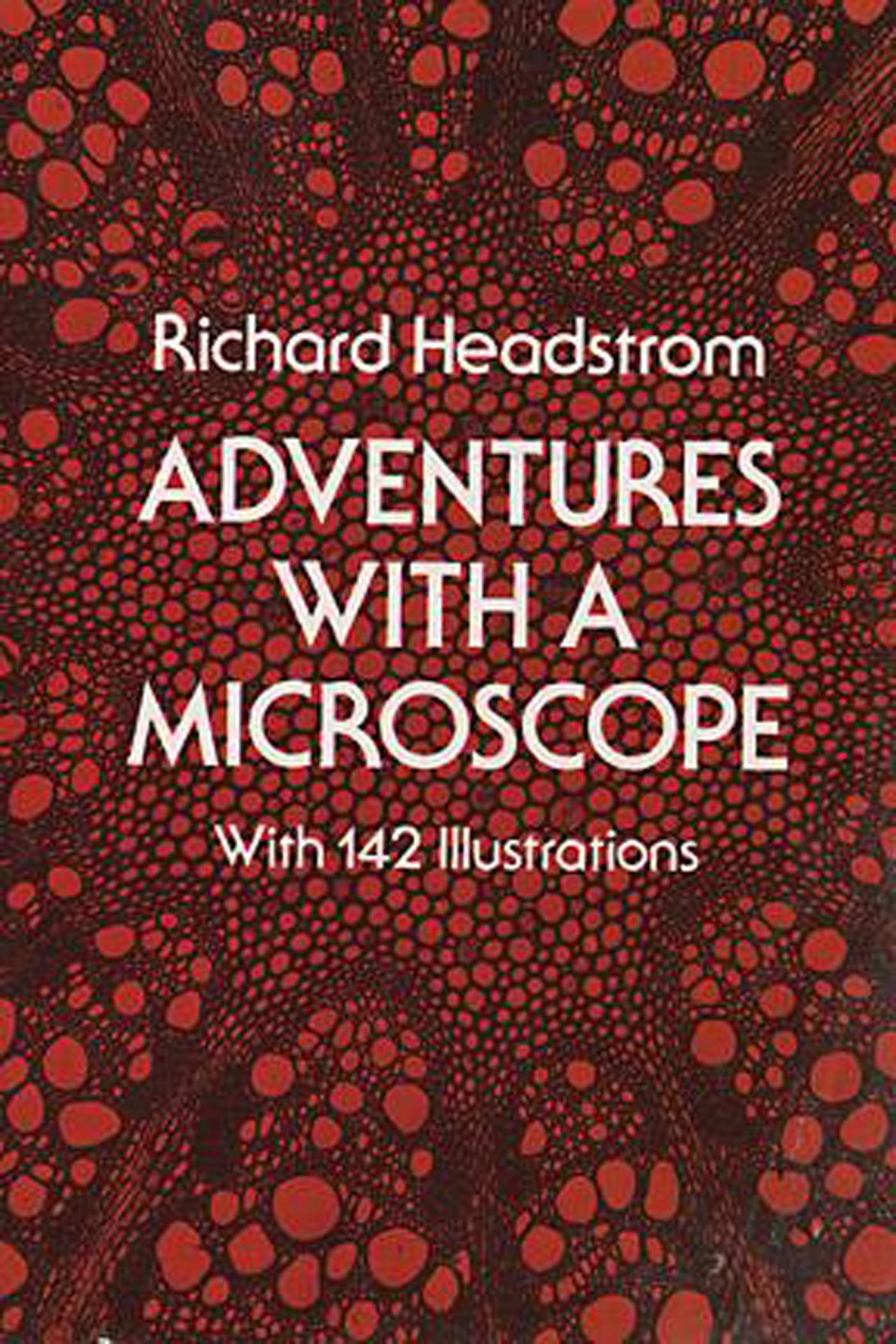
With a simple microscope and this book, you can embark on 59 wonderful adventures in the natural world — make discoveries about the structures of numerous microscopic animals; find out what everyday objects and foods really look like at the cellular level; gain an understanding of how to prepare specimens and slides; and learn about many scientific phenomena such as how a fly can walk upside down on the ceiling. It's all here in simple-to-understand language and 142 clear line drawings.
The author first examines under the microscope such everyday objects as a human hair, air bubble, scale of a herring, poppy seed and sugar crystal, and then offers through-the-microscope views of such creatures and objects as the water flea, hydra, house fly, amoeba, euglena, volvox, diatoms, desmids, algae, blood corpuscles, honey bee, rotifer, water-mites, potato starch, and other food substances, lichen, paramecium, coffee, sponge, chalk, yeast, bacteria, mustard, pepper, bryozoan, moss, mushroom, molds, cotton, and other textile fibers, ferns, dragon-flies, flea, spider, roots, and other plant structures, paper, aphid, fingerprints, nervous system of the grasshopper, and more.
Richard Headstrom, formerly associated with the New England Museum of Natural History and an experienced teacher and writer on natural science for young people, has made this book simple enough for any beginner at home as well as interesting for more experienced students and lay readers. Enjoyable and instructive, these adventures with a microscope will appeal to all who are curious about what there is to see beyond the range of the naked eye.
The author first examines under the microscope such everyday objects as a human hair, air bubble, scale of a herring, poppy seed and sugar crystal, and then offers through-the-microscope views of such creatures and objects as the water flea, hydra, house fly, amoeba, euglena, volvox, diatoms, desmids, algae, blood corpuscles, honey bee, rotifer, water-mites, potato starch, and other food substances, lichen, paramecium, coffee, sponge, chalk, yeast, bacteria, mustard, pepper, bryozoan, moss, mushroom, molds, cotton, and other textile fibers, ferns, dragon-flies, flea, spider, roots, and other plant structures, paper, aphid, fingerprints, nervous system of the grasshopper, and more.
Richard Headstrom, formerly associated with the New England Museum of Natural History and an experienced teacher and writer on natural science for young people, has made this book simple enough for any beginner at home as well as interesting for more experienced students and lay readers. Enjoyable and instructive, these adventures with a microscope will appeal to all who are curious about what there is to see beyond the range of the naked eye.
Betaal eenvoudig met kaart, Klarna, Apple Pay of Google Pay. Niet tevreden? Je hebt altijd 14 dagen bedenktijd. Lees meer in onze voorwaarden. Heb je vragen, mail ons dan via hello@memmo.org.
Memmo maakt studeren makkelijker – waar je ook bent ter wereld. Wij brengen je cursusboeken en slimme studietools samen op één plek: samenvattingen, quizzen, podcasts en flashcards. En Ted, je studievriend die antwoord geeft op alles wat je je afvraagt. Meer dan 50.000 studenten studeren hier al – gebouwd om je sneller te laten leren en minder stress te geven.
Misschien vind je dit ook leuk
Koop het boek0