
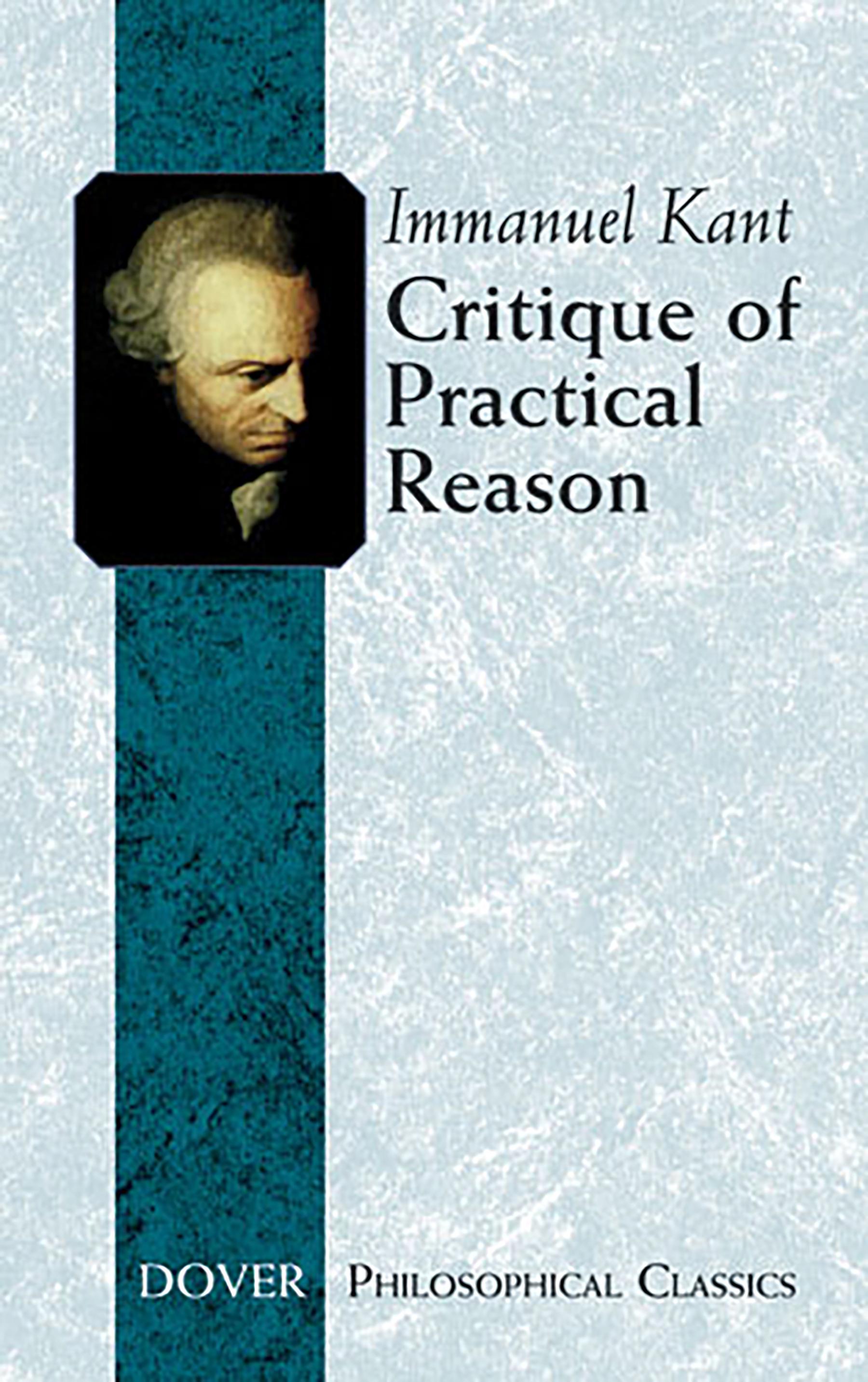
The second of Kant's three critiques, Critique of Practical Reason forms the center of Kantian philosophy; published in 1788, it is bookended by his Critique of Pure Reason and Critique of Judgement. With this work Kant establishes his role as a vindicator of the truth of Christianity; he approaches his proof by presenting positive affirmation of the immortality of the soul and the existence of God. The philosopher offers an argument concerning the summum bonum of life: people should not simply search after happiness, but follow the moral law and seek to become worthy of the happiness that God can bestow.
This Critique comprises three sections: the Analytic, the Dialectic, and the Doctrine of Method. The Analytic defines the ultimate moral principle, the categorical imperative, and argues that to obey it is to exercise a freedom. The Dialectic make the assumption that immortality and God exist, arguing that pure practical reason falls into error when it expects perfection in this world; we should anticipate finding perfection in the next world, with God's help. The final section, the Doctrine of Method, offers suggestions in educating people in the use of pure practical reason.
A seminal text in the history of moral philosophy, this volume offers the most complete statement of Kant's theory of free will and a full development of his practical metaphysics.
This Critique comprises three sections: the Analytic, the Dialectic, and the Doctrine of Method. The Analytic defines the ultimate moral principle, the categorical imperative, and argues that to obey it is to exercise a freedom. The Dialectic make the assumption that immortality and God exist, arguing that pure practical reason falls into error when it expects perfection in this world; we should anticipate finding perfection in the next world, with God's help. The final section, the Doctrine of Method, offers suggestions in educating people in the use of pure practical reason.
A seminal text in the history of moral philosophy, this volume offers the most complete statement of Kant's theory of free will and a full development of his practical metaphysics.
Betaal eenvoudig met kaart, Klarna, Apple Pay of Google Pay. Niet tevreden? Je hebt altijd 14 dagen bedenktijd. Lees meer in onze voorwaarden. Heb je vragen, mail ons dan via hello@memmo.org.
Memmo maakt studeren makkelijker – waar je ook bent ter wereld. Wij brengen je cursusboeken en slimme studietools samen op één plek: samenvattingen, quizzen, podcasts en flashcards. En Ted, je studievriend die antwoord geeft op alles wat je je afvraagt. Meer dan 50.000 studenten studeren hier al – gebouwd om je sneller te laten leren en minder stress te geven.
Misschien vind je dit ook leuk
Koop het boek0