
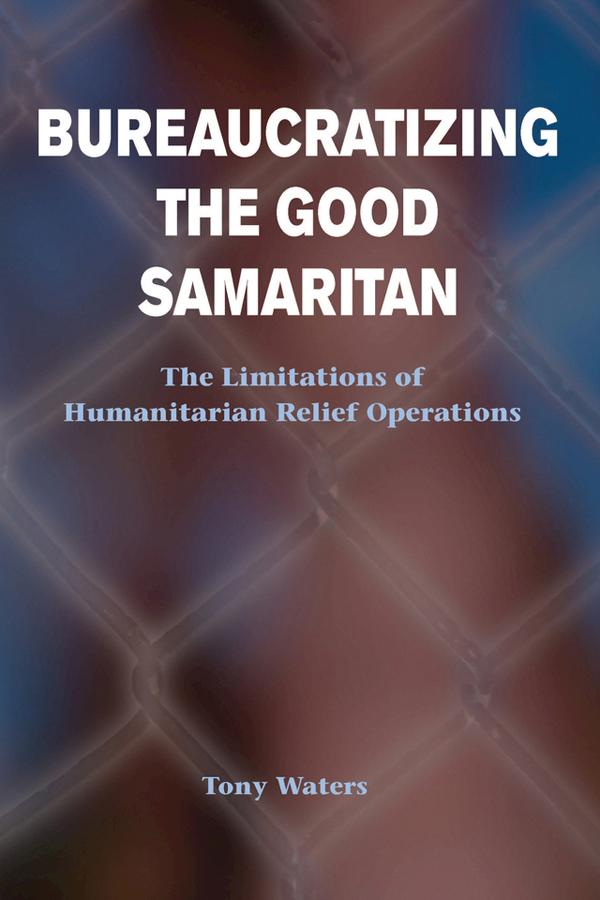
Bureaucratizing the Good Samaritan is about the organization of refugee relief programs. It describes the practical, political, and moral assumptions of the ?international refugee relief regime.? Tony Waters emphasizes that the agencies delivering humanitarian relief are embedded in rationalized bureaucracies whose values are determined by their institutional frameworks. The demand for ?victims? is observed in the close relation between the interests of the popular press and the decisions made by bureaucracies.This presents a paradox in all humanitarian relief organizations, but perhaps no more so than in the Rwanda Relief Operations (1994-96) which ended in the largest mass forced repatriation since the end of World War II. This crisis is analyzed with an assumption that there is a basic contradiction between the demands of the bureaucratized organization and the need of relief agencies to generate the emotional publicity to sustain the interest of northern donors. The book concludes by noting that if refugee relief programs are to become more effective, the connection between the press's emotional demands for ?victims? and the bureaucratic organizations's decision processes need to be identified and reassessed.
Betaal eenvoudig met kaart, Klarna, Apple Pay of Google Pay. Niet tevreden? Je hebt altijd 14 dagen bedenktijd. Lees meer in onze voorwaarden. Heb je vragen, mail ons dan via hello@memmo.org.
Memmo maakt studeren makkelijker – waar je ook bent ter wereld. Wij brengen je cursusboeken en slimme studietools samen op één plek: samenvattingen, quizzen, podcasts en flashcards. En Ted, je studievriend die antwoord geeft op alles wat je je afvraagt. Meer dan 50.000 studenten studeren hier al – gebouwd om je sneller te laten leren en minder stress te geven.
Misschien vind je dit ook leuk
Koop het boek0