
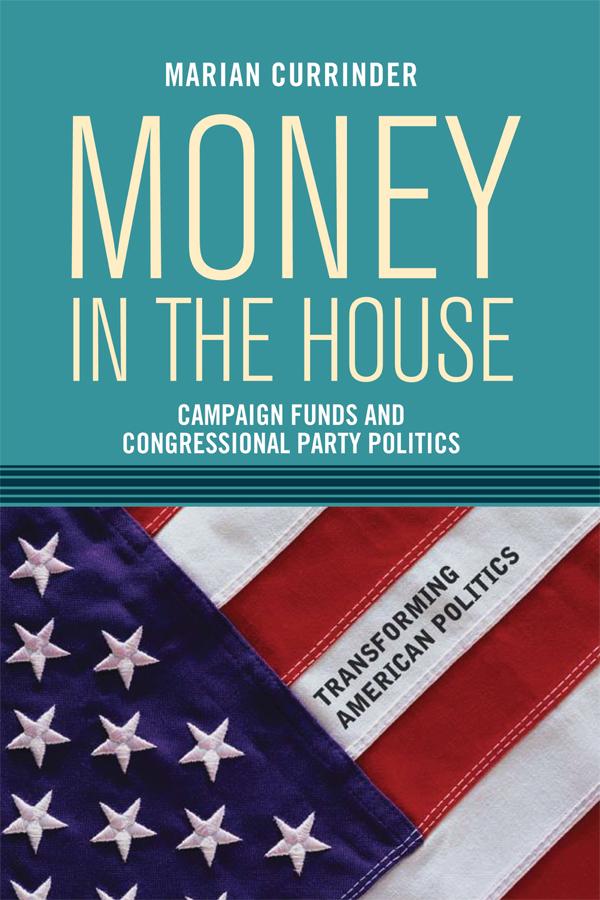
Money in the House provides a compelling look at how the drive to raise campaign money has come to dominate congressional party politics. Author Marian Currinder examines the rise of member-to-member and member-to-party giving as part of a broader process that encourages ambitious House members to compete for power by raising money for the party and its candidates. As the margin between parties in the House has narrowed, the political environment has become fiercely competitive. Because electoral success is largely equated with fundraising success, the party that raises the most money is at a distinct advantage. In addition to relying on outside interests and individuals for campaign contributions, the congressional parties increasingly call on their own members to give for the good of the whole. As a result, lawmakers must devote ever-increasing amounts of time to fundraising. The fundraising expectations for members who wish to advance in the chamber are even higher. By requiring their members to raise and redistribute tremendous amounts of money in order to gain power in the chamber, the parties benefit from their members' ambitious pursuits. Currinder argues that the new 'rule of money' is fundamentally altering the way House members pursue power and the way congressional parties define and reward loyalty.
Betaal eenvoudig met kaart, Klarna, Apple Pay of Google Pay. Niet tevreden? Je hebt altijd 14 dagen bedenktijd. Lees meer in onze voorwaarden. Heb je vragen, mail ons dan via hello@memmo.org.
Memmo maakt studeren makkelijker – waar je ook bent ter wereld. Wij brengen je cursusboeken en slimme studietools samen op één plek: samenvattingen, quizzen, podcasts en flashcards. En Ted, je studievriend die antwoord geeft op alles wat je je afvraagt. Meer dan 50.000 studenten studeren hier al – gebouwd om je sneller te laten leren en minder stress te geven.