
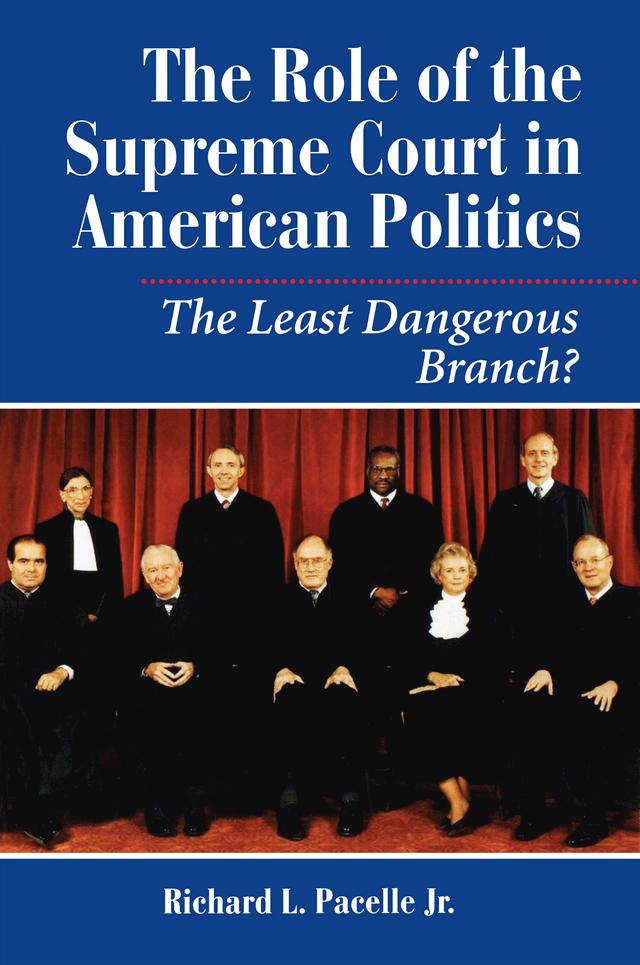
When the Supreme Court's effectively decided the presidential election of 2000, it decision illustrated a classic question in American politics: what is the appropriate role for the Supreme Court? The dilemma is between judicial activism, the Court's willingness to make significant changes in public policy, and judicial restraint, the Court's willingness to confine the use and extent of its power. While the Framers of the Constitution felt that the judiciary would be the "least dangerous branch" of government, many have come to the conclusion that courts govern America, a notion at odds with democratic government.Richard Pacelle traces the historical ebb and flow of the Court's role in the critical issues of American politics: slavery, free speech, religion, abortion, and affirmative action. Pacelle examines the arguments for judicial restraint, including that unelected judges making policy runs against democratic principles, and the arguments for judicial activism, including the important role the court has played as a protector of minority rights. Pacelle suggests that there needs to be a balance between judicial activism and restraint in light of the constraints on the institution and its power. Stimulating and sure to generate discussion, The Supreme Court in American Politics is a concise supplemental text for American Government and Judicial Politics course.
Betaal eenvoudig met kaart, Klarna, Apple Pay of Google Pay. Niet tevreden? Je hebt altijd 14 dagen bedenktijd. Lees meer in onze voorwaarden. Heb je vragen, mail ons dan via hello@memmo.org.
Memmo maakt studeren makkelijker – waar je ook bent ter wereld. Wij brengen je cursusboeken en slimme studietools samen op één plek: samenvattingen, quizzen, podcasts en flashcards. En Ted, je studievriend die antwoord geeft op alles wat je je afvraagt. Meer dan 50.000 studenten studeren hier al – gebouwd om je sneller te laten leren en minder stress te geven.
Misschien vind je dit ook leuk
Koop het boek0