
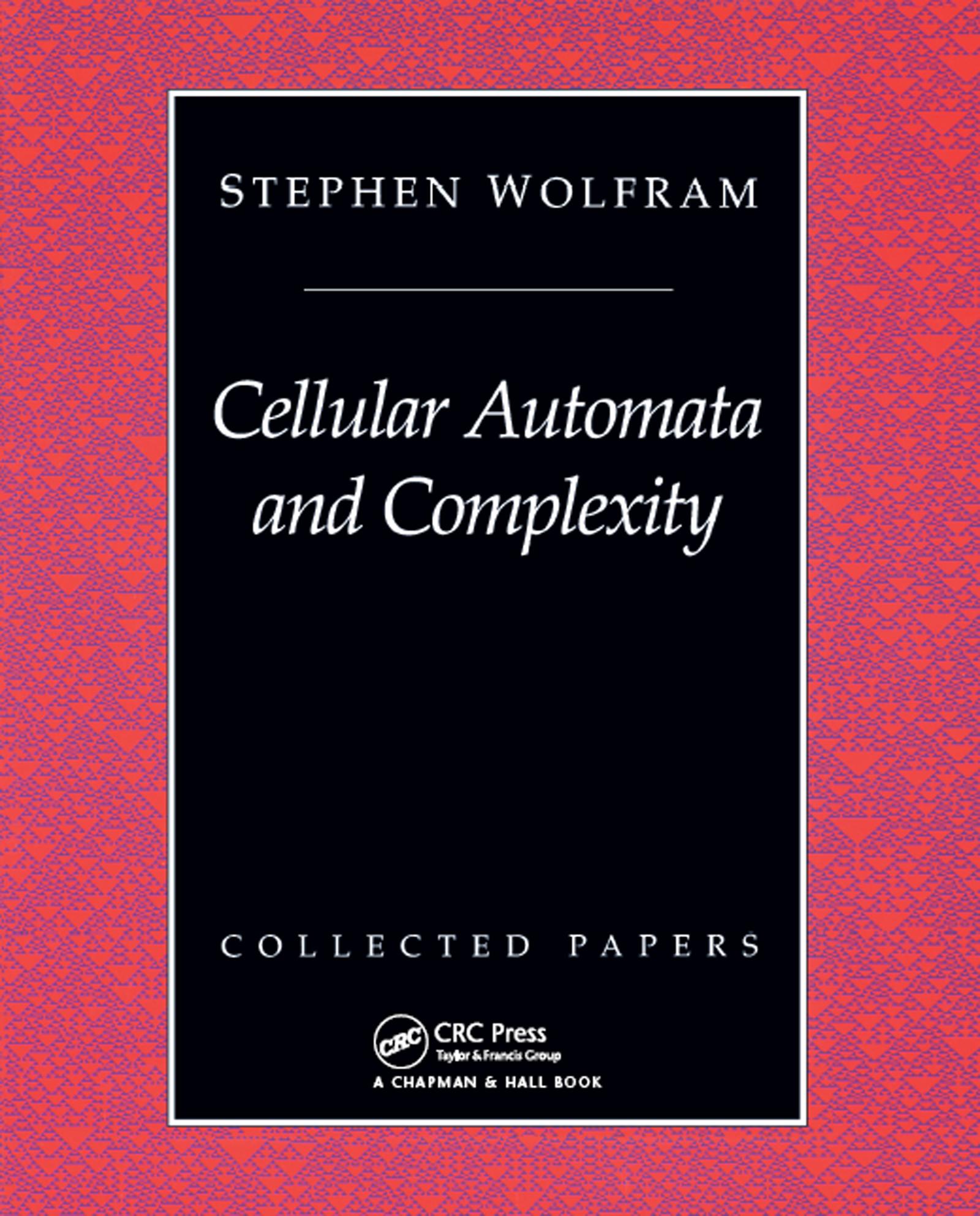
Are mathematical equations the best way to model nature? For many years it had been assumed that they were. But in the early 1980s, Stephen Wolfram made the radical proposal that one should instead build models that are based directly on simple computer programs. Wolfram made a detailed study of a class of such models known as cellular automata, and discovered a remarkable fact: that even when the underlying rules are very simple, the behaviour they produce can be highly complex, and can mimic many features of what we see in nature. And based on this result, Wolfram began a program of research to develop what he called A Science of Complexity."The results of Wolfram's work found many applications, from the so-called Wolfram Classification central to fields such as artificial life, to new ideas about cryptography and fluid dynamics. This book is a collection of Wolfram's original papers on cellular automata and complexity. Some of these papers are widely known in the scientific community others have never been published before. Together, the papers provide a highly readable account of what has become a major new field of science, with important implications for physics, biology, economics, computer science and many other areas.
Betaal eenvoudig met kaart, Klarna, Apple Pay of Google Pay. Niet tevreden? Je hebt altijd 14 dagen bedenktijd. Lees meer in onze voorwaarden. Heb je vragen, mail ons dan via hello@memmo.org.
Memmo maakt studeren makkelijker – waar je ook bent ter wereld. Wij brengen je cursusboeken en slimme studietools samen op één plek: samenvattingen, quizzen, podcasts en flashcards. En Ted, je studievriend die antwoord geeft op alles wat je je afvraagt. Meer dan 50.000 studenten studeren hier al – gebouwd om je sneller te laten leren en minder stress te geven.
Misschien vind je dit ook leuk
Koop het boek0