
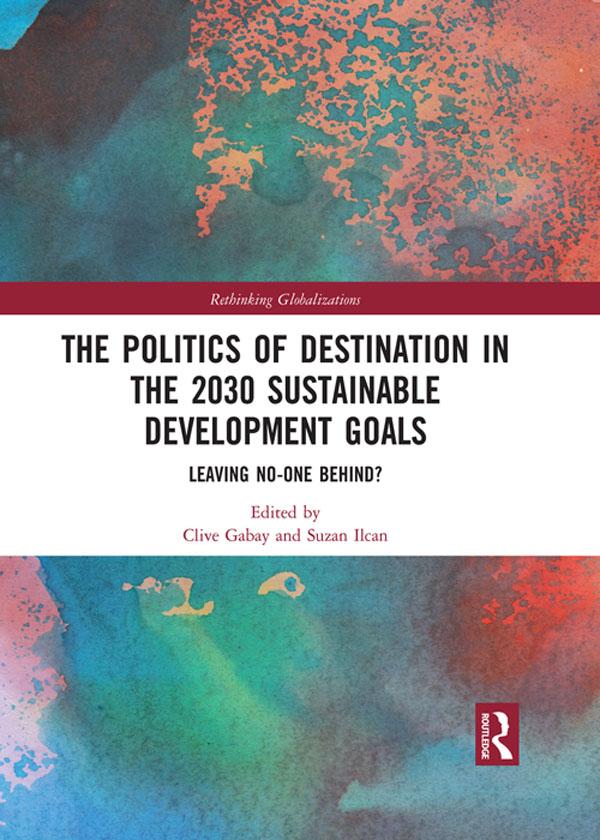
This book represents an unusual intervention in debates about the nature of contemporary international development, where the majority of scholarship tends to concern itself with measuring or collating goal performance. Through a series of analyses of the United Nations Sustainable Development Goals, this book explores development as a political construct, and is concerned with the kinds of epistemological, hegemonic, or politico-economic assumptions built into contemporary development policy, and the ensuing effectiveness the SDGs will have in terms of addressing or perpetuating the historical impoverishment of large groups of people living in poverty. The contributors to the book take issue with many of the assumptions upon which SDGs rest, while also broadening the conversation to pay attention to knowledge production, modernity, colonialism, exclusion, citizenship, and other conceptual insights. In this context, the book raises questions about the discourses and practices of the SDGs, especially in relation to how they can: define the limits of what can be said and what can be done; shape development logics through notions of division and forms of exclusion; construct political problems as technical problems; create certain spaces of imagination as a field of activity; and endorse particular ideas and forms of knowledge in models for sustainable development.
This book was originally published as a special issue of Globalizations.
Betaal eenvoudig met kaart, Klarna, Apple Pay of Google Pay. Niet tevreden? Je hebt altijd 14 dagen bedenktijd. Lees meer in onze voorwaarden. Heb je vragen, mail ons dan via hello@memmo.org.
Memmo maakt studeren makkelijker – waar je ook bent ter wereld. Wij brengen je cursusboeken en slimme studietools samen op één plek: samenvattingen, quizzen, podcasts en flashcards. En Ted, je studievriend die antwoord geeft op alles wat je je afvraagt. Meer dan 50.000 studenten studeren hier al – gebouwd om je sneller te laten leren en minder stress te geven.