
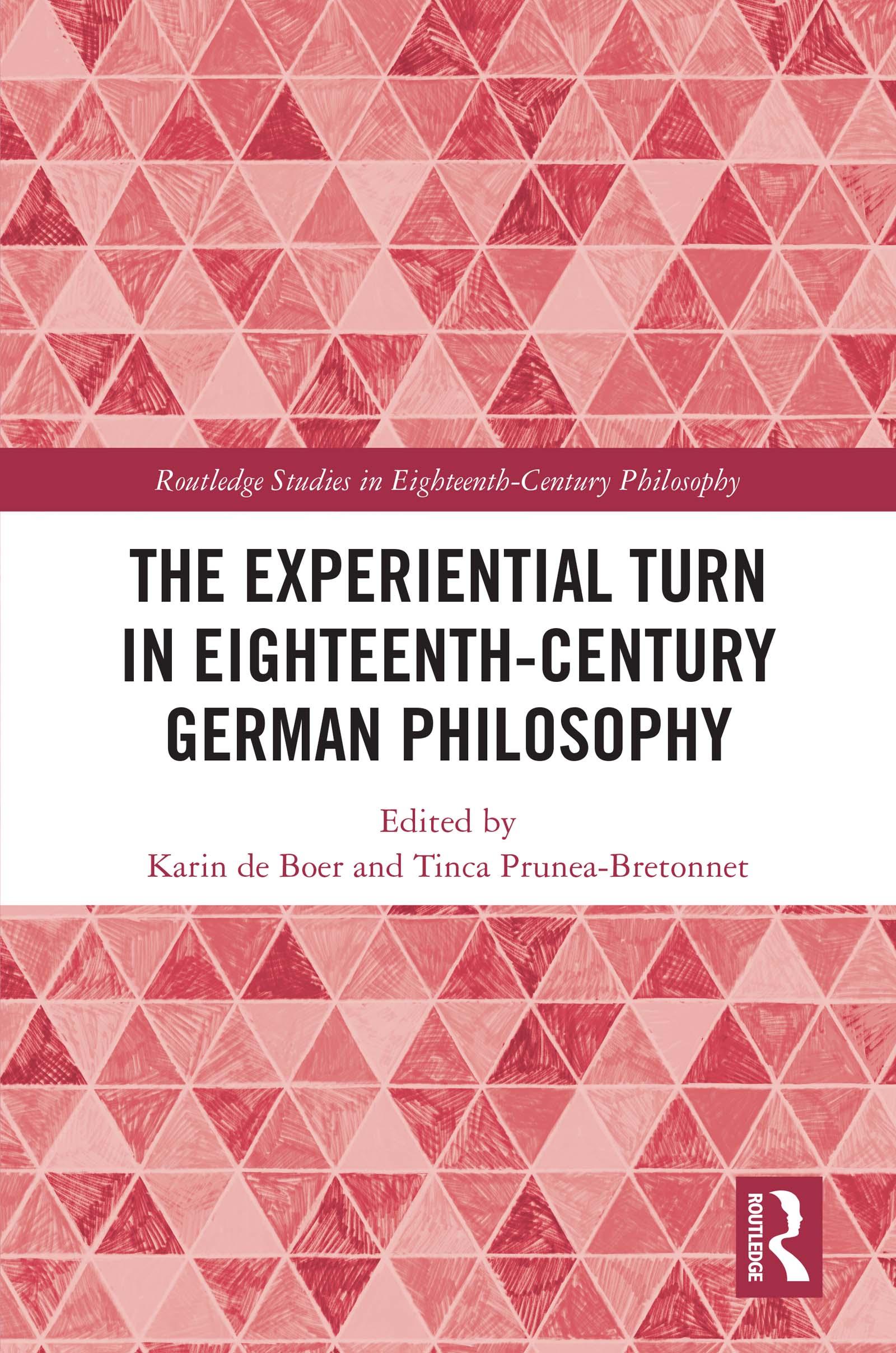
This collection of essays challenges the prevailing assumption that eighteenth-century German philosophy prior to Kant was largely defined by post-Leibnizian rationalism and, accordingly, a low esteem of the cognitive function of the senses. It does so by highlighting the various ways in which eighteenth-century German philosophers reconceived the notion and role of experience in their efforts to identify, defend, and contest the contribution of sensibility to disciplines such as metaphysics, theology, the natural sciences, psychology, and aesthetics. Engaging in depth with Tschirnhaus, Wolff, the Wolffians, eclecticism, Popularphilosophie, the Berlin Academy, Tetens, and Kant, its thirteen chapters present a more nuanced understanding of the German reception of British and French ideas and dismiss the prevailing view that German philosophy was largely isolated from European debates. Moreover, the book introduces a number of relatively unknown, but highly relevant philosophers and developments to non-specialized scholars and contributes to a better understanding of the richness and complexity of the German Enlightenment.
Betaal eenvoudig met kaart, Klarna, Apple Pay of Google Pay. Niet tevreden? Je hebt altijd 14 dagen bedenktijd. Lees meer in onze voorwaarden. Heb je vragen, mail ons dan via hello@memmo.org.
Memmo maakt studeren makkelijker – waar je ook bent ter wereld. Wij brengen je cursusboeken en slimme studietools samen op één plek: samenvattingen, quizzen, podcasts en flashcards. En Ted, je studievriend die antwoord geeft op alles wat je je afvraagt. Meer dan 50.000 studenten studeren hier al – gebouwd om je sneller te laten leren en minder stress te geven.