
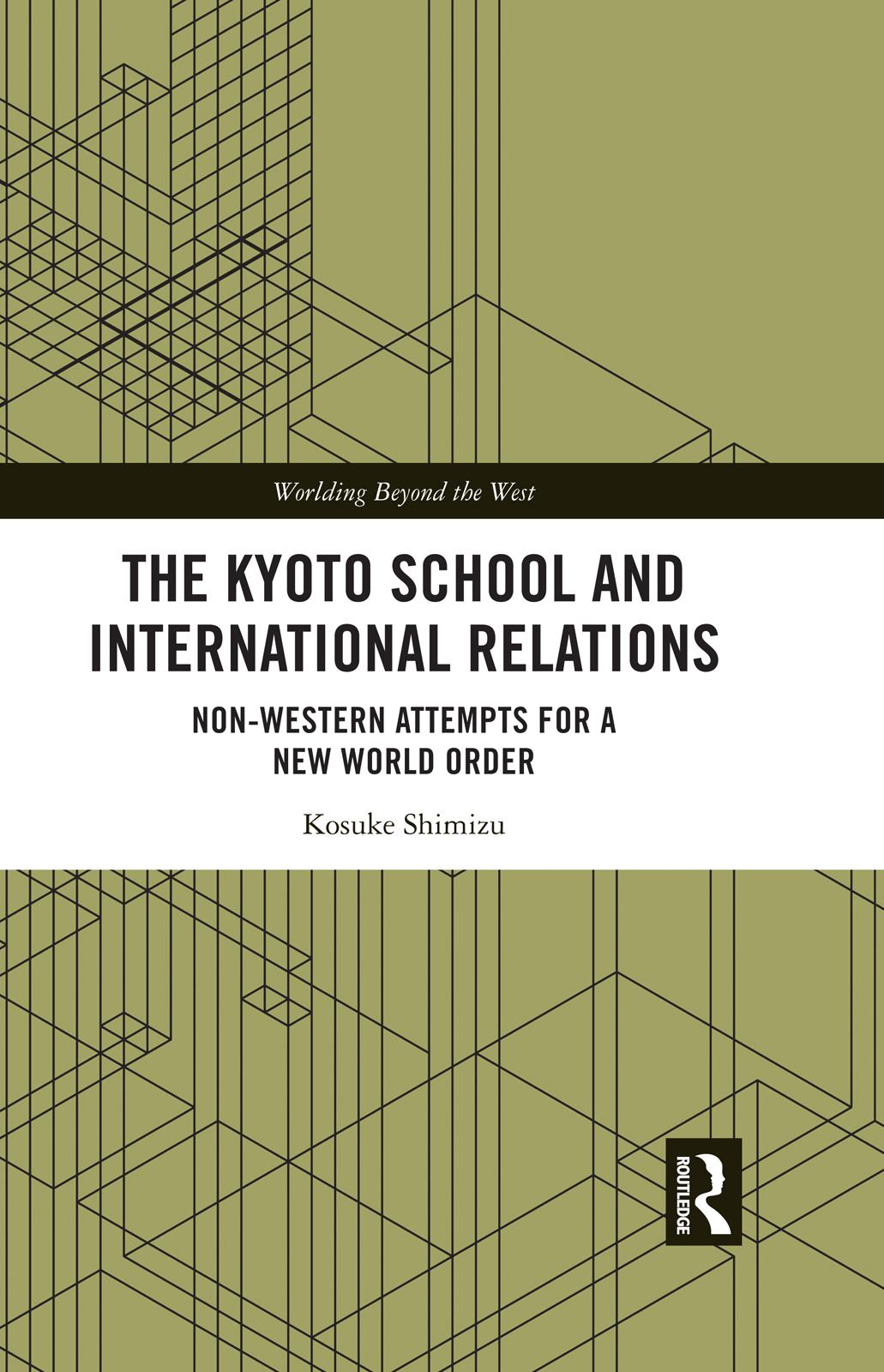
The Kyoto School and International Relations explores the Kyoto School’s challenge to transcend the ‘Western’ domination over the ‘rest’ of the world, and the issues this raises for contemporary ‘non-Western’ and ‘Global IR’ literature.
Was the support of Kyoto School thinkers inevitable due to the despotism of military government, thus nothing to do with their philosophy, or a logical extension of their philosophical engagement? The book answers this question by investigating individual Kyoto School philosophers in detail. The author argues that any attempts to transcend the ‘West’ are destined to be drawn into power politics as far as they uncritically adopt and use the prevailing ontological concept of linear progressive time and dominant meta-narrative of Westphalia. Thus, to fully understand this problem, there is the need to be cautious of the power of language of Westphalia and the concept of time in IR.
Aimed at students and scholars of IR theory, Japanese politics and East Asian IR in general, this book provides some introductory explanations of these academic subjects, developing a theory based on the concepts of time and language of Kyoto School philosophy.
Betaal eenvoudig met kaart, Klarna, Apple Pay of Google Pay. Niet tevreden? Je hebt altijd 14 dagen bedenktijd. Lees meer in onze voorwaarden. Heb je vragen, mail ons dan via hello@memmo.org.
Memmo maakt studeren makkelijker – waar je ook bent ter wereld. Wij brengen je cursusboeken en slimme studietools samen op één plek: samenvattingen, quizzen, podcasts en flashcards. En Ted, je studievriend die antwoord geeft op alles wat je je afvraagt. Meer dan 50.000 studenten studeren hier al – gebouwd om je sneller te laten leren en minder stress te geven.