
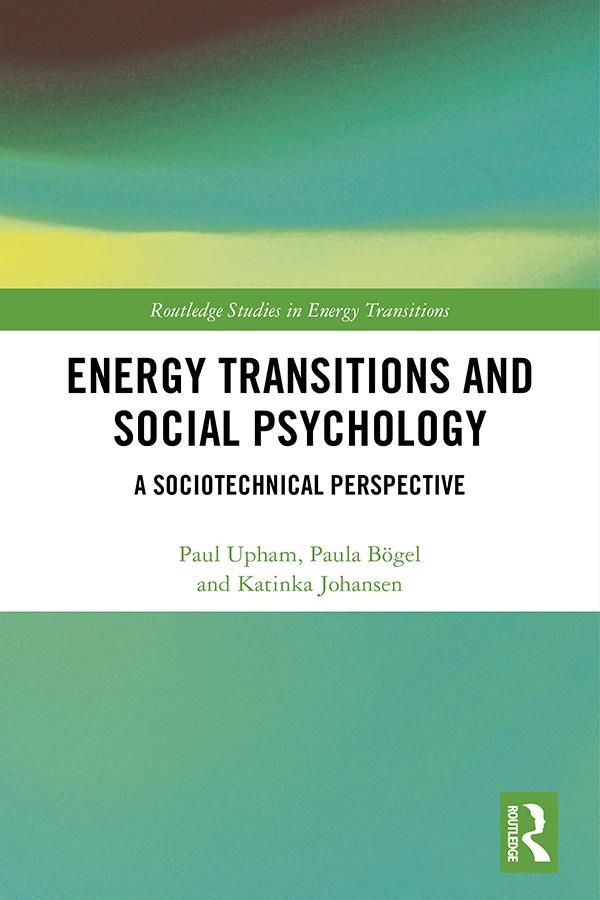
This book explains how social psychological concepts can be closely integrated with sociotechnical perspectives of energy transitions. It shows the value of actor-centred analysis that acknowledges the role of individual-level processes within their wider contexts of energy supply and use. In this way, the book connects social psychological and sociological frames of analysis, preserving the value of both, to provide multi-level, analytically extended accounts of energy transitions processes.
Sociotechnical thinking is about the interactions of people and technology, including the rules, regulations and institutions involved. Such perspectives help to identify the many forms of path dependency that can make change difficult. Human behaviour plays a strong role in maintaining these path dependencies, but it can also introduce change. This book advocates a deliberately interdisciplinary research agenda that recognises the value of social psychological perspectives when seeking to create new pathways for energy supply and use. At the same time, it also demonstrates the value of sociotechnical perspectives for energy-related social psychology.
Energy Transitions and Social Psychology will be of great interest to students and scholars of energy transitions, environmental and energy psychology, sustainable development and innovation studies, as well as students and scholars of environment and energy more generally.
Betaal eenvoudig met kaart, Klarna, Apple Pay of Google Pay. Niet tevreden? Je hebt altijd 14 dagen bedenktijd. Lees meer in onze voorwaarden. Heb je vragen, mail ons dan via hello@memmo.org.
Memmo maakt studeren makkelijker – waar je ook bent ter wereld. Wij brengen je cursusboeken en slimme studietools samen op één plek: samenvattingen, quizzen, podcasts en flashcards. En Ted, je studievriend die antwoord geeft op alles wat je je afvraagt. Meer dan 50.000 studenten studeren hier al – gebouwd om je sneller te laten leren en minder stress te geven.