
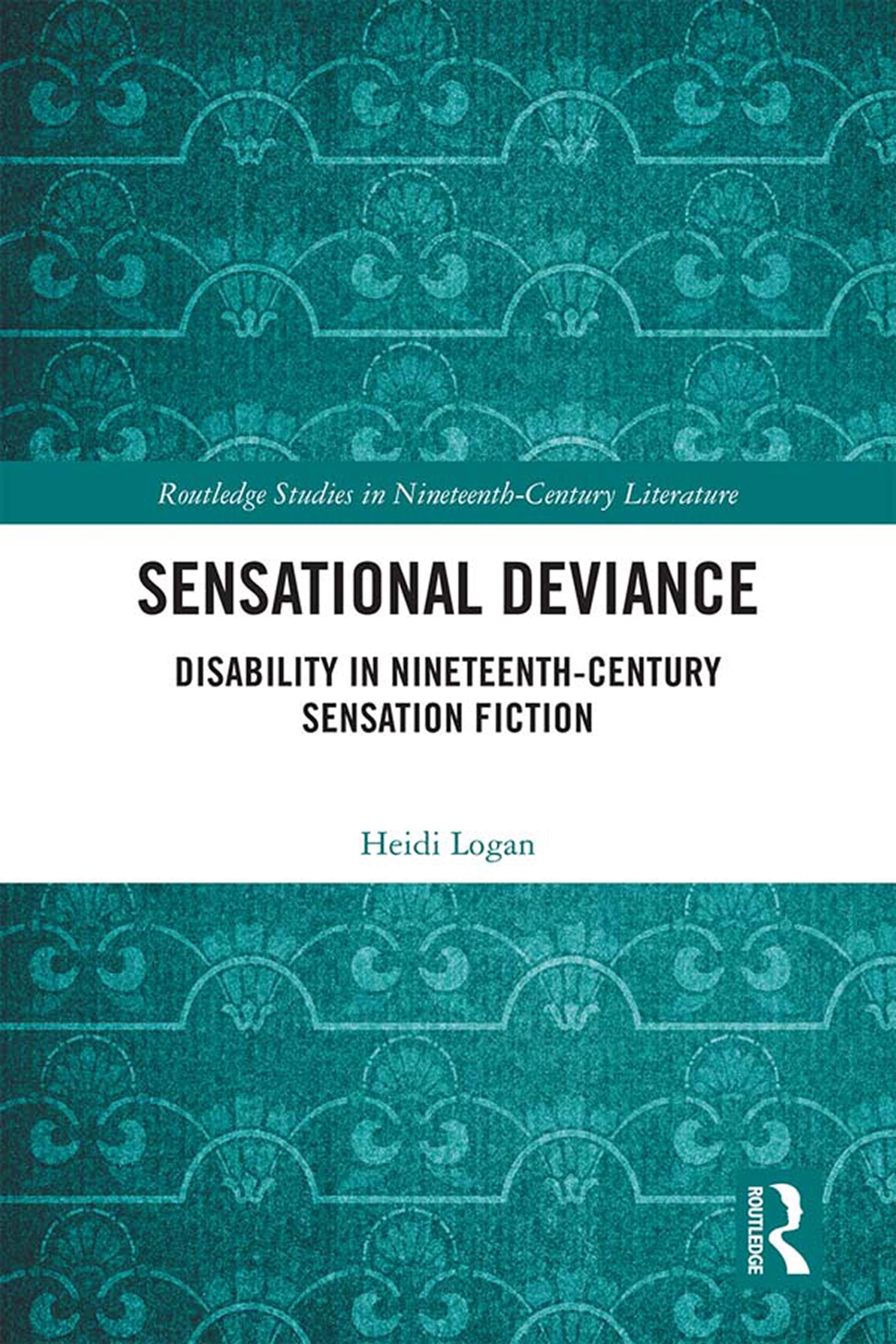
Sensational Deviance: Disability in Nineteenth-Century Sensation Fiction investigates the representation of disability in fictional works by the leading Victorian sensation novelists Wilkie Collins and Mary Elizabeth Braddon, exploring how disability acts as a major element in the shaping of the sensation novel genre and how various sensation novels respond to traditional viewpoints of disability and to new developments in physiological and psychiatric knowledge. The depictions of disabled characters in sensation fiction frequently deviate strongly from typical depictions of disability in mainstream Victorian literature, undermining its stigmatized positioning as tragic deficit, severe limitation, or pathology.
Close readings of nine individual novels situate their investigations of physical, sensory, and cognitive disabilities against the period’s disability discourses and interest in senses, perception, stimuli, the nervous system, and the hereditability of impairments. The importance of moral insanity and degeneration theory within sensation fiction connect the genre with criminal anthropology, suggesting the genre’s further significance in the light of the later emergence of eugenics, psychoanalysis, and genetics.
Betaal eenvoudig met kaart, Klarna, Apple Pay of Google Pay. Niet tevreden? Je hebt altijd 14 dagen bedenktijd. Lees meer in onze voorwaarden. Heb je vragen, mail ons dan via hello@memmo.org.
Memmo maakt studeren makkelijker – waar je ook bent ter wereld. Wij brengen je cursusboeken en slimme studietools samen op één plek: samenvattingen, quizzen, podcasts en flashcards. En Ted, je studievriend die antwoord geeft op alles wat je je afvraagt. Meer dan 50.000 studenten studeren hier al – gebouwd om je sneller te laten leren en minder stress te geven.