
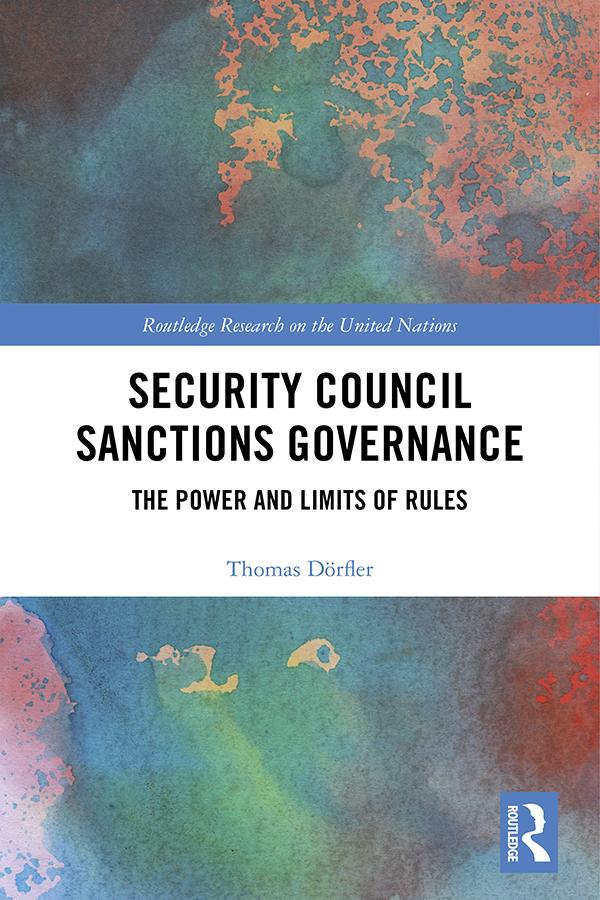
Little is known about how far-reaching decisions in UN Security Council sanctions committees are made. Developing a novel committee governance concept and using examples drawn from sanctions imposed on Iraq, Al-Qaida, Congo, Sudan and Iran, this book shows that Council members tend to follow the will of the powerful, whereas sanctions committee members often decide according to the rules. This is surprising since both Council and committees are staffed by the same member states.
Offering a fascinating account of Security Council micro-politics and decision-making processes on sanctions, this rigorous comparative and theory-driven analysis treats the Council and its sanctions committees as distinguishable entities that may differ in decision practice despite having the same members. Drawing extensively on primary documents, diplomatic cables, well-informed press coverage, reports by close observers and extensive interviews with committee members, Council diplomats and sanctions experts, it contrasts with the conventional wisdom on decision-making within these bodies, which suggests that the powerful permanent members would not accept rule-based decisions against their interests.
This book will be of interest to policy practitioners and scholars working in the broad field of international organizations and international relations theory as well as those specializing in sanctions, international law, the Security Council and counter-terrorism.
Betaal eenvoudig met kaart, Klarna, Apple Pay of Google Pay. Niet tevreden? Je hebt altijd 14 dagen bedenktijd. Lees meer in onze voorwaarden. Heb je vragen, mail ons dan via hello@memmo.org.
Memmo maakt studeren makkelijker – waar je ook bent ter wereld. Wij brengen je cursusboeken en slimme studietools samen op één plek: samenvattingen, quizzen, podcasts en flashcards. En Ted, je studievriend die antwoord geeft op alles wat je je afvraagt. Meer dan 50.000 studenten studeren hier al – gebouwd om je sneller te laten leren en minder stress te geven.