
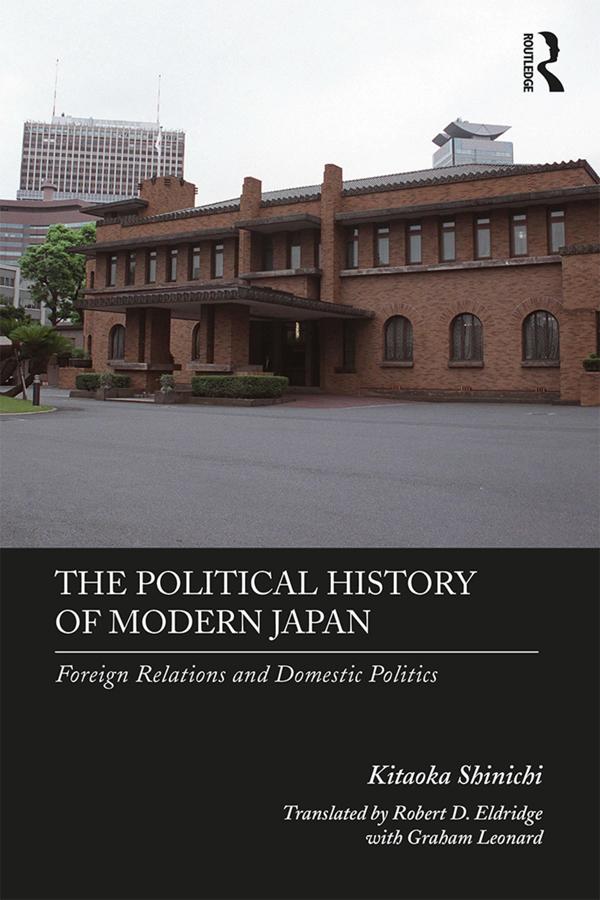
Spanning the 130-year period between the end of the Tokugawa Era and the end of the Cold War, this book introduces students to the formation, collapse, and rebirth of the modern Japanese state. It demonstrates how, faced with foreign threats, Japan developed a new governing structure to deal with these challenges and in turn gradually shaped its international environment. Had Japan been a self-sufficient power, like the United States, it is unlikely that external relations would have exercised such great control over the nation. And, if it were a smaller country, it may have been completely pressured from the outside and could not have influenced the global stage on its own. For better or worse therefore, this book argues, Japan was neither too large nor too small.
Covering the major events, actors, and institutions of Japan’s modern history, the key themes discussed include:
- Building the Meiji state and Constitution.
- The establishment of Parliament.
- The First Sino-Japanese and Russo-Japanese Wars.
- Party Politics and International Cooperation.
- The Pacific War.
- Development of LDP politics.
- Changes in the international order and the end of the Cold War.
This book, written by one of Japan's leading experts on Japan's political history, will be an essential resource for students of Japanese modern history and politics.
Betaal eenvoudig met kaart, Klarna, Apple Pay of Google Pay. Niet tevreden? Je hebt altijd 14 dagen bedenktijd. Lees meer in onze voorwaarden. Heb je vragen, mail ons dan via hello@memmo.org.
Memmo maakt studeren makkelijker – waar je ook bent ter wereld. Wij brengen je cursusboeken en slimme studietools samen op één plek: samenvattingen, quizzen, podcasts en flashcards. En Ted, je studievriend die antwoord geeft op alles wat je je afvraagt. Meer dan 50.000 studenten studeren hier al – gebouwd om je sneller te laten leren en minder stress te geven.