
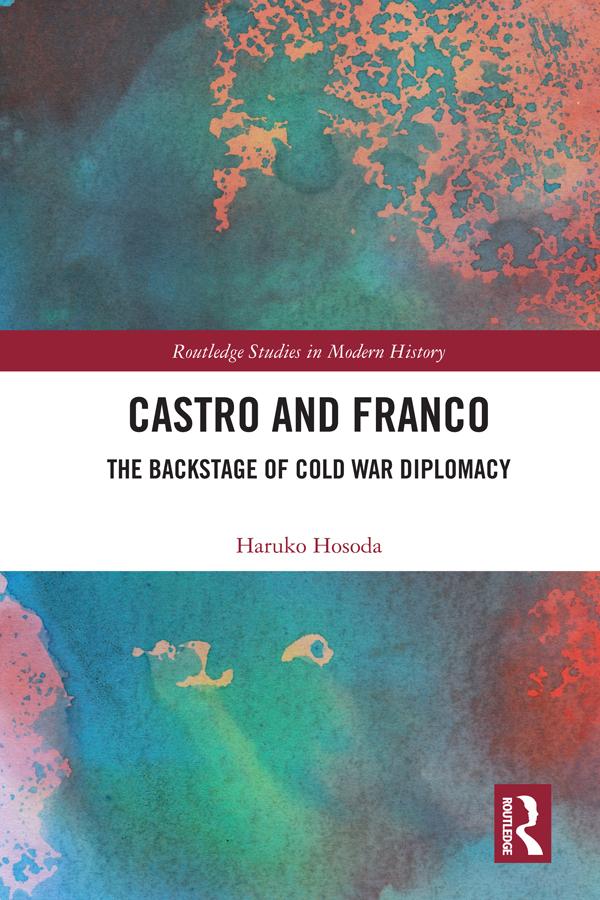
Cuba’s Fidel Castro and Spain’s Francisco Franco were two men with very similar backgrounds but very different political ideologies. Both received a Catholic education and had strong connections to the Galicia region of Spain. Both were familiar with guerrilla tactics and came to power through fighting civil wars. However, Franco had support from fascists, who fought a vicious campaign against communist guerrillas, whereas Cuba was strategically aligned with the USSR after the revolution. The two countries nevertheless maintained strong relations, notably keeping a formal diplomatic relationship after the 1959 Cuban revolution despite the United States' severing of ties to Cuba. This relationship, Hosoda argues, would remain a vital back channel for communication between Cuba and the West.
Using a mixture of primary and secondary sources, derived from Cuban, American and Spanish archives, Hosoda analyses the nature and wider role of diplomatic relations between Cuba and Spain during the Cold War. Addressing both the question of how this relationship was forged – whether through the personal strange "amity" of their leaders, mutual animosity toward the U.S., or the alignment of national interests – and the importance of the role that it played. Considering also the role of the Vatican, this book offers a fascinating insight into a rarely studied aspect of the Cold War, one that transcends the usual East-West binaries.
Betaal eenvoudig met kaart, Klarna, Apple Pay of Google Pay. Niet tevreden? Je hebt altijd 14 dagen bedenktijd. Lees meer in onze voorwaarden. Heb je vragen, mail ons dan via hello@memmo.org.
Memmo maakt studeren makkelijker – waar je ook bent ter wereld. Wij brengen je cursusboeken en slimme studietools samen op één plek: samenvattingen, quizzen, podcasts en flashcards. En Ted, je studievriend die antwoord geeft op alles wat je je afvraagt. Meer dan 50.000 studenten studeren hier al – gebouwd om je sneller te laten leren en minder stress te geven.