
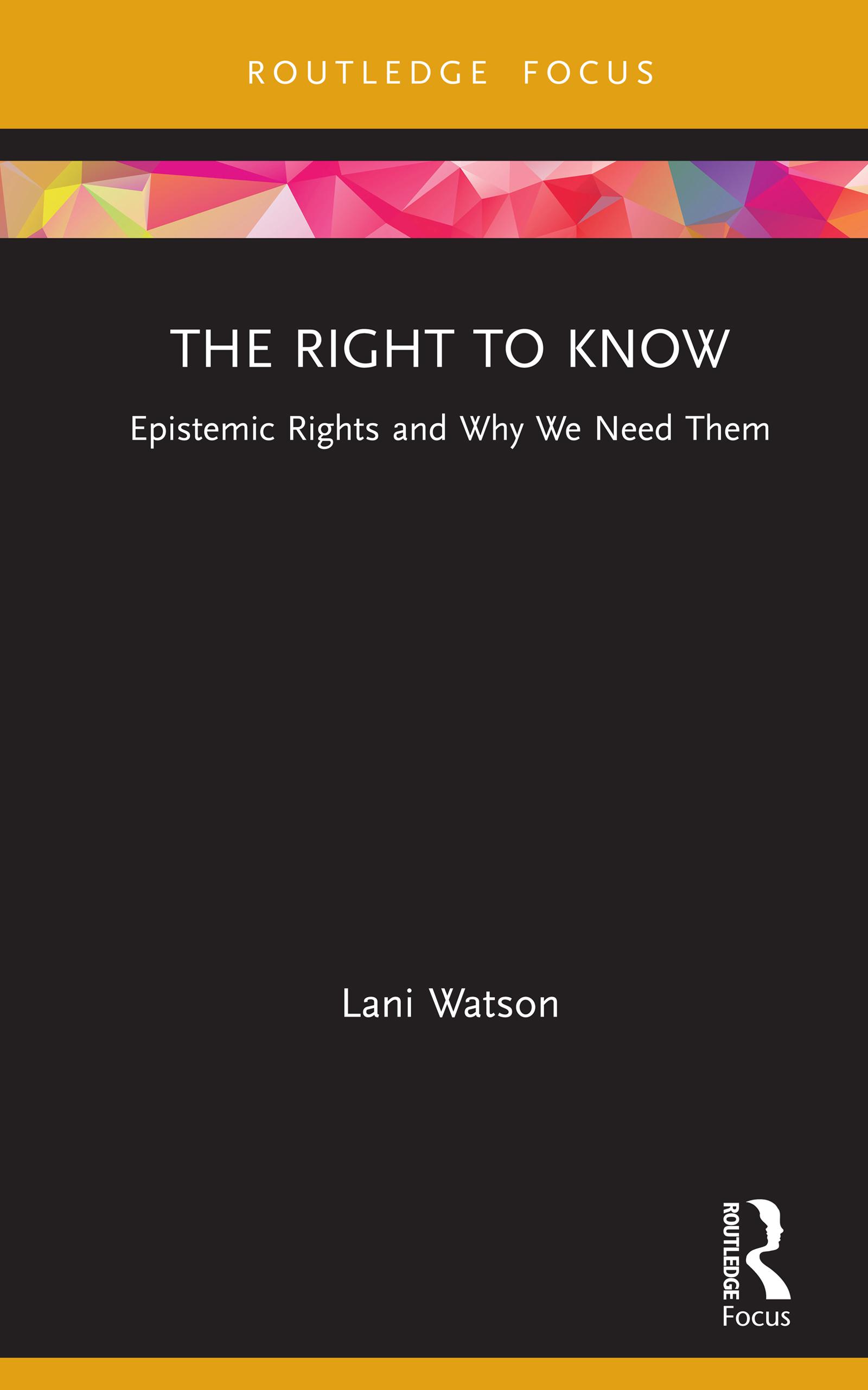
We speak of the right to know with relative ease. You have the right to know the results of a medical test or to be informed about the collection and use of personal data. But what exactly is the right to know, and who should we trust to safeguard it?
This book provides the first comprehensive examination of the right to know and other epistemic rights: rights to goods such as information, knowledge and truth. These rights play a prominent role in our information-centric society and yet they often go unnoticed, disregarded and unprotected. As such, those who control what we know, or think we know, exert an influence on our lives that is often as dangerous as it is imperceptible.
Beginning with a rigorous but accessible philosophical account of epistemic rights, Lani Watson examines the harms caused by epistemic rights violations, drawing on case studies across medical, political and legal contexts. She investigates who has the right to what information, who is responsible for the quality and circulation of information and what epistemic duties we have towards each other. This book is essential reading for philosophers, legal theorists and anyone concerned with the protection and promotion of information, knowledge and truth.
.
Betaal eenvoudig met kaart, Klarna, Apple Pay of Google Pay. Niet tevreden? Je hebt altijd 14 dagen bedenktijd. Lees meer in onze voorwaarden. Heb je vragen, mail ons dan via hello@memmo.org.
Memmo maakt studeren makkelijker – waar je ook bent ter wereld. Wij brengen je cursusboeken en slimme studietools samen op één plek: samenvattingen, quizzen, podcasts en flashcards. En Ted, je studievriend die antwoord geeft op alles wat je je afvraagt. Meer dan 50.000 studenten studeren hier al – gebouwd om je sneller te laten leren en minder stress te geven.