
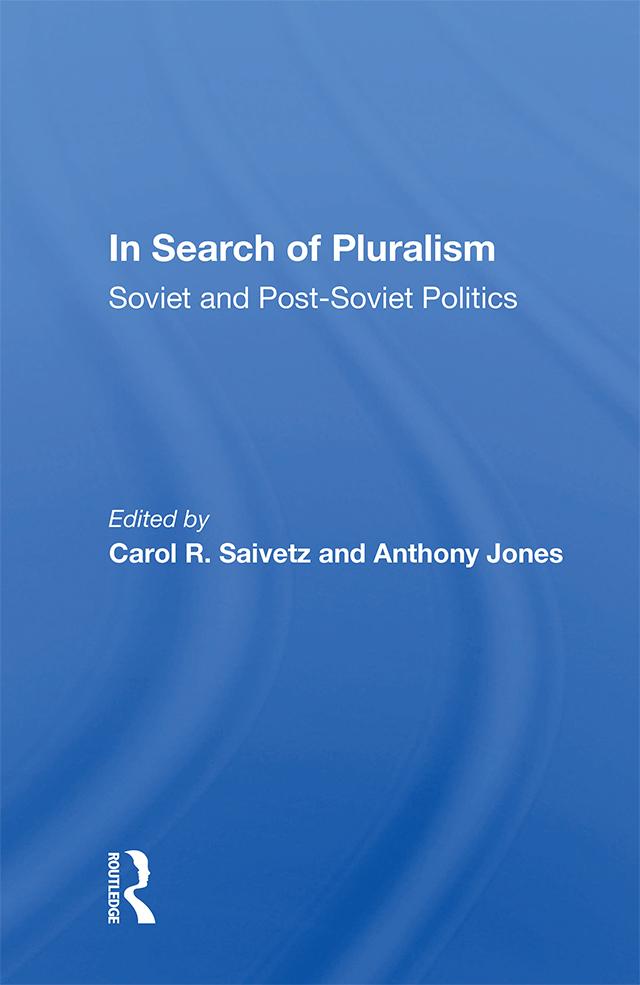
Building innovatively on Western social-science theory and on older models of Soviet politics, the authors review recent changes in the former USSR in order to assess the prospects there for democratic pluralism. Chapters focus on the first competitive elections, the new legislative bodies at state and local levels, and the newly freed press, exploring the extent to which these institutions can be described as democratic or pluralistic. Other chapters trace the complex linkages between a plurality of political-economic interests—explaining why Russian labor, government, and business may be moving toward a corporatist coalition and how political activists' sharply divergent attitudes toward the state and property keep them from forming a broad-based party. Although it is difficult in this period of dramatic flux to predict the future, these thought-provoking analyses will provide a deeper understanding of the transformations under way and will stimulate further exploration.
Betaal eenvoudig met kaart, Klarna, Apple Pay of Google Pay. Niet tevreden? Je hebt altijd 14 dagen bedenktijd. Lees meer in onze voorwaarden. Heb je vragen, mail ons dan via hello@memmo.org.
Memmo maakt studeren makkelijker – waar je ook bent ter wereld. Wij brengen je cursusboeken en slimme studietools samen op één plek: samenvattingen, quizzen, podcasts en flashcards. En Ted, je studievriend die antwoord geeft op alles wat je je afvraagt. Meer dan 50.000 studenten studeren hier al – gebouwd om je sneller te laten leren en minder stress te geven.
Misschien vind je dit ook leuk
Koop het boek0