
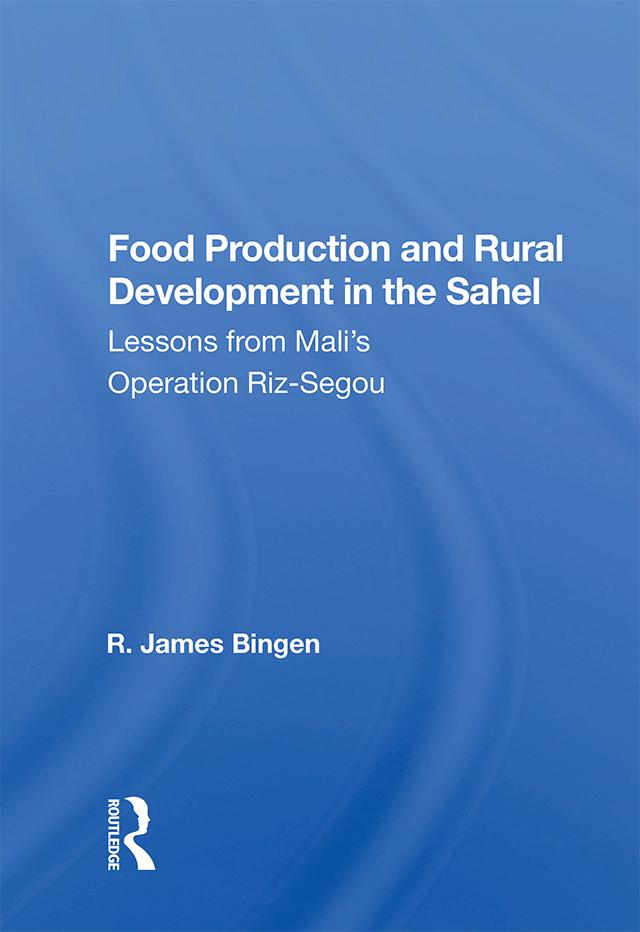
In Mali and throughout the Sahel, governments increasingly rely on parastatal organizations to overcome the problems of lagging food production and rural poverty. This book examines the political and economic consequences of the efforts of one organization, Operation Riz-Segou in Mali, to increase smallholder food and cash crop production. Drawing extensively on fieldwork in Mali, the author finds that significant investments in irrigation facilities, financed by foreign aid, have not reduced the smallholder's vulnerability to the risks posed by weather and uncertain flood levels of the Niger River. The extension system discourages smallholder investment for long-term agricultural development because of its preoccupation with supervision and administrative control. Moreover, the Operation engages in many popular rural development activities—literacy programs, farmer training, women's artisanal centers—that give the facade of grassroots participation but in reality do not provide villagers a critically needed voice in local program administration. Comparing Operation Riz-Segou to similar parastatal agricultural development programs in the Sahel, Dr. Bingen discusses why only those policies deliberately designed and carefully implemented to share power with the majority of the people can lay the political and economic foundation required to overcome rural poverty and resolve the food crisis in the Sahel.
Betaal eenvoudig met kaart, Klarna, Apple Pay of Google Pay. Niet tevreden? Je hebt altijd 14 dagen bedenktijd. Lees meer in onze voorwaarden. Heb je vragen, mail ons dan via hello@memmo.org.
Memmo maakt studeren makkelijker – waar je ook bent ter wereld. Wij brengen je cursusboeken en slimme studietools samen op één plek: samenvattingen, quizzen, podcasts en flashcards. En Ted, je studievriend die antwoord geeft op alles wat je je afvraagt. Meer dan 50.000 studenten studeren hier al – gebouwd om je sneller te laten leren en minder stress te geven.
Misschien vind je dit ook leuk
Koop het boek0