
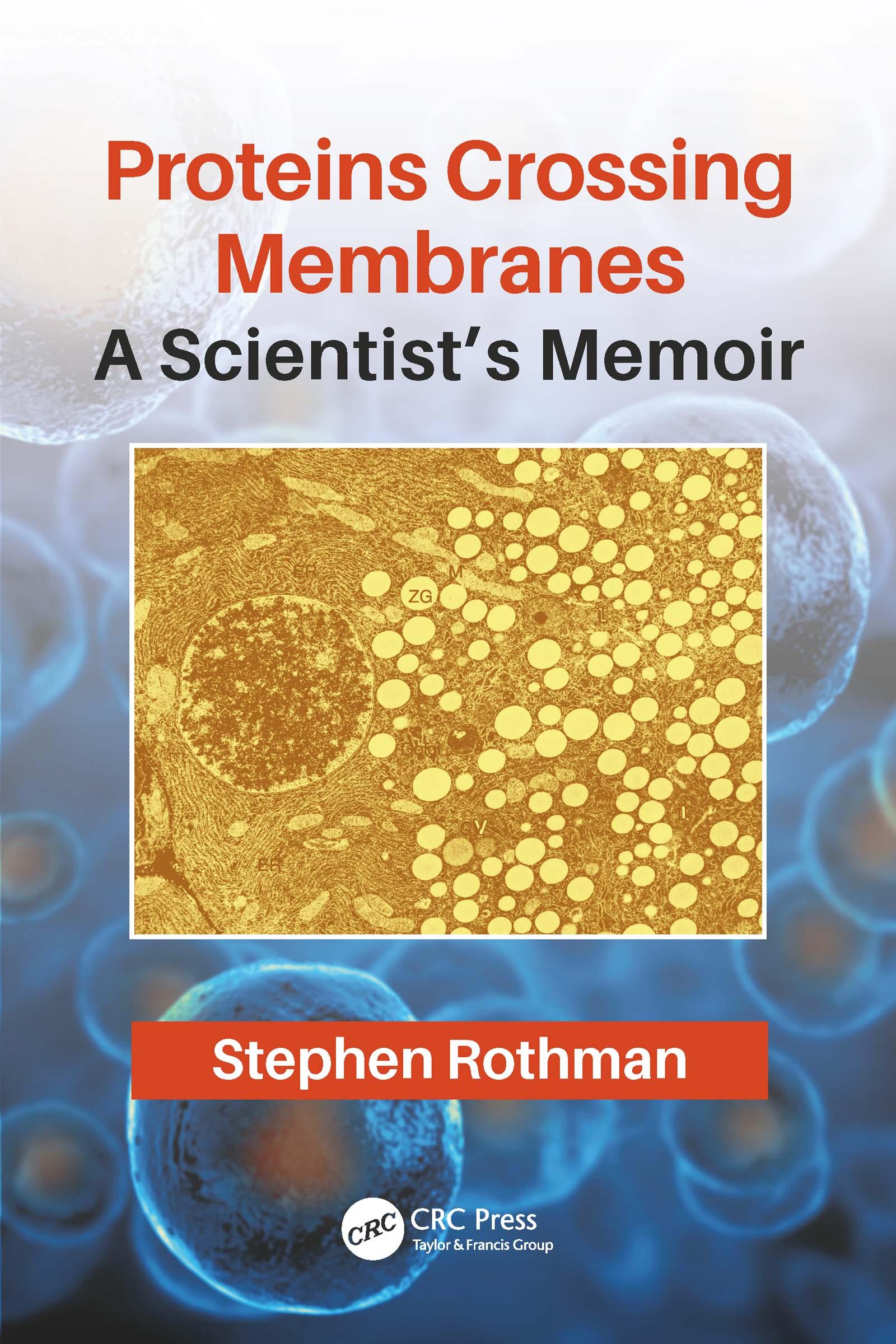
In an intriguing series of experiments carried out many years ago, a common scientific belief, feted by no less than three Nobel prizes, was brought into question. The observations were about proteins—the molecules that the genetic code specifies and that are in one way or another central to all of life’s activities. The experiments however were not about what proteins do, but how they are moved, in particular how they are moved from where they are made to where they act. The results of these studies conflicted with the standard view of how this happens, and thus became controversial.
The standard view, the vesicle theory of protein secretion, envisions proteins being carried within and out of cells en masse in membrane-bound sacs or vesicles. The controversial experiments demonstrated that to the contrary individual protein molecules cross the relevant membranes as a result of their own motion. This was thought to be impossible at the time. Proteins Crossing Membranes is a personal narrative that tells the story of the controversy. Among other things, the author illustrates that scientists, like the rest of us, can rigidly hold onto their beliefs despite evidence that they are misguided.
Key Features
- Reviews the data in support and critical of the vesicle theory of protein secretion
- Explores the ways scientists respond to evidence that challenges a favored theory
- Documents the author’s personal experiences in this conflict-laden situation
Betaal eenvoudig met kaart, Klarna, Apple Pay of Google Pay. Niet tevreden? Je hebt altijd 14 dagen bedenktijd. Lees meer in onze voorwaarden. Heb je vragen, mail ons dan via hello@memmo.org.
Memmo maakt studeren makkelijker – waar je ook bent ter wereld. Wij brengen je cursusboeken en slimme studietools samen op één plek: samenvattingen, quizzen, podcasts en flashcards. En Ted, je studievriend die antwoord geeft op alles wat je je afvraagt. Meer dan 50.000 studenten studeren hier al – gebouwd om je sneller te laten leren en minder stress te geven.