
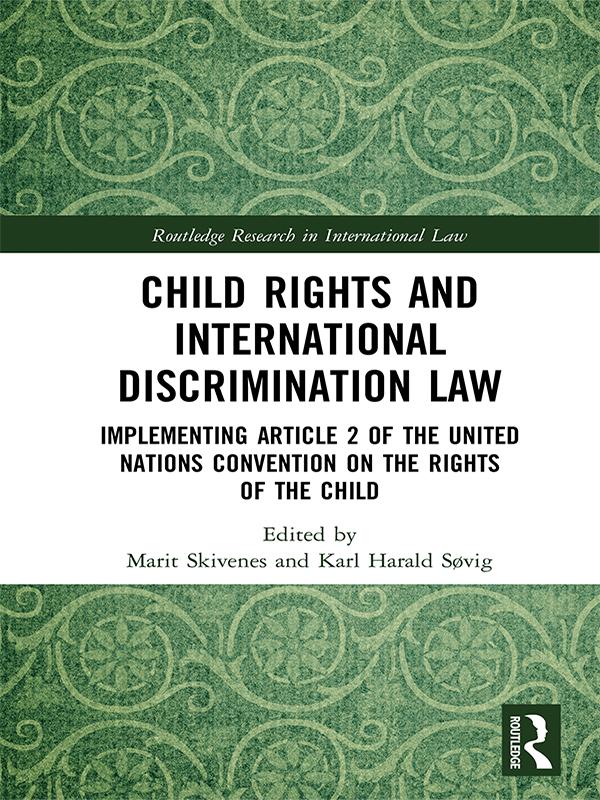
Societies and states are at a crossroad in how children are treated and how their rights are respected and protected. Children´s new position and their strong rights create tensions and challenge the traditional relationships between family and the state. The United Nations Convention on the Rights of the Child was adopted unanimously by the General Assembly of the United Nations in 1989 and came into force in 1990. Article 2 places states under an obligation to accord primacy to the best interests of the child in all actions concerning children and to ensure and regulate child protection.
This book offers a comparative and critical analysis of the implementation of Article 2 of the United Nations Convention on the Rights of the Child. In order to examine how Article 2 is being implemented, it is essential to have a sound understanding of the obligations it emposes. The opening chapters will explore the precise content of these obligations in terms of the legislative history of the text, its underlying philosophy, its amplification by the United Nations Committee on the Rights of the Child, and subsequent authoritative interpretations of it by courts around the world. The book will then drill down into the conceptual and theoretical challenges posed by the very nature of the obligations and will offer in-depth exploration of the long-running ‘rights v welfare’ debate that has always presented something of a challenge in giving effect to children’s rights. Contributors are leading academics in the children’s rights field drawn from a wide range of countries and jurisdictions worldwide, including those with common law, civilian and mixed traditions. Disciplines represented in the book include law, psychology, political science, childhood studies, social work and anthropology.
By drawing together the various facets of Article 2 and analysing it from a range of perspectives, the volume provides a coherent and comprehensive inter-disciplinary analysis on discrimination and the rights of the child.
Betaal eenvoudig met kaart, Klarna, Apple Pay of Google Pay. Niet tevreden? Je hebt altijd 14 dagen bedenktijd. Lees meer in onze voorwaarden. Heb je vragen, mail ons dan via hello@memmo.org.
Memmo maakt studeren makkelijker – waar je ook bent ter wereld. Wij brengen je cursusboeken en slimme studietools samen op één plek: samenvattingen, quizzen, podcasts en flashcards. En Ted, je studievriend die antwoord geeft op alles wat je je afvraagt. Meer dan 50.000 studenten studeren hier al – gebouwd om je sneller te laten leren en minder stress te geven.