
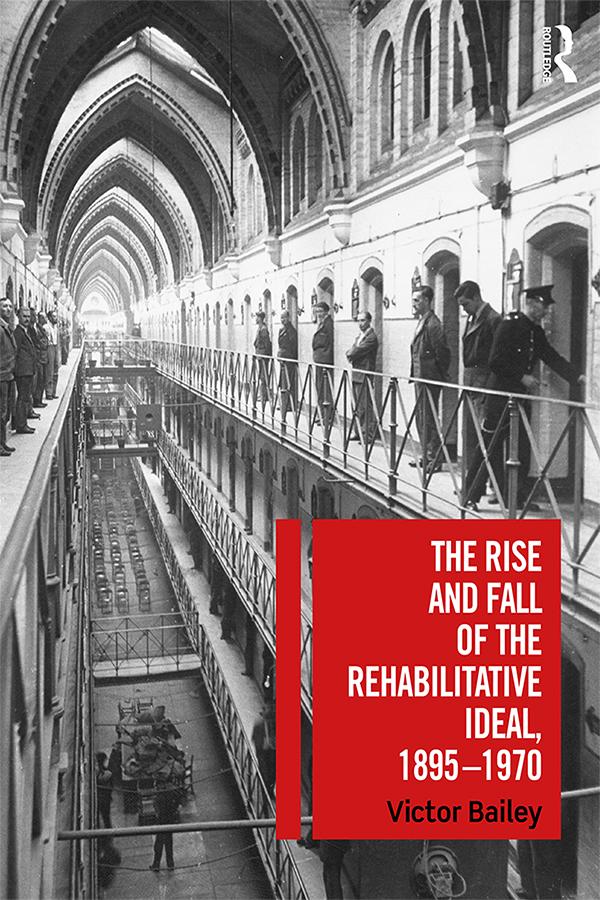
Spanning almost a century of penal policy and practice in England and Wales, this book is a study of the long arc of the rehabilitative ideal, beginning in 1895, the year of the Gladstone Committee on Prisons, and ending in 1970, when the policy of treating and training criminals was very much on the defensive.
Drawing on a plethora of source material, such as the official papers of mandarins, ministers, and magistrates, measures of public opinion, prisoner memoirs, publications of penal reform groups and prison officers, the reports of Royal Commissions and Departmental Committees, political opinion in both Houses of Parliament and the research of the first cadre of criminologists, this book comprehensively examines a number of aspects of the British penal system, including judicial sentencing, law-making, and the administration of legal penalties. In doing so, Victor Bailey expertly weaves a complex and nuanced picture of punishment in twentieth-century England and Wales, one that incorporates the enduring influence of the death penalty, and will force historians to revise their interpretation of twentieth-century social and penal policy.
This detailed and ground-breaking account of the rise and fall of the rehabilitative ideal will be essential reading for scholars and students of the history of crime and justice and historical criminology, as well as those interested in social and legal history.
Betaal eenvoudig met kaart, Klarna, Apple Pay of Google Pay. Niet tevreden? Je hebt altijd 14 dagen bedenktijd. Lees meer in onze voorwaarden. Heb je vragen, mail ons dan via hello@memmo.org.
Memmo maakt studeren makkelijker – waar je ook bent ter wereld. Wij brengen je cursusboeken en slimme studietools samen op één plek: samenvattingen, quizzen, podcasts en flashcards. En Ted, je studievriend die antwoord geeft op alles wat je je afvraagt. Meer dan 50.000 studenten studeren hier al – gebouwd om je sneller te laten leren en minder stress te geven.