
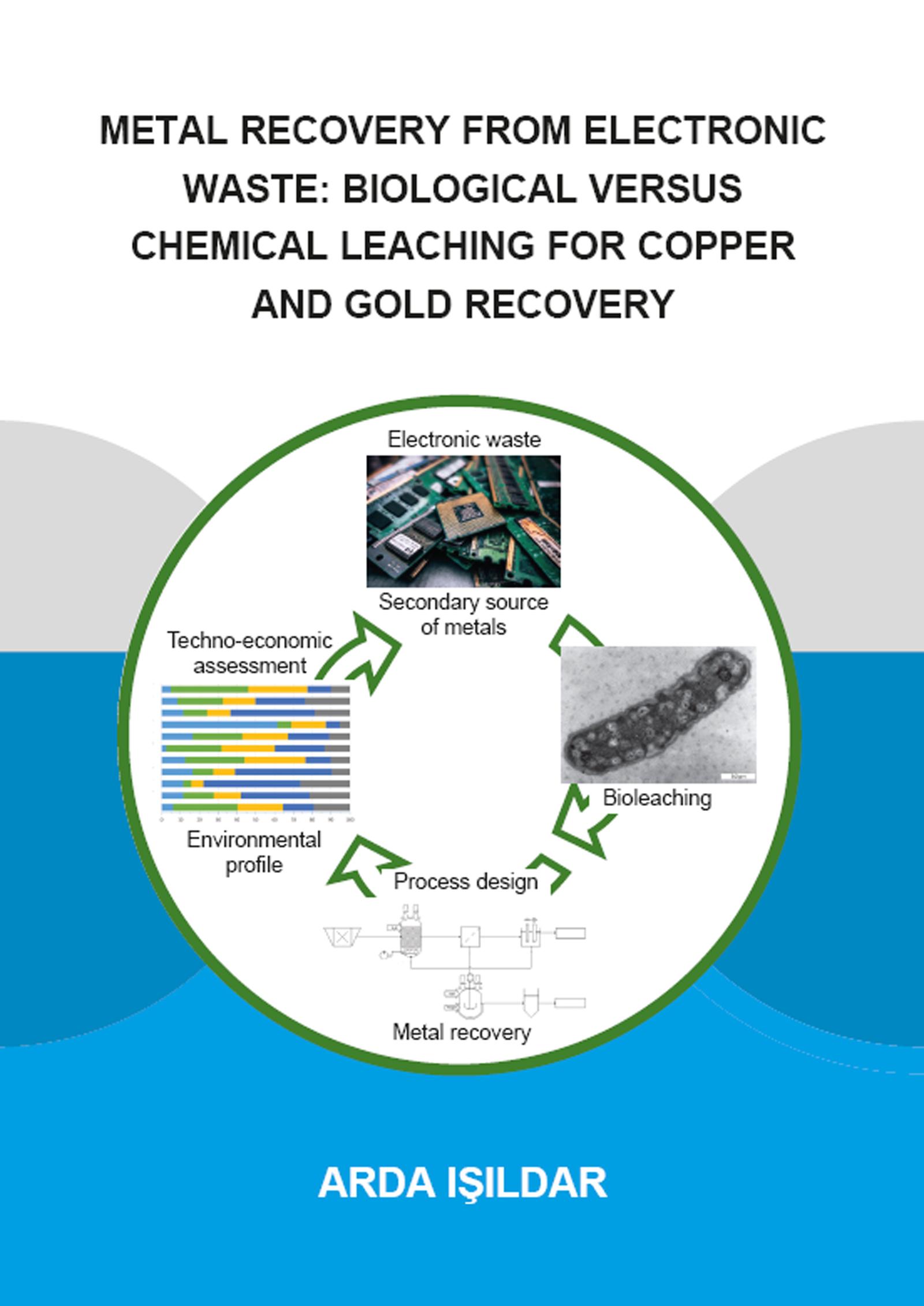
Waste electrical and electronic equipment (WEEE) generation is a global problem. Despite the growing awareness and deterring legislation, most of the WEEE is disposed improperly, i.e. landfilled or otherwise shipped overseas, and treated in sub-standard conditions. Informal recycling of WEEE has catastrophic effects on humans and the environment. WEEE contains considerable quantities of valuable metals such as base metals, precious metals and rare earth elements (REE). Metal recovery from WEEE is conventionally carried out by pyrometallurgical and hydrometallurgical methods.
In this PhD research, novel metal recovery technologies from WEEE are investigated. Using acidophilic and cyanide-generating bacteria, copper and gold were removed from crushed electronic waste with removal efficiencies of 98.4 and 44.0%, respectively. The leached metals in solution were recovered using sulfidic precipitation and electrowinning separation techniques. Finally, a techno-economic assessment of the technology was studied. This research addresses the knowledge gap on two metal extraction approaches, namely chemical and biological, from a secondary source of metals. The essential parameters of the selective metal recovery processes, scale-up potential, techno-economic and sustainability assessment have been studied.
Betaal eenvoudig met kaart, Klarna, Apple Pay of Google Pay. Niet tevreden? Je hebt altijd 14 dagen bedenktijd. Lees meer in onze voorwaarden. Heb je vragen, mail ons dan via hello@memmo.org.
Memmo maakt studeren makkelijker – waar je ook bent ter wereld. Wij brengen je cursusboeken en slimme studietools samen op één plek: samenvattingen, quizzen, podcasts en flashcards. En Ted, je studievriend die antwoord geeft op alles wat je je afvraagt. Meer dan 50.000 studenten studeren hier al – gebouwd om je sneller te laten leren en minder stress te geven.