
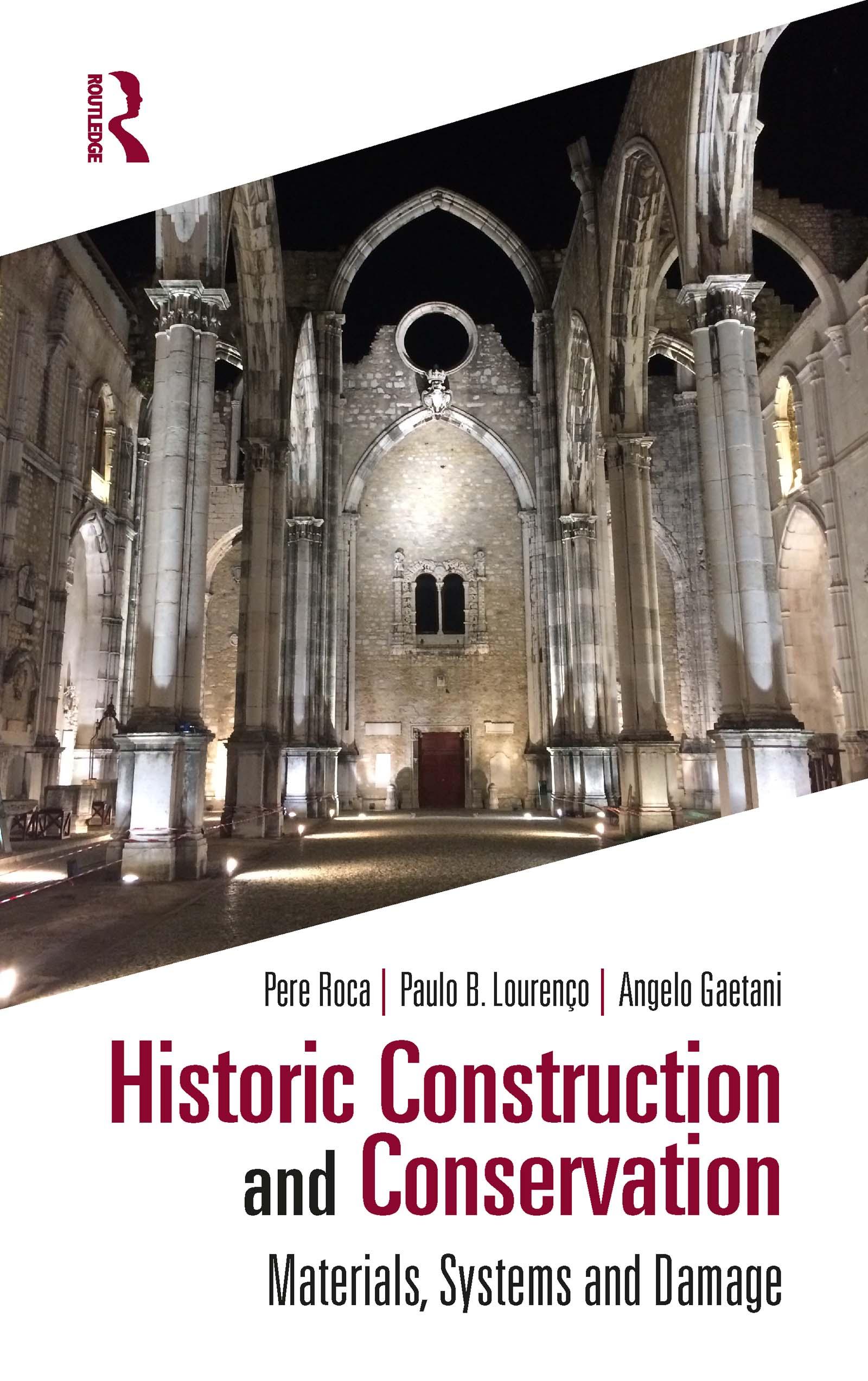
Conservation in the built environment raises fundamental questions which have been debated for centuries - what is worth preserving, how is it possible, why is it important?
This book takes a modern approach to the meaning of a heritage structure and its conservation. The historical evolution of conservation is briefly addressed, considering prominent individuals and cases; along with the history of construction, focusing on materials and related structural elements, with insight on the sizing rules adopted by masons. This explains structural decisions made during the construction process and allows comparison of scientific theories from the 18th century to modern understanding of limit analysis. Damage and collapse mechanisms for masonry construction, as the most widespread structural form for historical buildings, is described. Excess permanent loading and settlement is differentiated from environmental and anthropogenic actions such as earthquake or incorrect intervention.
The team of authors brings together unique expertise, with high level research and leading practice with archetypical cases from around the world. The book addresses the history of conservation by exploring materials and structures and the history of construction and damage, so it is of value to students and professionals in civil engineering and architecture, as well as archaeologists and art historians.
Betaal eenvoudig met kaart, Klarna, Apple Pay of Google Pay. Niet tevreden? Je hebt altijd 14 dagen bedenktijd. Lees meer in onze voorwaarden. Heb je vragen, mail ons dan via hello@memmo.org.
Memmo maakt studeren makkelijker – waar je ook bent ter wereld. Wij brengen je cursusboeken en slimme studietools samen op één plek: samenvattingen, quizzen, podcasts en flashcards. En Ted, je studievriend die antwoord geeft op alles wat je je afvraagt. Meer dan 50.000 studenten studeren hier al – gebouwd om je sneller te laten leren en minder stress te geven.