
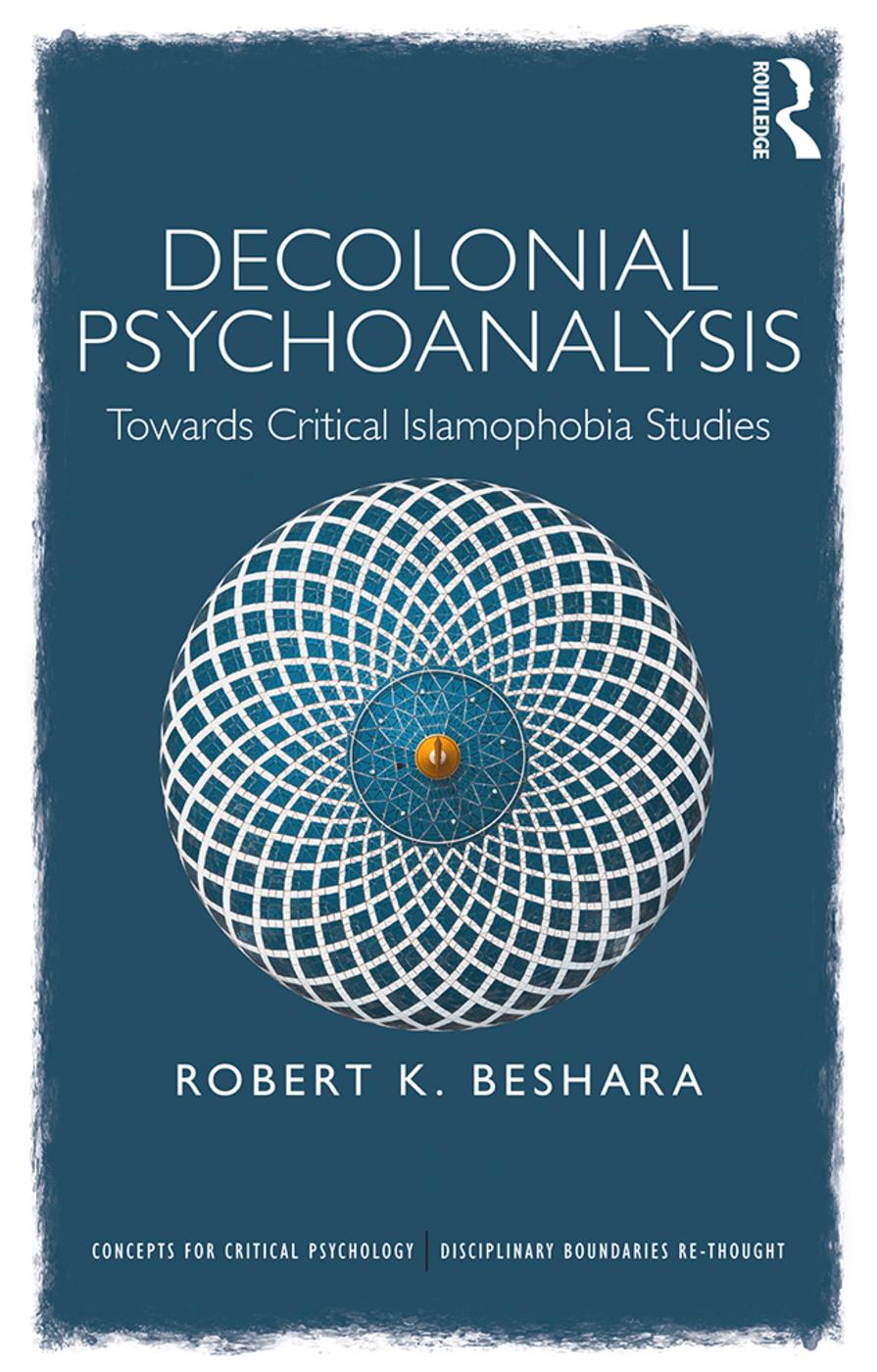
In this provocative and necessary book, Robert K. Beshara uses psychoanalytic discursive analysis to explore the possibility of a genuinely anti-colonial critical psychology. Drawing on postcolonial and decolonial approaches to Islamophobia, this book enhances understandings of Critical Border Thinking and Lacanian Discourse Analysis, alongside other theoretico-methodological approaches.
Using a critical decolonial psychology approach to conceptualize everyday Islamophobia, the author examines theoretical resources situated within the discursive turn, such as decoloniality/transmodernity, and carries out an archeology of (counter)terrorism, a genealogy of the conceptual Muslim, and a Žižekian ideology critique. Conceiving of Decolonial Psychoanalysis as one theoretical resource for Critical Islamophobia Studies (CIS), the author also applies Lacanian Discourse Analysis to extracts from interviews conducted with US Muslims to theorize their ethico-political subjectivity and considers a politics of resistance, adversarial aesthetics, and ethics of liberation.
Essential to any attempt to come to terms with the legacy of racism in psychology, and the only critical psychological study on Islamophobia in the United States, this is a fascinating read for anyone interested in a critical approach to Islamophobia.
Betaal eenvoudig met kaart, Klarna, Apple Pay of Google Pay. Niet tevreden? Je hebt altijd 14 dagen bedenktijd. Lees meer in onze voorwaarden. Heb je vragen, mail ons dan via hello@memmo.org.
Memmo maakt studeren makkelijker – waar je ook bent ter wereld. Wij brengen je cursusboeken en slimme studietools samen op één plek: samenvattingen, quizzen, podcasts en flashcards. En Ted, je studievriend die antwoord geeft op alles wat je je afvraagt. Meer dan 50.000 studenten studeren hier al – gebouwd om je sneller te laten leren en minder stress te geven.