
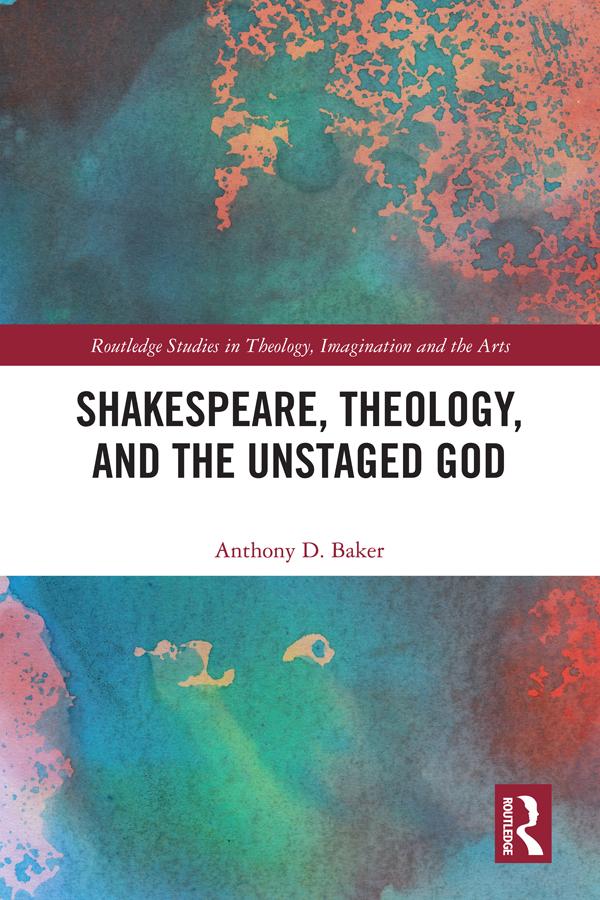
While many scholars in Shakespeare and Religious Studies assume a secularist viewpoint in their interpretation of Shakespeare’s works, there are others that allow for a theologically coherent reading. Located within the turn to religion in Shakespeare studies, this book goes beyond the claim that Shakespeare simply made artistic use of religious material in his drama. It argues that his plays inhabit a complex and rich theological atmosphere, individually, by genre and as a body of work.
The book begins by acknowledging that a plot-controlling God figure, or even a consistent theological dogma, is largely absent in the plays of Shakespeare. However, it argues that this absence is not necessarily a sign of secularization, but functions in a theologically generative manner. It goes on to suggest that the plays reveal a consistent, if variant, attention to the theological possibility of a divine "presence" mediated through human wit, both in gracious and malicious forms. Without any prejudice for divine intervention, the plots actually gesture on many turns toward a hidden supernatural "actor", or God.
Making bold claims about the artistic and theological of Shakespeare’s work, this book will be of interest to scholars of Theology and the Arts, Shakespeare and Literature more generally.
Betaal eenvoudig met kaart, Klarna, Apple Pay of Google Pay. Niet tevreden? Je hebt altijd 14 dagen bedenktijd. Lees meer in onze voorwaarden. Heb je vragen, mail ons dan via hello@memmo.org.
Memmo maakt studeren makkelijker – waar je ook bent ter wereld. Wij brengen je cursusboeken en slimme studietools samen op één plek: samenvattingen, quizzen, podcasts en flashcards. En Ted, je studievriend die antwoord geeft op alles wat je je afvraagt. Meer dan 50.000 studenten studeren hier al – gebouwd om je sneller te laten leren en minder stress te geven.