
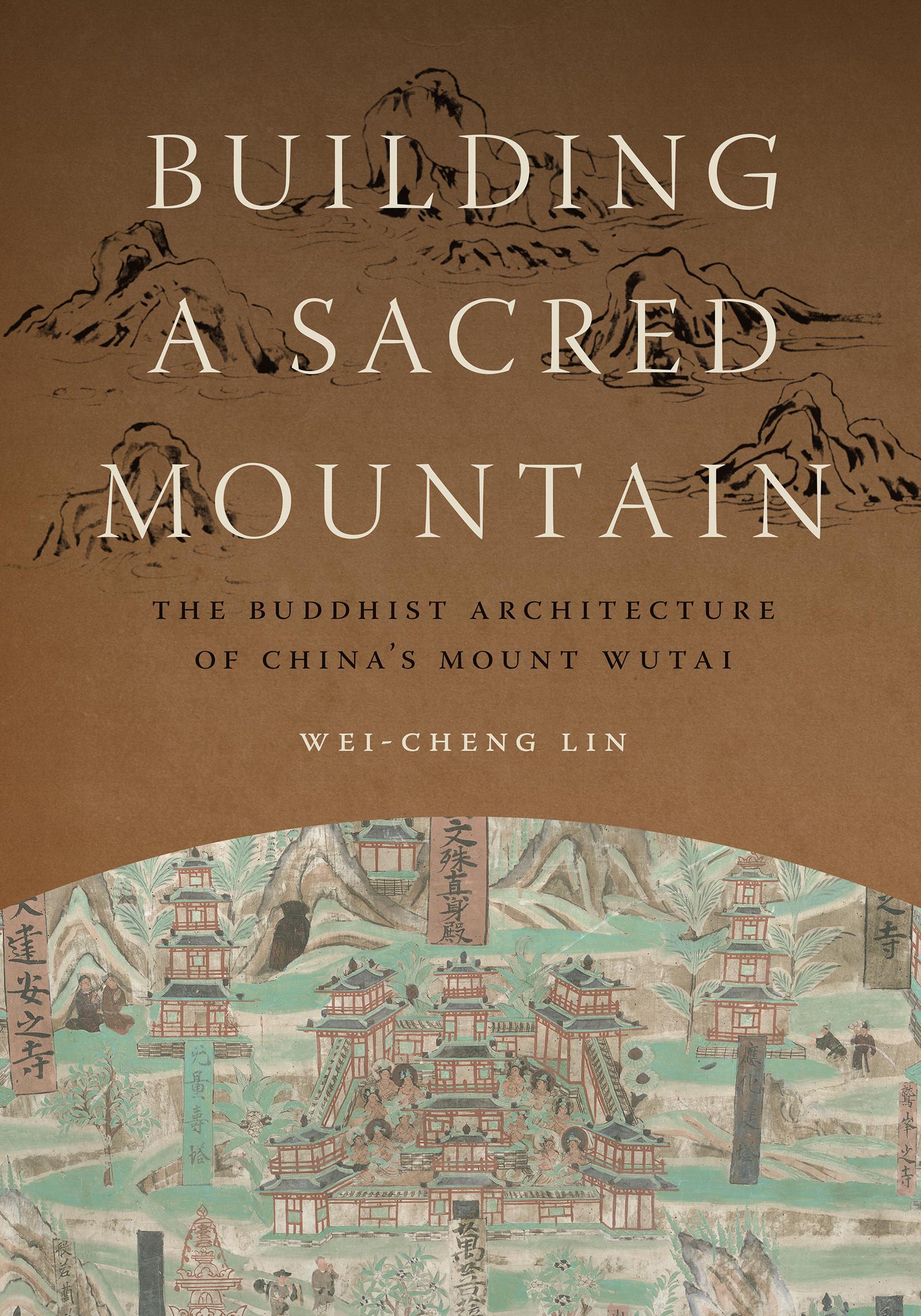
By the tenth century CE, Mount Wutai had become a major pilgrimage site within the emerging culture of a distinctively Chinese Buddhism. Famous as the abode of the bodhisattva Mañjuśrī (known for his habit of riding around the mountain on a lion), the site in northeastern China’s Shanxi Province was transformed from a wild area, long believed by Daoists to be sacred, into an elaborate complex of Buddhist monasteries.
In Building a Sacred Mountain, Wei-Cheng Lin traces the confluence of factors that produced this transformation and argues that monastic architecture, more than texts, icons, relics, or pilgrimages, was the key to Mount Wutai’s emergence as a sacred site. Departing from traditional architectural scholarship, Lin’s interdisciplinary approach goes beyond the analysis of forms and structures to show how the built environment can work in tandem with practices and discourses to provide a space for encountering the divine.
Art History Publication Initiative. For more information, visit http://arthistorypi.org/books/building-a-sacred-mountain
Betaal eenvoudig met kaart, Klarna, Apple Pay of Google Pay. Niet tevreden? Je hebt altijd 14 dagen bedenktijd. Lees meer in onze voorwaarden. Heb je vragen, mail ons dan via hello@memmo.org.
Memmo maakt studeren makkelijker – waar je ook bent ter wereld. Wij brengen je cursusboeken en slimme studietools samen op één plek: samenvattingen, quizzen, podcasts en flashcards. En Ted, je studievriend die antwoord geeft op alles wat je je afvraagt. Meer dan 50.000 studenten studeren hier al – gebouwd om je sneller te laten leren en minder stress te geven.