
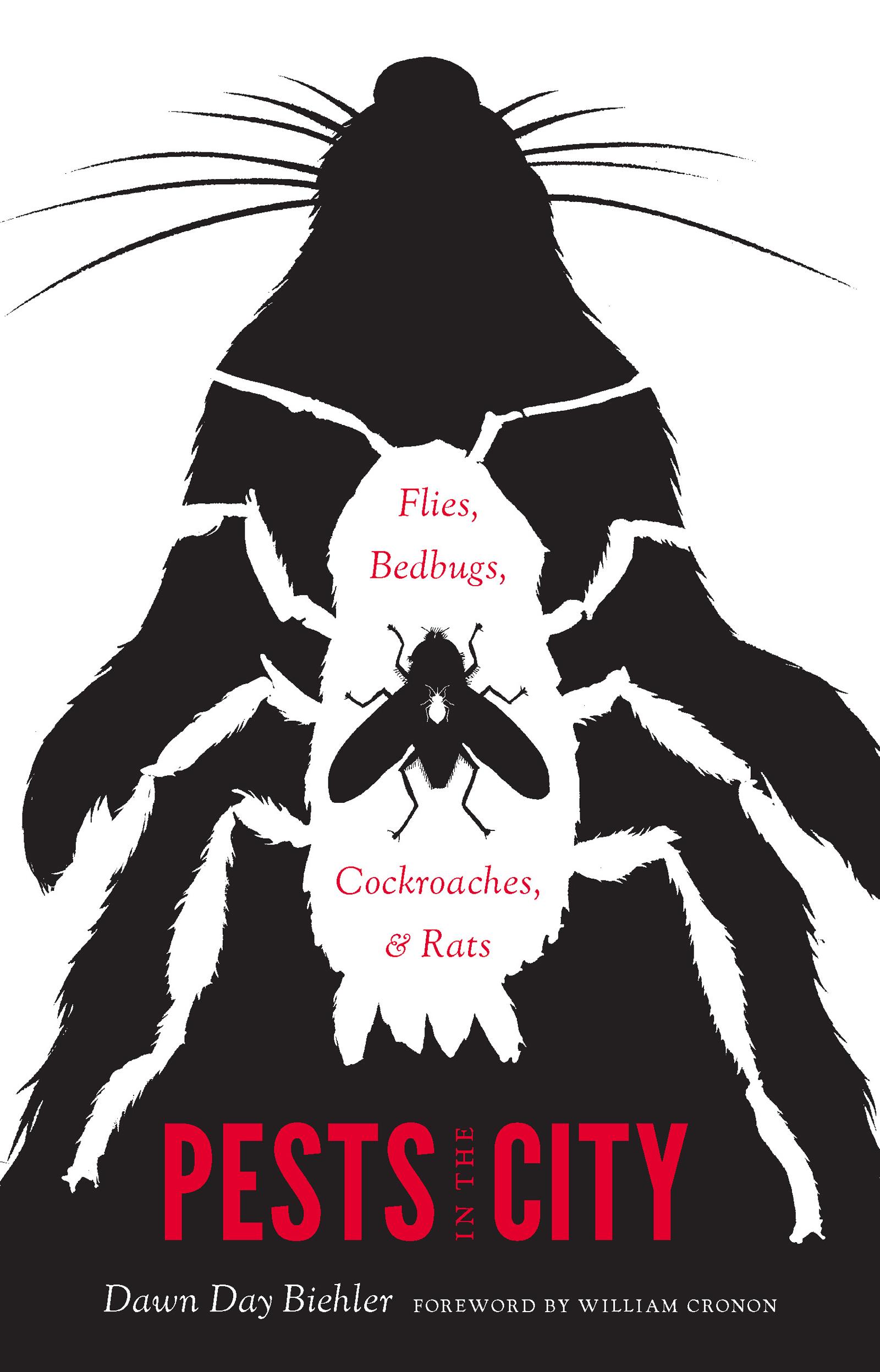
From tenements to alleyways to latrines, twentieth-century American cities created spaces where pests flourished and people struggled for healthy living conditions. In Pests in the City, Dawn Day Biehler argues that the urban ecologies that supported pests were shaped not only by the physical features of cities but also by social inequalities, housing policies, and ideas about domestic space.
Community activists and social reformers strived to control pests in cities such as Washington, DC, Chicago, Baltimore, New York, and Milwaukee, but such efforts fell short when authorities blamed families and neighborhood culture for infestations rather than attacking racial segregation or urban disinvestment. Pest-control campaigns tended to target public or private spaces, but pests and pesticides moved readily across the porous boundaries between homes and neighborhoods.
This story of flies, bedbugs, cockroaches, and rats reveals that such creatures thrived on lax code enforcement and the marginalization of the poor, immigrants, and people of color. As Biehler shows, urban pests have remained a persistent problem at the intersection of public health, politics, and environmental justice, even amid promises of modernity and sustainability in American cities.
Betaal eenvoudig met kaart, Klarna, Apple Pay of Google Pay. Niet tevreden? Je hebt altijd 14 dagen bedenktijd. Lees meer in onze voorwaarden. Heb je vragen, mail ons dan via hello@memmo.org.
Memmo maakt studeren makkelijker – waar je ook bent ter wereld. Wij brengen je cursusboeken en slimme studietools samen op één plek: samenvattingen, quizzen, podcasts en flashcards. En Ted, je studievriend die antwoord geeft op alles wat je je afvraagt. Meer dan 50.000 studenten studeren hier al – gebouwd om je sneller te laten leren en minder stress te geven.