
Winner of the 24th Annual Susanne M. Glasscock Humanities Book Prize
Finalist for the 2023 Cundill History Prize
Gold Medal Recipient, Nautilus Book Awards, Sustainability
The dirty work essential to a clean energy transition
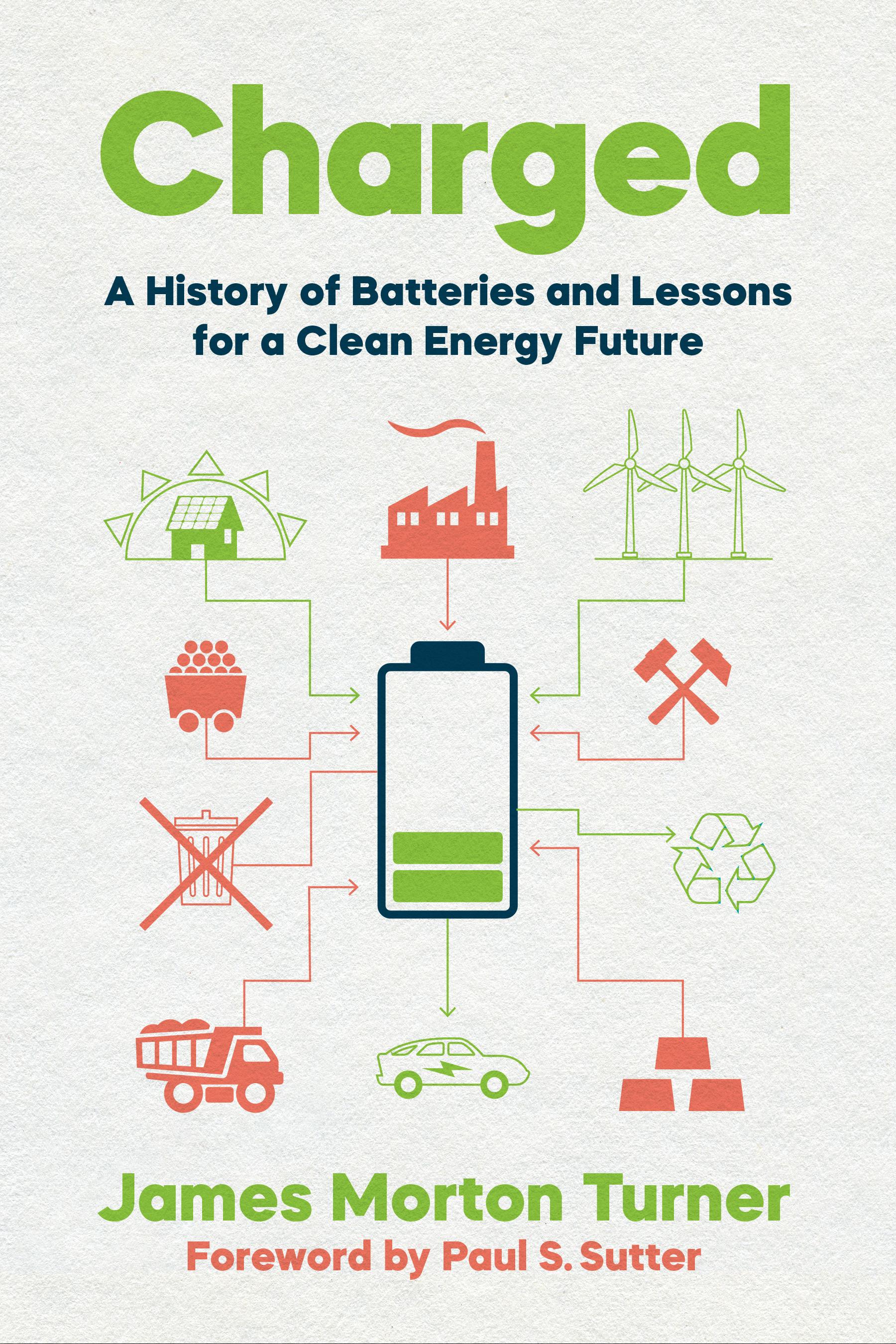
To achieve fossil fuel independence, few technologies are more important than batteries. Used for powering zero-emission vehicles, storing electricity from solar panels and wind turbines, and revitalizing the electric grid, batteries are essential to scaling up the renewable energy resources that help address global warming. But given the unique environmental impact of batteries—including mining, disposal, and more—does a clean energy transition risk trading one set of problems for another?
In Charged, James Morton Turner unpacks the history of batteries to explore why solving "the battery problem" is critical to a clean energy transition. As climate activists focus on what a clean energy future will create—sustainability, resiliency, and climate justice—the history of batteries offers a sharp reminder of what building that future will consume: lithium, graphite, nickel, and other specialized materials. With new insight on the consequences for people and communities on the front lines, Turner draws on the past for crucial lessons that will help us build a just and clean energy future, from the ground up.
Betaal eenvoudig met kaart, Klarna, Apple Pay of Google Pay. Niet tevreden? Je hebt altijd 14 dagen bedenktijd. Lees meer in onze voorwaarden. Heb je vragen, mail ons dan via hello@memmo.org.
Memmo maakt studeren makkelijker – waar je ook bent ter wereld. Wij brengen je cursusboeken en slimme studietools samen op één plek: samenvattingen, quizzen, podcasts en flashcards. En Ted, je studievriend die antwoord geeft op alles wat je je afvraagt. Meer dan 50.000 studenten studeren hier al – gebouwd om je sneller te laten leren en minder stress te geven.