
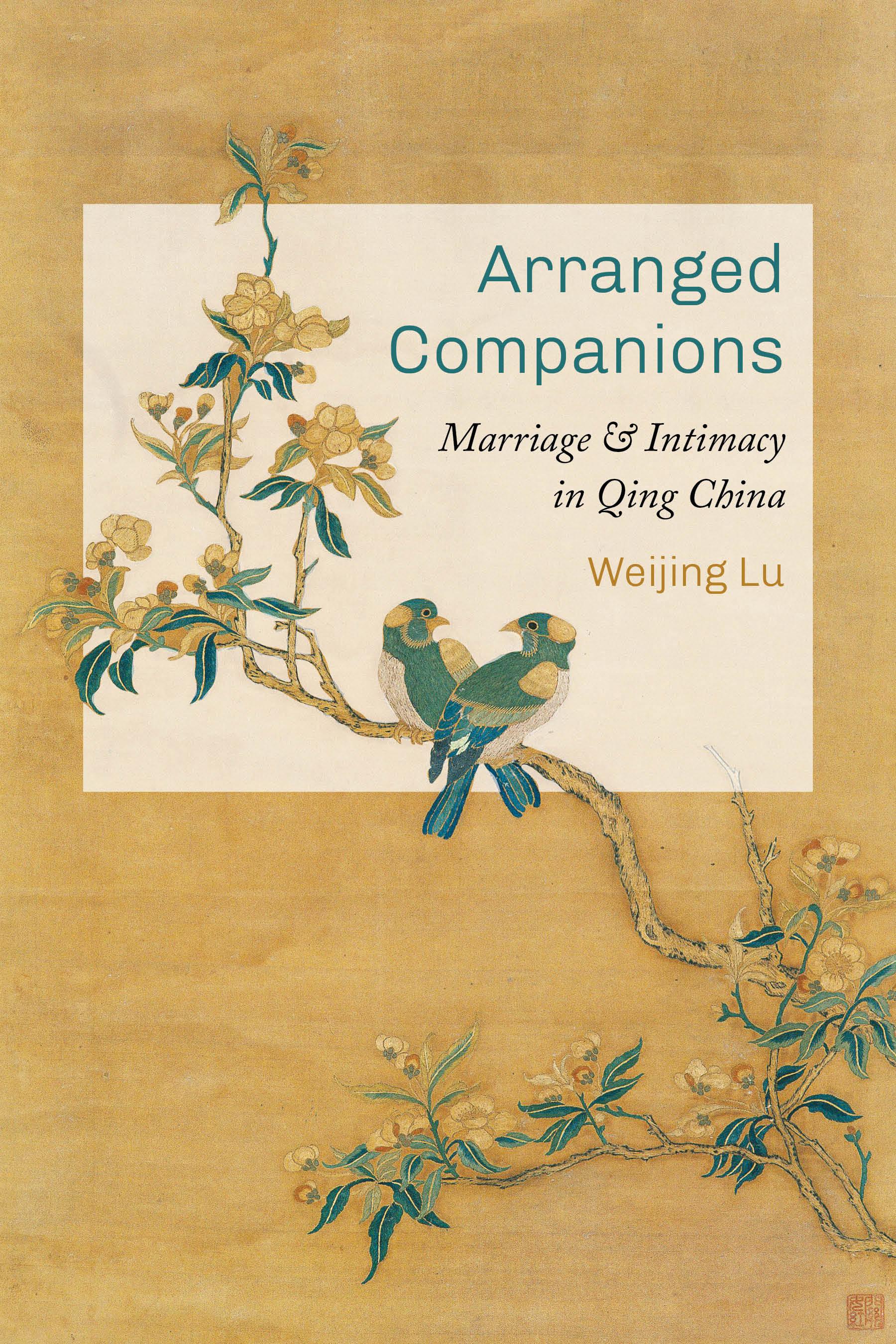
Questions conventional assumptions about premodern conjugal relationships
Although commonly associated with patriarchal oppression, arranged marriages have adapted over the centuries to changing cultural norms and the lived experiences of men and women. In Arranged Companions, historian Weijing Lu chronicles how marital behaviors during the early and High Qing (mid-seventeenth through mid-nineteenth centuries) were informed by rich and complex traditions and mediated by the historical conditions of the period, during which marital affection was celebrated as a basic ingredient of an ideal marriage.
Lu finds public representation and private communication of marital affection in personal records, including poetry, biographies, letters, and memoirs. During this unique historical moment, ideals of marital companionship and love came to fruition while social changes also created new tensions for couples and extended families. Offering surprising revelations about conjugal relations during this time of change, Arranged Companions raises provocative questions about the cultural construction of intimacy and the meaning of a “happy marriage.”
Betaal eenvoudig met kaart, Klarna, Apple Pay of Google Pay. Niet tevreden? Je hebt altijd 14 dagen bedenktijd. Lees meer in onze voorwaarden. Heb je vragen, mail ons dan via hello@memmo.org.
Memmo maakt studeren makkelijker – waar je ook bent ter wereld. Wij brengen je cursusboeken en slimme studietools samen op één plek: samenvattingen, quizzen, podcasts en flashcards. En Ted, je studievriend die antwoord geeft op alles wat je je afvraagt. Meer dan 50.000 studenten studeren hier al – gebouwd om je sneller te laten leren en minder stress te geven.