
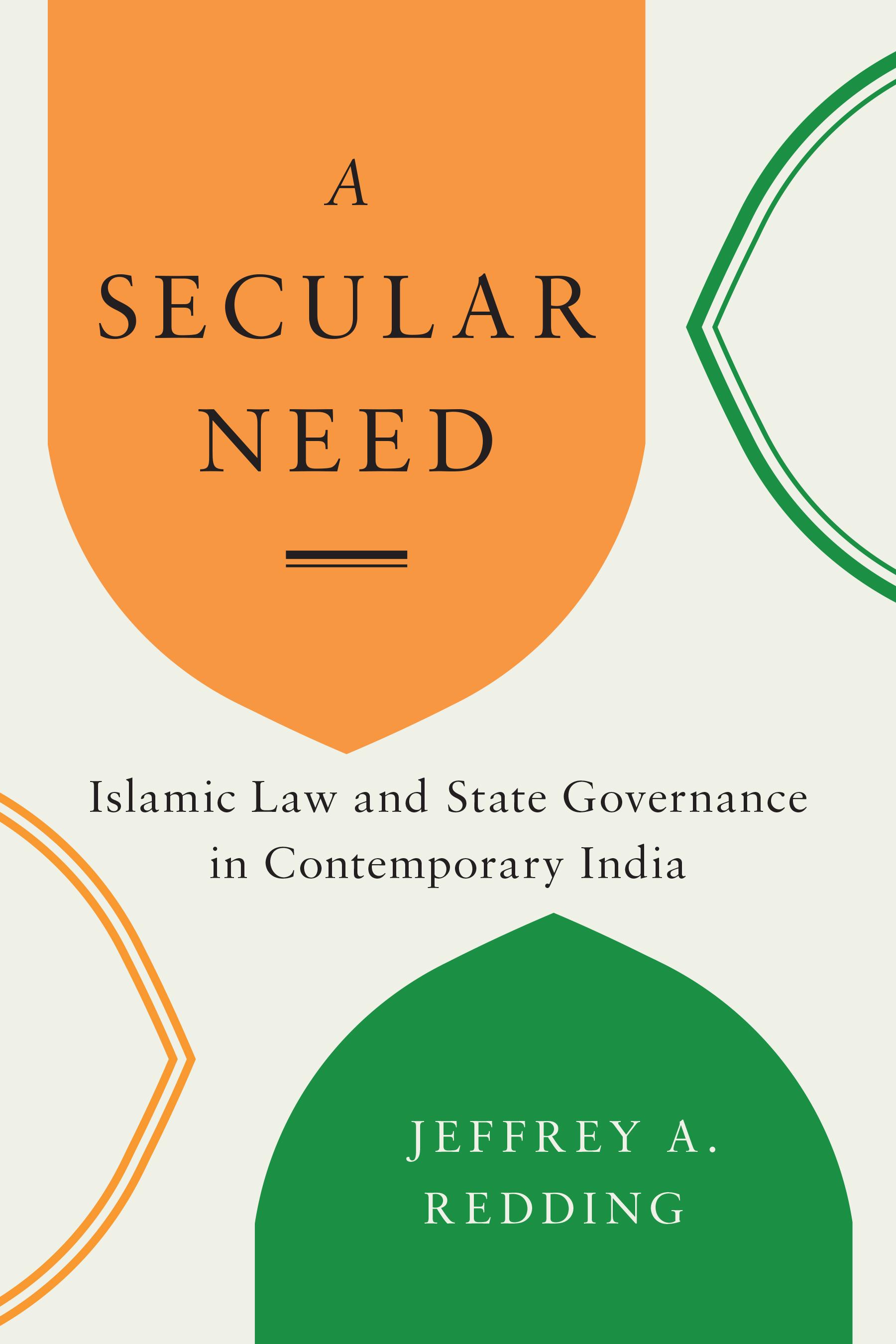
Whether from the perspective of Islamic law’s advocates, secularism’s partisans, or communities caught in their crossfire, many people see the relationship between Islamic law and secularism as antagonistic and increasingly discordant. In the United States there are calls for “sharia bans” in the courts, in western Europe legal limitations have been imposed on mosques and the wearing of headscarves, and in the Arab Middle East conflicts between secularist old guards and Islamist revolutionaries persist—suggesting that previously unsteady coexistences are transforming into outright hostilities.
Jeffrey Redding’s exploration of India’s non-state system of Muslim dispute resolution—known as the dar-ul-qaza system and commonly referred to as “Muslim courts” or “shariat courts”—challenges conventional narratives about the inevitable opposition between Islamic law and secular forms of governance, demonstrating that Indian secular law and governance cannot work without the significant assistance of non-state Islamic legal actors.
Betaal eenvoudig met kaart, Klarna, Apple Pay of Google Pay. Niet tevreden? Je hebt altijd 14 dagen bedenktijd. Lees meer in onze voorwaarden. Heb je vragen, mail ons dan via hello@memmo.org.
Memmo maakt studeren makkelijker – waar je ook bent ter wereld. Wij brengen je cursusboeken en slimme studietools samen op één plek: samenvattingen, quizzen, podcasts en flashcards. En Ted, je studievriend die antwoord geeft op alles wat je je afvraagt. Meer dan 50.000 studenten studeren hier al – gebouwd om je sneller te laten leren en minder stress te geven.