
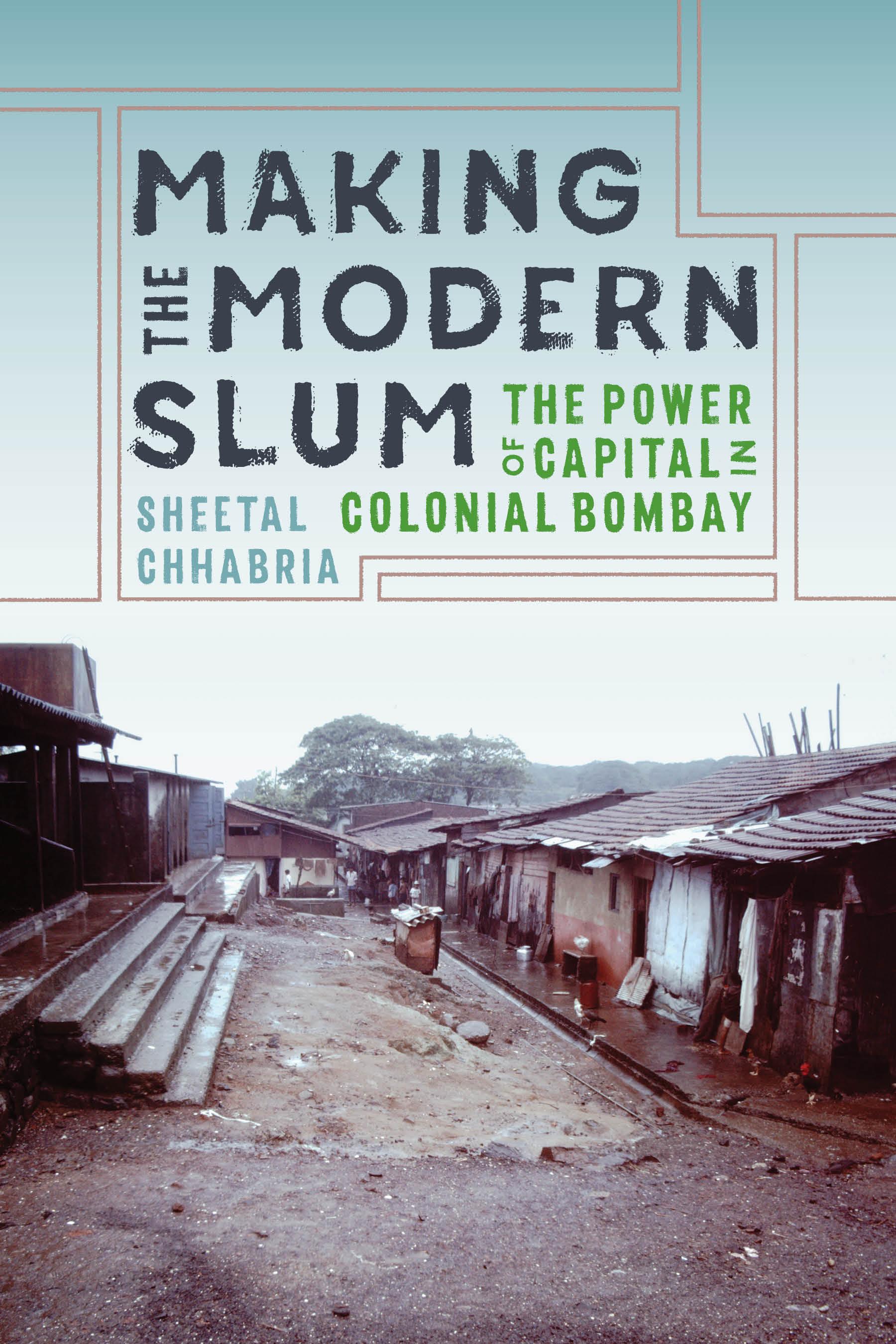
In the late nineteenth and early twentieth centuries, Bombay was beset by crises such as famine and plague. Yet, rather than halting the flow of capital, these crises served to secure it. In colonial Bombay, capitalists and governors, Indian and British alike, used moments of crisis to justify interventions that delimited the city as a distinct object and progressively excluded laborers and migrants from it. Town planners, financiers, and property developers joined forces to secure the city as a space for commerce and encoded shelter types as legitimate or illegitimate. By the early twentieth century, the slum emerged as a particularly useful category of stigmatization that would animate city-making projects in subsequent decades.
Sheetal Chhabria locates the origins of Bombay’s now infamous “slum problem” in the broader histories of colonialism and capitalism. She not only challenges assumptions about colonial urbanization and cities in the global south, but also provides a new analytical approach to urban history. Making the Modern Slum shows how the wellbeing of the city–rather than of its people–became an increasingly urgent goal of government, positioning agrarian distress, famished migrants, and the laboring poor as threats to be contained or excluded.
Betaal eenvoudig met kaart, Klarna, Apple Pay of Google Pay. Niet tevreden? Je hebt altijd 14 dagen bedenktijd. Lees meer in onze voorwaarden. Heb je vragen, mail ons dan via hello@memmo.org.
Memmo maakt studeren makkelijker – waar je ook bent ter wereld. Wij brengen je cursusboeken en slimme studietools samen op één plek: samenvattingen, quizzen, podcasts en flashcards. En Ted, je studievriend die antwoord geeft op alles wat je je afvraagt. Meer dan 50.000 studenten studeren hier al – gebouwd om je sneller te laten leren en minder stress te geven.