
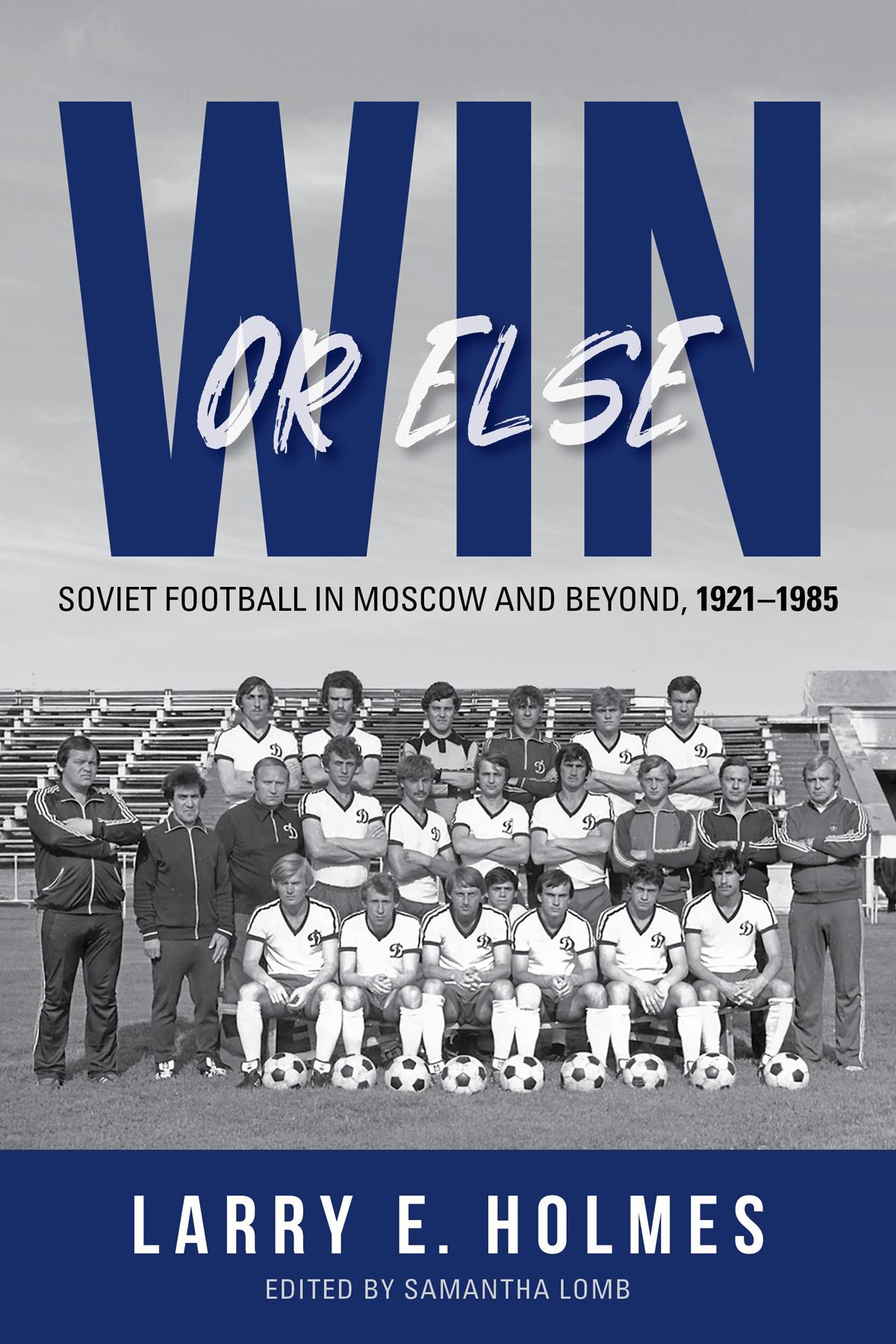
In Win or Else, Larry E. Holmes shows us how Soviet football culture regularly disregarded official ideological and political imperatives and skirted the boundaries between socialism and capitalism.
In the early 1920s, the Soviet press denounced football as a bourgeois sport that was injurious to both mind and body. Within that same decade, however, it blew up, becoming the most popular spectator sport in the USSR and growing into a fiercely competitive business with complex regional and national bureaucracies, a strong international presence, and a conviction that victory on the field was also a victory of Soviet supremacy. Writing as both historian and fan, Holmes focuses his study on the provincial Kirov team Dinamo from 1979 to 1985, when the club played at both its worst and its best. Spurred by a dismal 1979 season, the team's administrators and regional authorities had two options: obey Moscow's edict to reduce expenditures on professional sports or seek out new—and often illicit—funding sources to fill out a team of champions.
Drawing on rich archival materials as well as newspapers and interviews with former players, Win or Else reveals the foundations of Soviet sports culture—and the hazards that teams faced both in victory and in loss.
Betaal eenvoudig met kaart, Klarna, Apple Pay of Google Pay. Niet tevreden? Je hebt altijd 14 dagen bedenktijd. Lees meer in onze voorwaarden. Heb je vragen, mail ons dan via hello@memmo.org.
Memmo maakt studeren makkelijker – waar je ook bent ter wereld. Wij brengen je cursusboeken en slimme studietools samen op één plek: samenvattingen, quizzen, podcasts en flashcards. En Ted, je studievriend die antwoord geeft op alles wat je je afvraagt. Meer dan 50.000 studenten studeren hier al – gebouwd om je sneller te laten leren en minder stress te geven.