
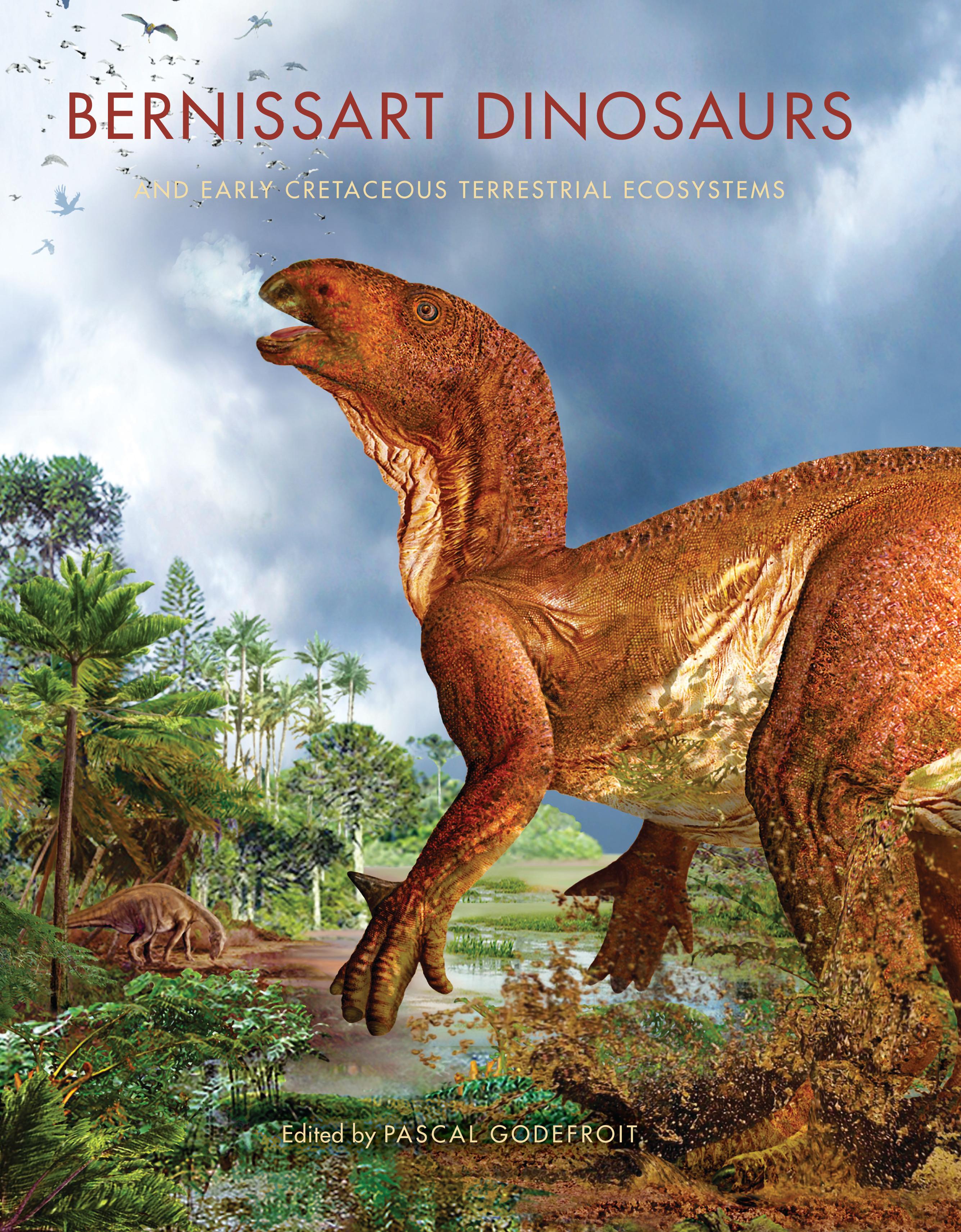
Bernissart Dinosaurs and Early Cretaceous Terrestrial Ecosystems
In 1878, the first complete dinosaur skeleton was discovered in a coal mine in Bernissart, Belgium. Iguanodon, first described by Gideon Mantell on the basis of fragments discovered in England in 1824, was initially reconstructed as an iguana-like reptile or a heavily built, horned quadruped. However, the Bernissart skeleton changed all that. The animal was displayed in an upright posture similar to a kangaroo, and later with its tail off the ground like the dinosaur we know of today. Focusing on the Bernissant discoveries, this book presents the latest research on Iguanodon and other denizens of the Cretaceous ecosystems of Europe, Asia, and Africa. Pascal Godefroit and contributors consider the Bernissart locality itself and the new research programs that are underway there. The book also presents a systematic revision of Iguanodon; new material from Spain, Romania, China, and Kazakhstan; studies of other Early Cretaceous terrestrial ecosystems; and examinations of Cretaceous vertebrate faunas.
Betaal eenvoudig met kaart, Klarna, Apple Pay of Google Pay. Niet tevreden? Je hebt altijd 14 dagen bedenktijd. Lees meer in onze voorwaarden. Heb je vragen, mail ons dan via hello@memmo.org.
Memmo maakt studeren makkelijker – waar je ook bent ter wereld. Wij brengen je cursusboeken en slimme studietools samen op één plek: samenvattingen, quizzen, podcasts en flashcards. En Ted, je studievriend die antwoord geeft op alles wat je je afvraagt. Meer dan 50.000 studenten studeren hier al – gebouwd om je sneller te laten leren en minder stress te geven.