
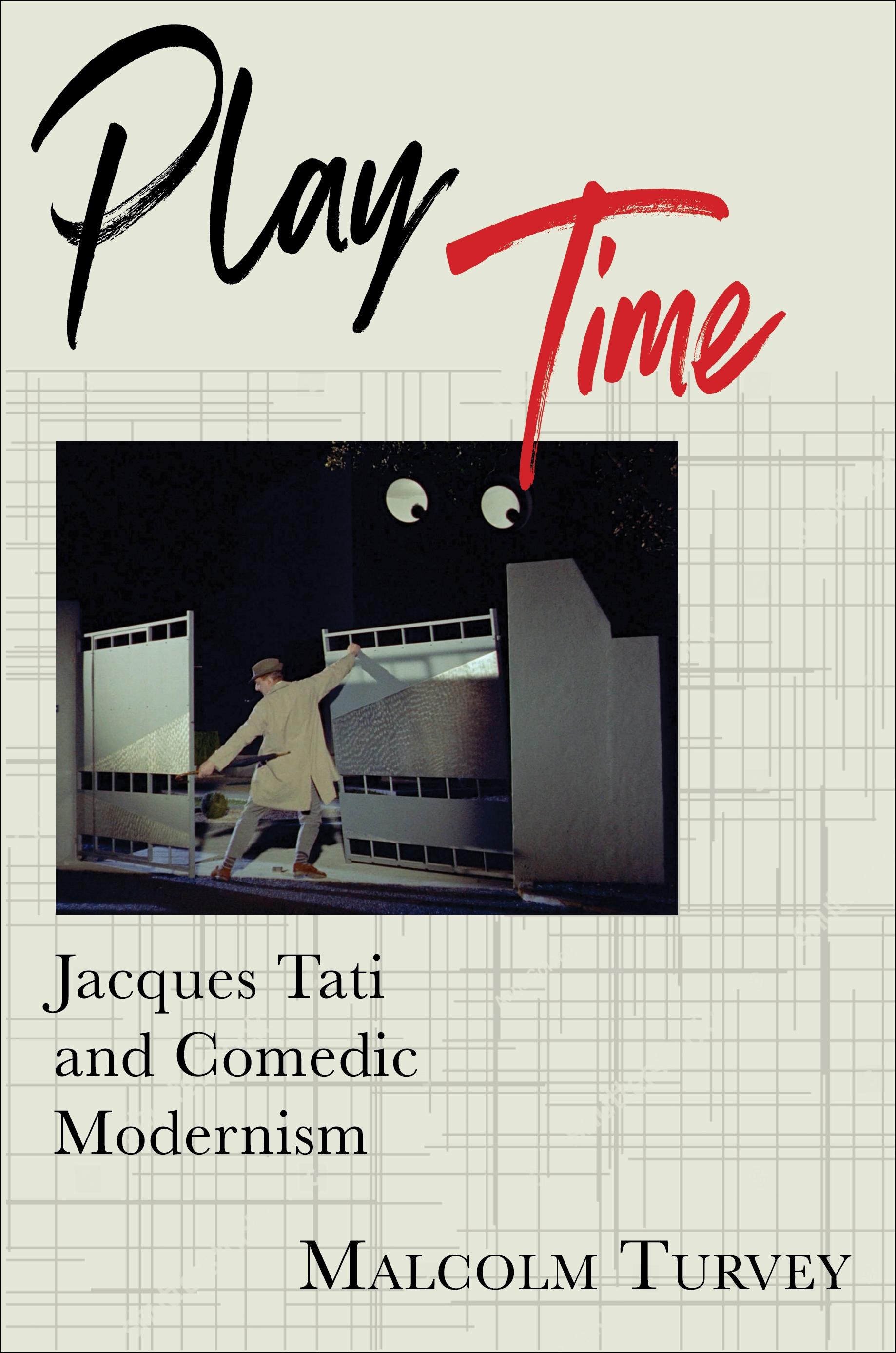
Jacques Tati is widely regarded as one of the greatest postwar European filmmakers. He made innovative and challenging comedies while achieving international box office success and attaining a devoted following. In Play Time, Malcolm Turvey examines Tati’s unique comedic style and evaluates its significance for the history of film and modernism.
Turvey argues that Tati captured elite and general audiences alike by combining a modernist aesthetic with slapstick routines, gag structures, and other established traditions of mainstream film comedy. Considering films such as Monsieur Hulot’s Holiday (1953), Mon Oncle (1958), Play Time (1967), and Trafic (1971), Turvey shows how Tati drew on the rich legacy of comic silent film while modernizing its conventions in order to encourage his viewers to adopt a playful attitude toward the modern world. Turvey also analyzes Tati’s sardonic view of the bourgeoisie and his complex and multifaceted satire of modern life. Tati's singular and enduring achievement, Turvey concludes, was to translate the democratic ideals of the postwar avant-garde into mainstream film comedy, crafting a genuinely popular modernism. Richly illustrated with images from the director’s films, Play Time offers an illuminating and original understanding of Tati’s work.
Betaal eenvoudig met kaart, Klarna, Apple Pay of Google Pay. Niet tevreden? Je hebt altijd 14 dagen bedenktijd. Lees meer in onze voorwaarden. Heb je vragen, mail ons dan via hello@memmo.org.
Memmo maakt studeren makkelijker – waar je ook bent ter wereld. Wij brengen je cursusboeken en slimme studietools samen op één plek: samenvattingen, quizzen, podcasts en flashcards. En Ted, je studievriend die antwoord geeft op alles wat je je afvraagt. Meer dan 50.000 studenten studeren hier al – gebouwd om je sneller te laten leren en minder stress te geven.