
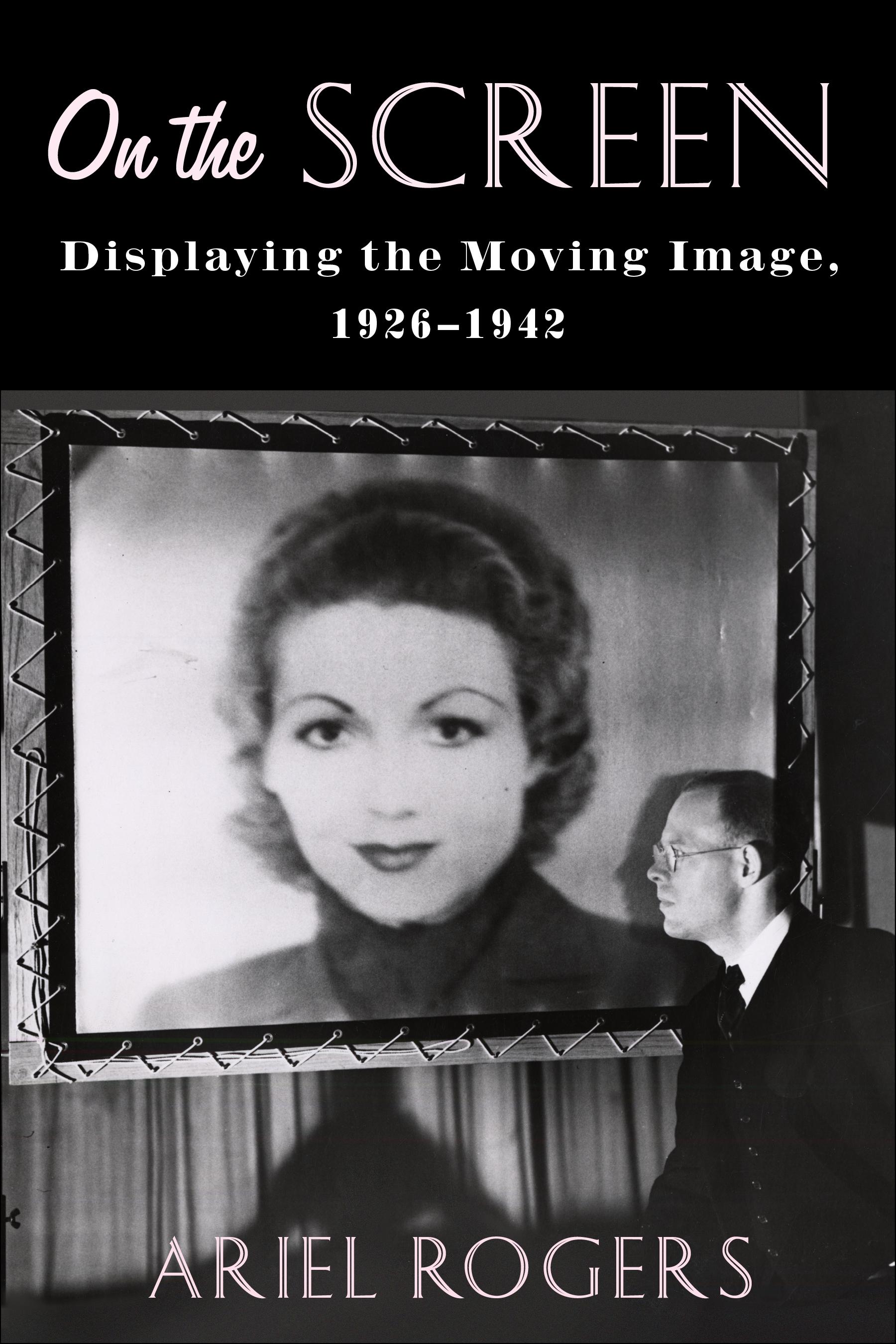
Today, in a world of smartphones, tablets, and computers, screens are a pervasive part of daily life. Yet a multiplicity of screens has been integral to the media landscape since cinema’s golden age. In On the Screen, Ariel Rogers rethinks the history of moving images by exploring how experiments with screen technologies in and around the 1930s changed the way films were produced, exhibited, and experienced.
Marshalling extensive archival research, Rogers reveals the role screens played at the height of the era of “classical” Hollywood cinema. She shows how filmmakers, technicians, architects, and exhibitors employed a variety of screens within diverse spaces, including studio soundstages, theaters, homes, stores, and train stations. Far from inert, screens served as means of structuring mediated space and time, contributing to the transformations of modern culture. On the Screen demonstrates how particular approaches to the use of screens traversed production and exhibition, theatrical and extratheatrical practice, mainstream and avant-garde modes, and even cinema and television. Rogers’s history challenges conventional narratives about the novelty of the twenty-first-century multiscreen environment, showing how attention to the variety of historical screen practices opens up new ways to understand contemporary media.
Betaal eenvoudig met kaart, Klarna, Apple Pay of Google Pay. Niet tevreden? Je hebt altijd 14 dagen bedenktijd. Lees meer in onze voorwaarden. Heb je vragen, mail ons dan via hello@memmo.org.
Memmo maakt studeren makkelijker – waar je ook bent ter wereld. Wij brengen je cursusboeken en slimme studietools samen op één plek: samenvattingen, quizzen, podcasts en flashcards. En Ted, je studievriend die antwoord geeft op alles wat je je afvraagt. Meer dan 50.000 studenten studeren hier al – gebouwd om je sneller te laten leren en minder stress te geven.