
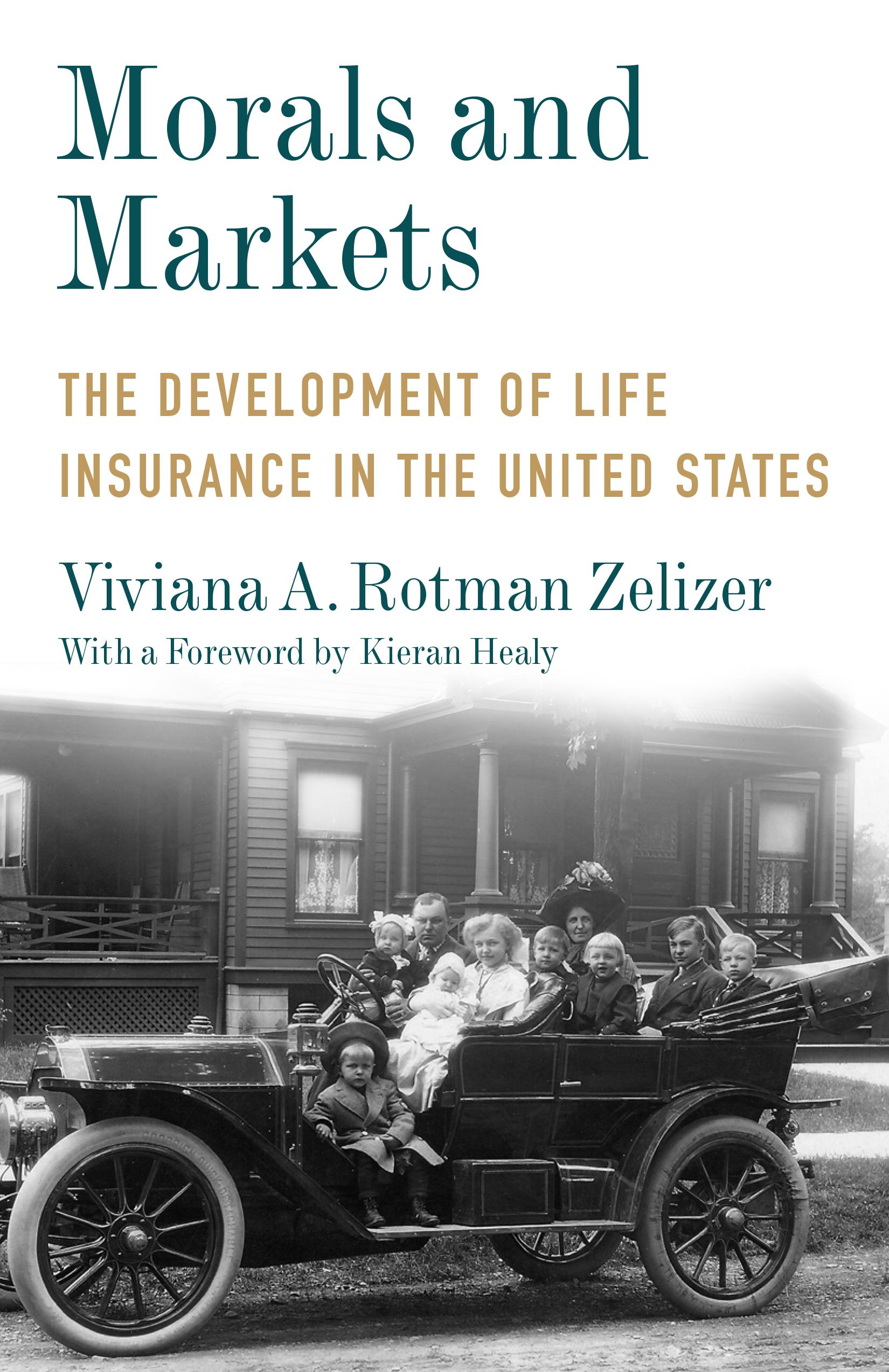
Life insurance—the promise of an insurer to pay a sum upon a person's death in exchange for a regular premium—is a bizarre enterprise. How can we monetize human life? Should we? What statistics do we use, what assumptions do we make, and what behavioral factors do we consider? First published in 1979, Morals and Markets Is a pathbreaking study exploring the development of life insurance in the United States. Viviana A. Rotman Zelizer combines economic history and a sociological perspective to advance a novel interpretation of the life insurance industry. The book pioneered a cultural approach to the analysis of morally controversial markets.
Zelizer begins in the mid-nineteenth century with the rise of the life insurance industry, a contentious chapter in the history of American business. Life insurance was stigmatized at first, denounced in newspapers and condemned by religious leaders as an immoral and sacrilegious gamble on human life. Over time, the business became a widely praised arrangement to secure a family's future. How did life insurance overcome cultural barriers? As Zelizer shows, the evolution of the industry in the United States matched evolving attitudes toward death, money, family relations, property, and personal legacy.
Betaal eenvoudig met kaart, Klarna, Apple Pay of Google Pay. Niet tevreden? Je hebt altijd 14 dagen bedenktijd. Lees meer in onze voorwaarden. Heb je vragen, mail ons dan via hello@memmo.org.
Memmo maakt studeren makkelijker – waar je ook bent ter wereld. Wij brengen je cursusboeken en slimme studietools samen op één plek: samenvattingen, quizzen, podcasts en flashcards. En Ted, je studievriend die antwoord geeft op alles wat je je afvraagt. Meer dan 50.000 studenten studeren hier al – gebouwd om je sneller te laten leren en minder stress te geven.