
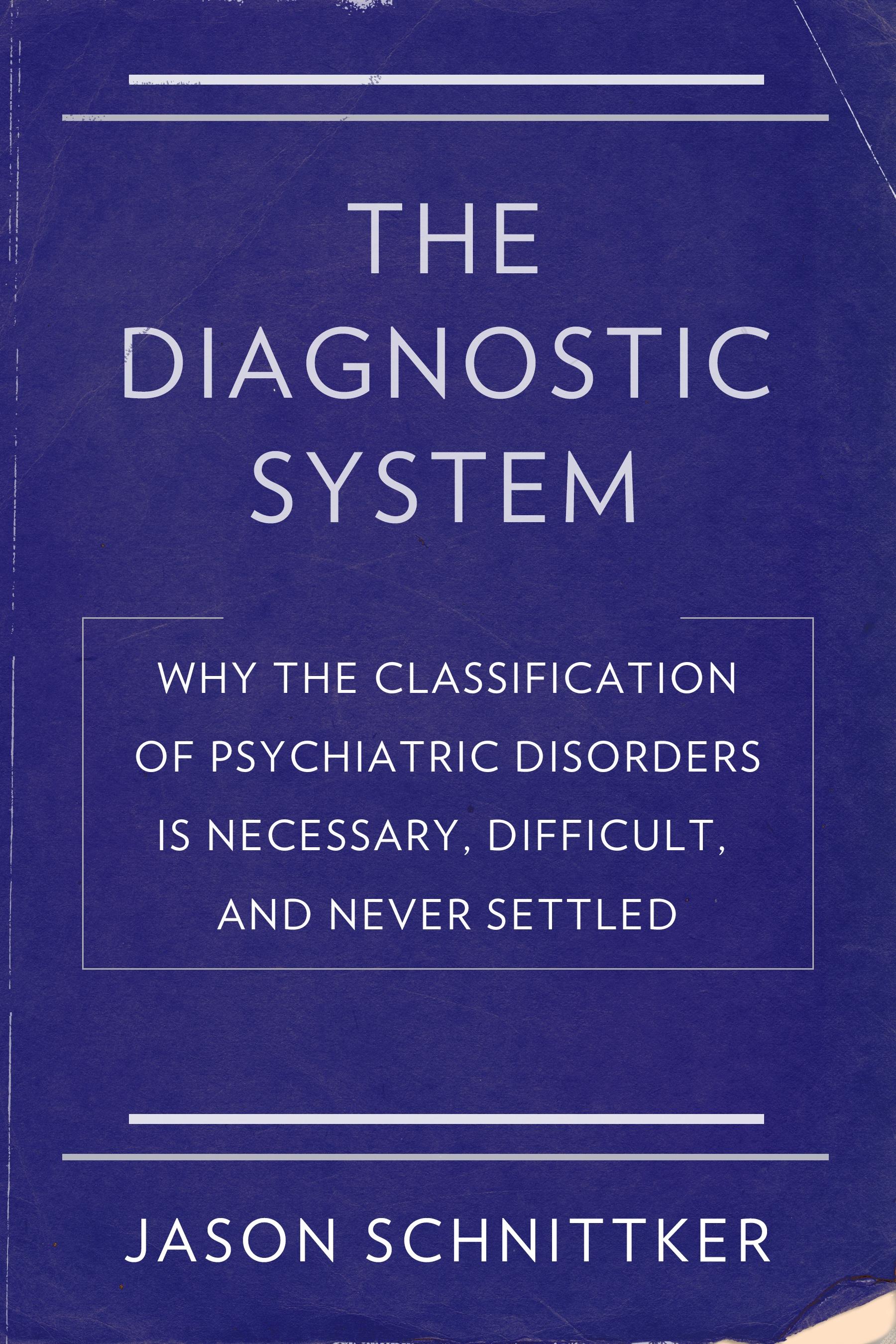
Mental illness is many things at once: It is a natural phenomenon that is also shaped by society and culture. It is biological but also behavioral and social. Mental illness is a problem of both the brain and the mind, and this ambiguity presents a challenge for those who seek to accurately classify psychiatric disorders. The leading resource we have for doing so is the American Psychiatric Association’s Diagnostic and Statistical Manual, but no edition of the manual has provided a decisive solution, and all have created controversy. In The Diagnostic System, the sociologist Jason Schnittker looks at the multiple actors involved in crafting the DSM and the many interests that the manual hopes to serve. Is the DSM the best tool for defining mental illness? Can we insure against a misleading approach?
Schnittker shows that the classification of psychiatric disorders is best understood within the context of a system that involves diverse parties with differing interests. The public wants a better understanding of personal suffering. Mental-health professionals seek reliable and treatable diagnostic categories. Scientists want definitions that correspond as closely as possible to nature. And all parties seek definitive insight into what they regard as the right target. Yet even the best classification system cannot satisfy all of these interests simultaneously. Progress toward an ideal is difficult, and revisions to diagnostic criteria often serve the interests of one group at the expense of another. Schnittker urges us to become comfortable with the socially constructed nature of categorization and accept that a perfect taxonomy of mental-health disorders will remain elusive. Decision making based on evolving though fluid understandings is not a weakness but an adaptive strength of the mental-health profession, even if it is not a solid foundation for scientific discovery or a reassuring framework for patients.
Betaal eenvoudig met kaart, Klarna, Apple Pay of Google Pay. Niet tevreden? Je hebt altijd 14 dagen bedenktijd. Lees meer in onze voorwaarden. Heb je vragen, mail ons dan via hello@memmo.org.
Memmo maakt studeren makkelijker – waar je ook bent ter wereld. Wij brengen je cursusboeken en slimme studietools samen op één plek: samenvattingen, quizzen, podcasts en flashcards. En Ted, je studievriend die antwoord geeft op alles wat je je afvraagt. Meer dan 50.000 studenten studeren hier al – gebouwd om je sneller te laten leren en minder stress te geven.