
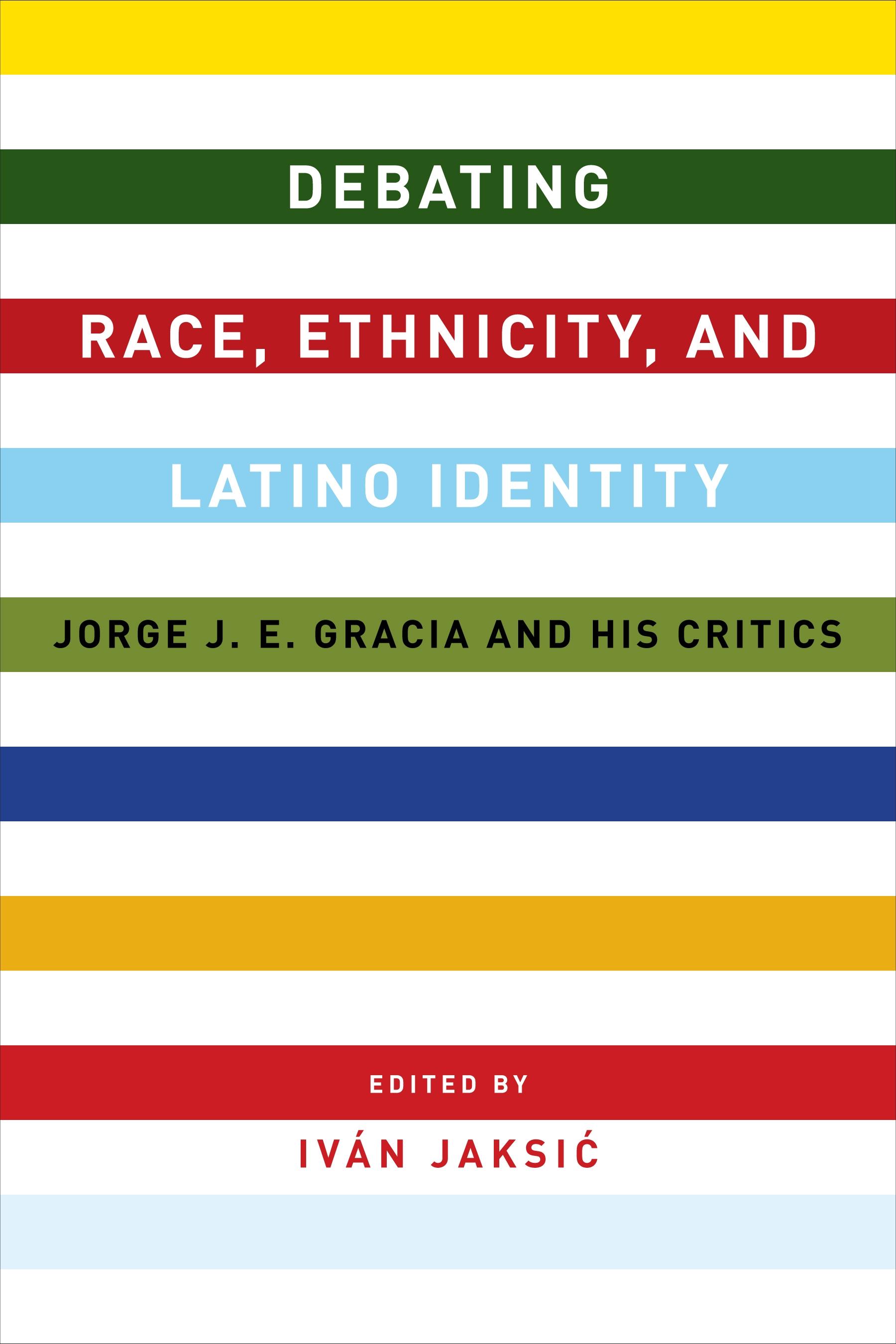
The philosopher Jorge J. E. Gracia engages fifteen prominent scholars on race, ethnicity, nationality, and Hispanic/Latino identity in the United States. Their discussion joins two distinct traditions: the philosophy of race begun by African Americans in the nineteenth century, and the search for an understanding of identity initiated by Latin American philosophers in the sixteenth century. Participants include Linda M. Alcoff, K. Anthony Appiah, Richard J. Bernstein, Lawrence Blum, Robert Gooding-Williams, Eduardo Mendieta, and Lucius T. Outlaw Jr., and their dialogue reflects the analytic, Aristotelian, Continental, literary, Marxist, and pragmatic schools of thought.
These intellectuals start with the philosophy of Hispanics/Latinos in the United States and then move to the philosophy of African Americans and Anglo Americans in the United States and the philosophy of Latin Americans in Latin America. Gracia and his interlocutors debate the nature of race and ethnicity and their relation to nationality, linguistic rights, matters of identity, and Affirmative Action, binding the concepts of race and ethnicity together in ways that open new paths of inquiry. Gracia's Familial-Historical View of ethnic and Hispanic/Latino identity operates at the center of each of these discussions, providing vivid access to the philosopher's provocative arguments while adding unique depth to issues that each of us struggles to understand.
Betaal eenvoudig met kaart, Klarna, Apple Pay of Google Pay. Niet tevreden? Je hebt altijd 14 dagen bedenktijd. Lees meer in onze voorwaarden. Heb je vragen, mail ons dan via hello@memmo.org.
Memmo maakt studeren makkelijker – waar je ook bent ter wereld. Wij brengen je cursusboeken en slimme studietools samen op één plek: samenvattingen, quizzen, podcasts en flashcards. En Ted, je studievriend die antwoord geeft op alles wat je je afvraagt. Meer dan 50.000 studenten studeren hier al – gebouwd om je sneller te laten leren en minder stress te geven.