
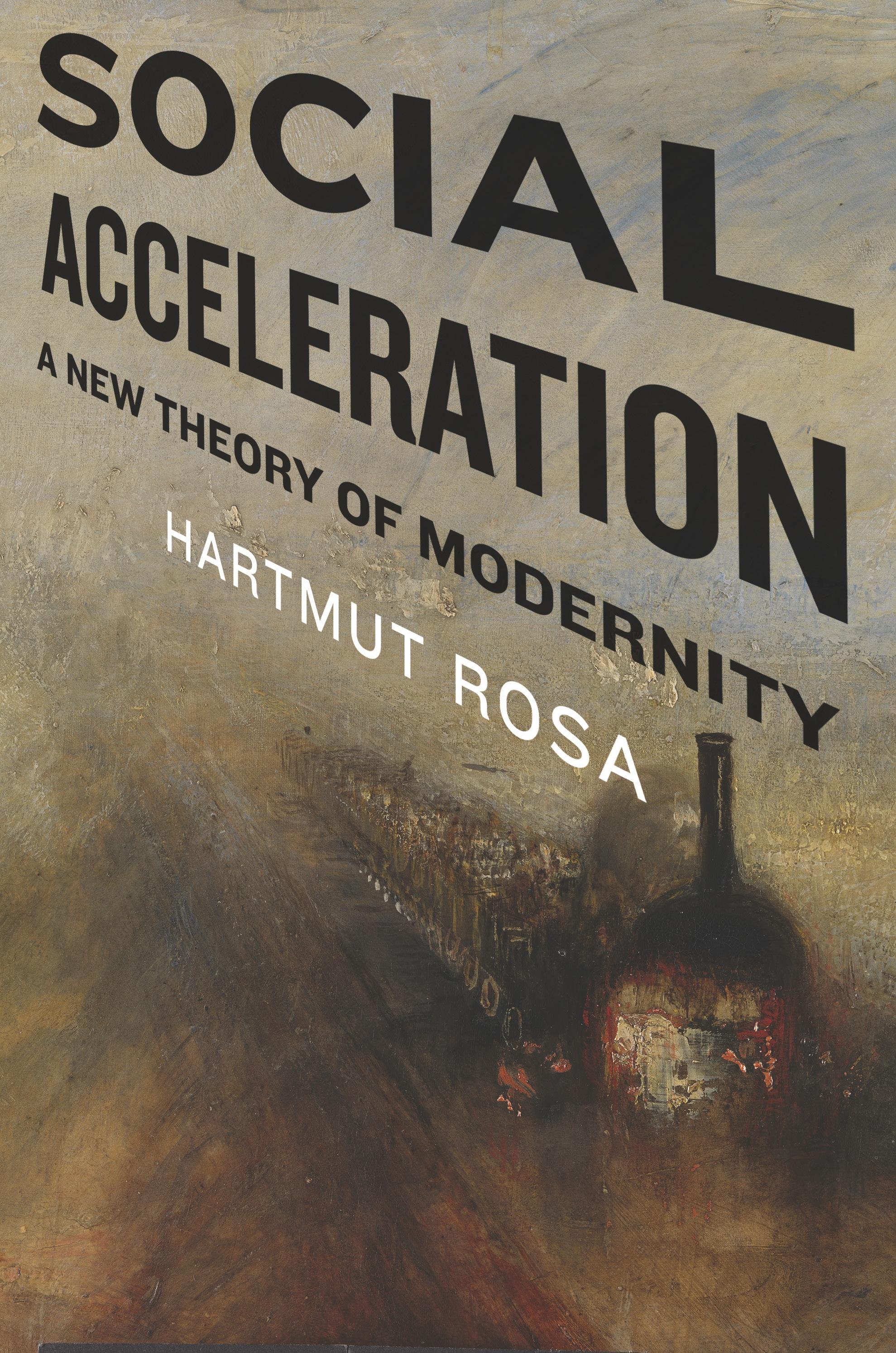
Hartmut Rosa advances an account of the temporal structure of society from the perspective of critical theory. He identifies three categories of change in the tempo of modern social life: technological acceleration, evident in transportation, communication, and production; the acceleration of social change, reflected in cultural knowledge, social institutions, and personal relationships; and acceleration in the pace of life, which happens despite the expectation that technological change should increase an individual's free time.
According to Rosa, both the structural and cultural aspects of our institutions and practices are marked by the "shrinking of the present," a decreasing time period during which expectations based on past experience reliably match the future. When this phenomenon combines with technological acceleration and the increasing pace of life, time seems to flow ever faster, making our relationships to each other and the world fluid and problematic. It is as if we are standing on "slipping slopes," a steep social terrain that is itself in motion and in turn demands faster lives and technology. As Rosa deftly shows, this self-reinforcing feedback loop fundamentally determines the character of modern life.
Betaal eenvoudig met kaart, Klarna, Apple Pay of Google Pay. Niet tevreden? Je hebt altijd 14 dagen bedenktijd. Lees meer in onze voorwaarden. Heb je vragen, mail ons dan via hello@memmo.org.
Memmo maakt studeren makkelijker – waar je ook bent ter wereld. Wij brengen je cursusboeken en slimme studietools samen op één plek: samenvattingen, quizzen, podcasts en flashcards. En Ted, je studievriend die antwoord geeft op alles wat je je afvraagt. Meer dan 50.000 studenten studeren hier al – gebouwd om je sneller te laten leren en minder stress te geven.