
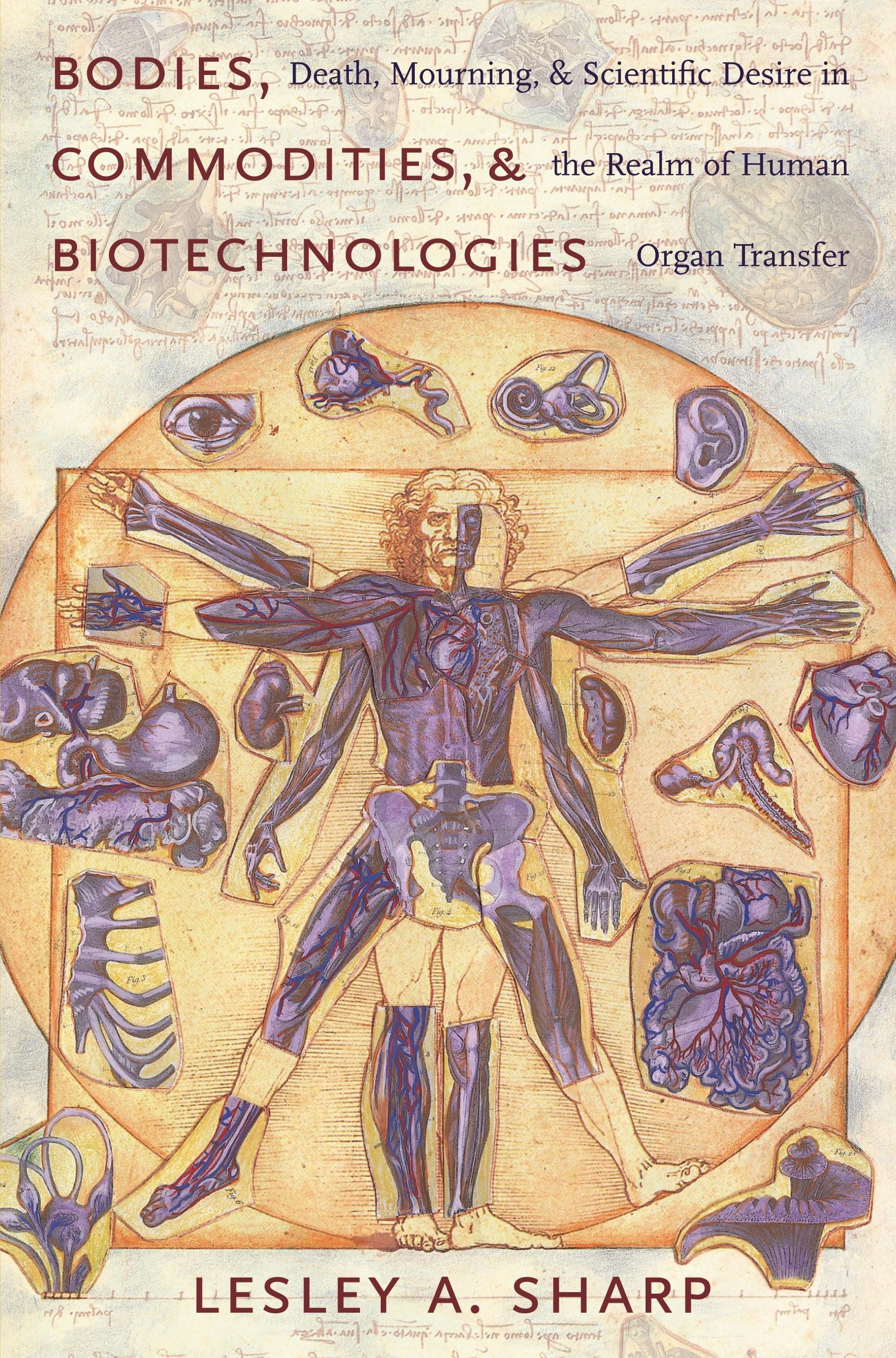
In the United States today, the human body defines a lucrative site of reusable parts, ranging from whole organs to minuscule and even microscopic tissues. Although the medical practices that enable the transfer of parts from one body to another most certainly relieve suffering and extend lives, they have also irrevocably altered perceptions of the cultural values assigned to the body.
Organ transfer is rich terrain to investigate—especially in the American context, where sophisticated technological interventions have significantly shaped understandings of health and well-being, suffering, and death. In Bodies, Commodities, and Biotechnologies, Lesley Sharp probes the ideological assumptions underlying the transfer of body parts, the social significance of donors' deaths, and the medico-scientific desires surrounding complex forms of body repair. Sharp also considers the experimental realm, in which nonhuman species and artificial devices present further opportunities for recovery and for controversy.
A compelling scientific investigation and social critique, Bodies, Commodities, and Biotechnologies explores the pervasive, and at times pernicious, practices shaping American biomedicine in the twenty-first century.
Betaal eenvoudig met kaart, Klarna, Apple Pay of Google Pay. Niet tevreden? Je hebt altijd 14 dagen bedenktijd. Lees meer in onze voorwaarden. Heb je vragen, mail ons dan via hello@memmo.org.
Memmo maakt studeren makkelijker – waar je ook bent ter wereld. Wij brengen je cursusboeken en slimme studietools samen op één plek: samenvattingen, quizzen, podcasts en flashcards. En Ted, je studievriend die antwoord geeft op alles wat je je afvraagt. Meer dan 50.000 studenten studeren hier al – gebouwd om je sneller te laten leren en minder stress te geven.