
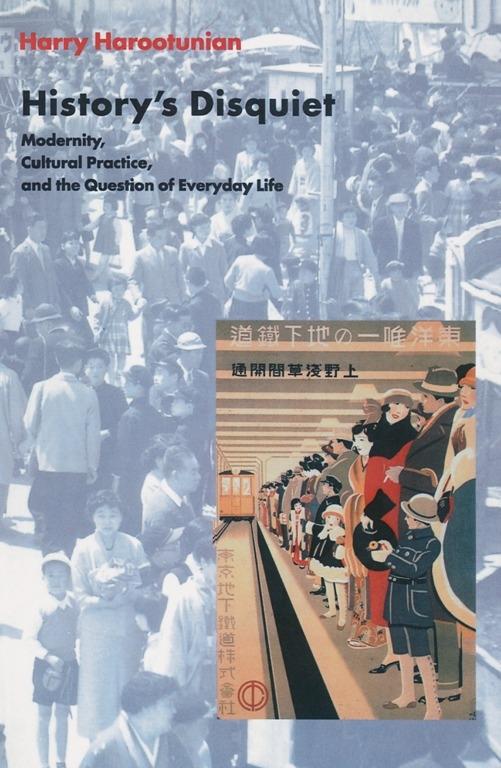
Acclaimed historian Harry Harootunian calls attention to the boundaries, real and theoretical, that compartmentalize the world around us. In one of the first works to explore on equal footing European and Japanese conceptions of modernity—as imagined in the writings of Georg Simmel and Walter Benjamin, as well as ethnologist Yanagita Kunio and Marxist philosopher Tosaka Jun—Harootunian seeks to expose the problematic nature of scholarly categories. In doing so, History's Disquiet presents intellectual genealogies of such orthodox notions as "field" and "modernity" and other concepts intellectuals in the East and West have used to understand the changing world around them. Contrasting reflections on everyday life in Japan and Europe, Harootunian shows how responses to capitalist society were expressed in similar ways: social critics in both regions alleged a broad sense of alienation, particularly among the middle class. However, he also points out that Japanese critics viewed modernity as a condition in which Japan—without the lengthy period of capitalist modernization that characterized Europe and America—was either "catching up" with those regions or "copying" them.
As elegantly written as it is controversial, this book is both an invitation for rethinking intellectual boundaries and an invigorating affirmation that such boundaries can indeed be broken down.
Betaal eenvoudig met kaart, Klarna, Apple Pay of Google Pay. Niet tevreden? Je hebt altijd 14 dagen bedenktijd. Lees meer in onze voorwaarden. Heb je vragen, mail ons dan via hello@memmo.org.
Memmo maakt studeren makkelijker – waar je ook bent ter wereld. Wij brengen je cursusboeken en slimme studietools samen op één plek: samenvattingen, quizzen, podcasts en flashcards. En Ted, je studievriend die antwoord geeft op alles wat je je afvraagt. Meer dan 50.000 studenten studeren hier al – gebouwd om je sneller te laten leren en minder stress te geven.