
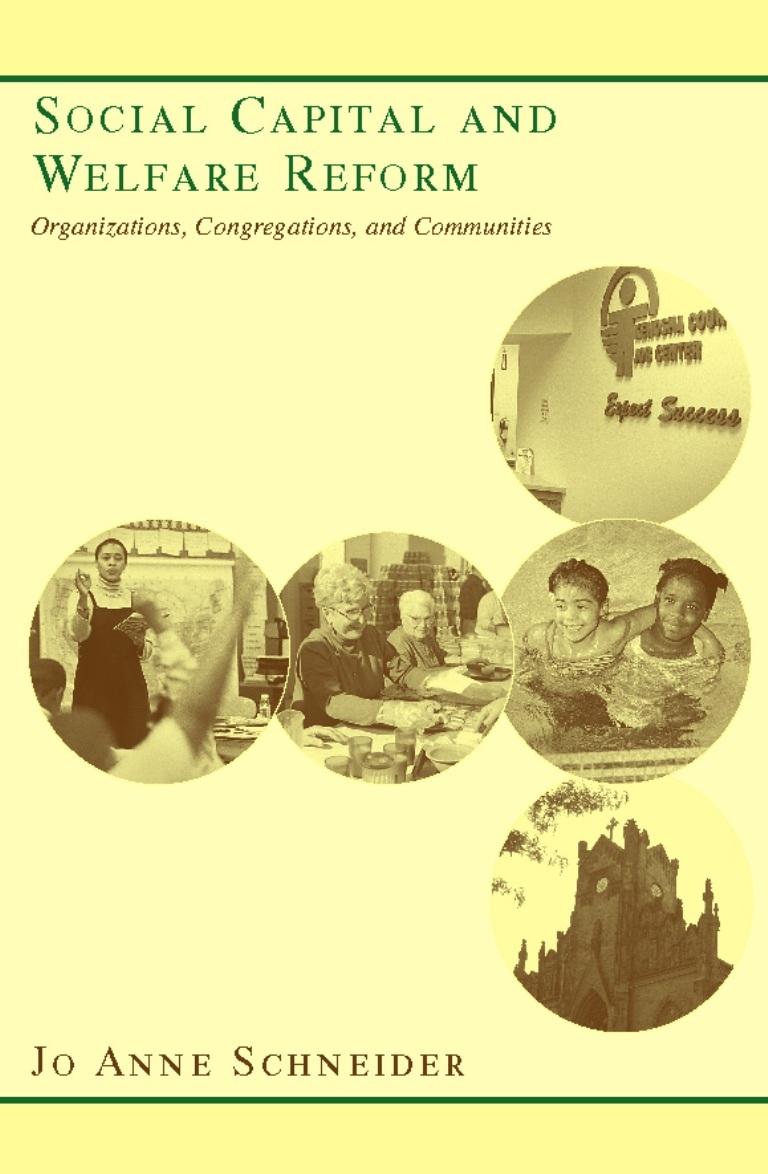
In this groundbreaking study, Jo Anne Schneider considers the reasons behind the limited success of most welfare reform initiatives and offers evidence-based recommendations for enhancing the effectiveness of welfare policy.
Schneider draws on her rich and nuanced ethnographic studies of Philadelphia, Milwaukee, and Kenosha, Wisconsin to clarify the role of social capital for both individuals and institutions. She shows that the social relationships and patterns of trust that enable people to gain access to resources like government services, organization funding, and jobs are crucial in helping families achieve their goals. Schneider examines the complex ways in which social capital functions in conjunction with economic, human, and cultural capital, and explores social capital dynamics among government, nonprofits, and congregations that together provide the welfare support system.
Social Capital and Welfare Reform is compulsory reading for researchers and students in social work, sociology, anthropology, public policy, education, community psychology, social psychiatry, and non-profit and public administration as well as policy makers interested in welfare reform, poverty, and nonprofits.
Betaal eenvoudig met kaart, Klarna, Apple Pay of Google Pay. Niet tevreden? Je hebt altijd 14 dagen bedenktijd. Lees meer in onze voorwaarden. Heb je vragen, mail ons dan via hello@memmo.org.
Memmo maakt studeren makkelijker – waar je ook bent ter wereld. Wij brengen je cursusboeken en slimme studietools samen op één plek: samenvattingen, quizzen, podcasts en flashcards. En Ted, je studievriend die antwoord geeft op alles wat je je afvraagt. Meer dan 50.000 studenten studeren hier al – gebouwd om je sneller te laten leren en minder stress te geven.