
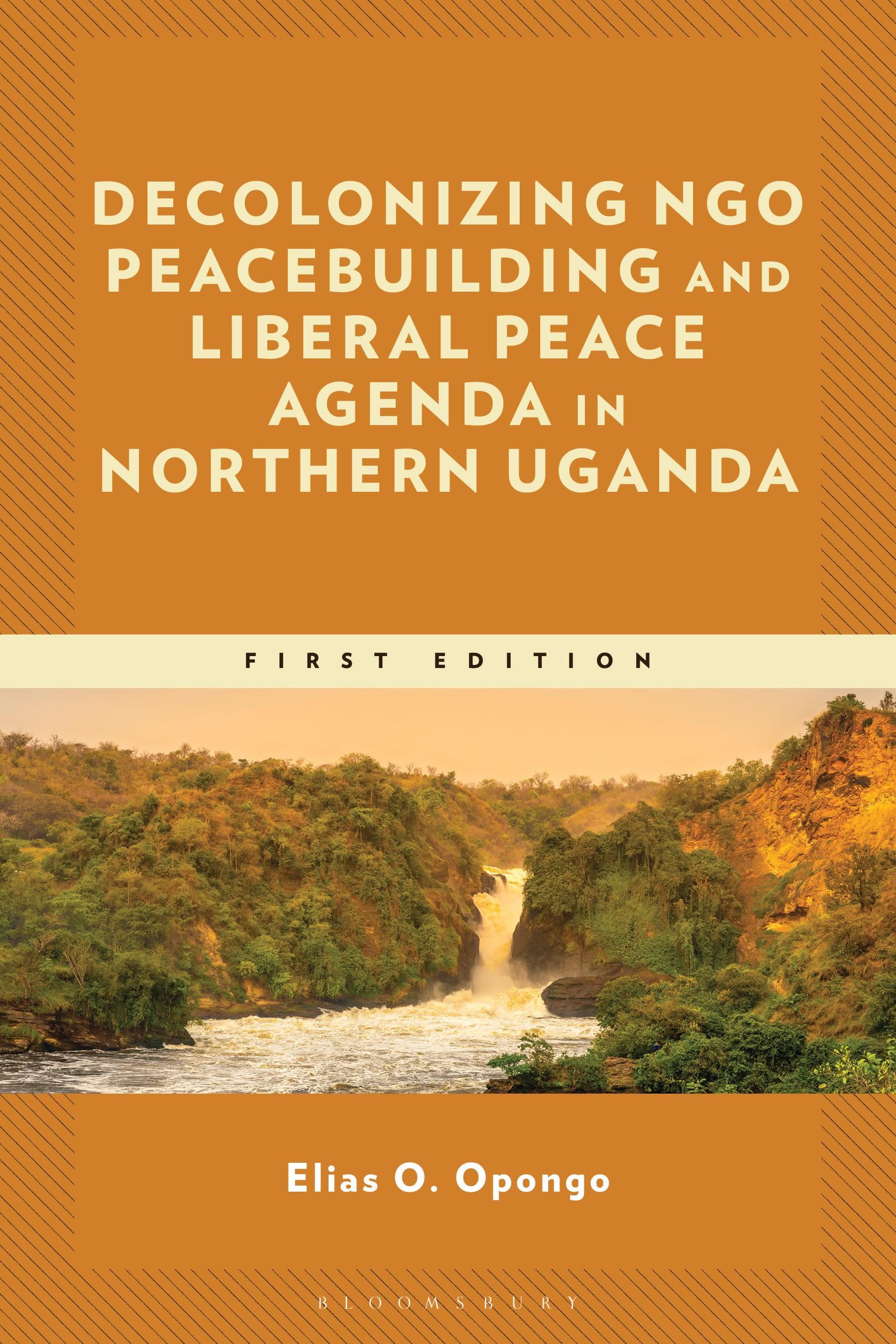
Critically examining how Western-funded NGO interventions have shaped post-conflict recovery in Northern Uganda, Elias O. Opongo argues that the liberal peace agenda-focused on democracy promotion, market reforms, and human rights-often marginalizes local agency and undermines culturally rooted approaches to peacebuilding.
Drawing on extensive fieldwork and grounded theory, Opongo explores how these externally driven models disconnect from the lived realities of conflict-affected communities. He introduces relational constructionism as a framework that emphasizes participatory, context-sensitive, and indigenous approaches-such as the Acholi Mato Oput ritual-that center dialogue, reintegration, and restorative justice.
The book also critiques the role of international actors, particularly the International Criminal Court (ICC), whose interventions can clash with local reconciliation efforts. Opongo's findings in Northern Uganda offer critical insights for other post-conflict African contexts dominated by donor-driven peacebuilding. He calls for a decolonial shift toward frameworks that restore African agency, reduce dependency, and prioritize community-led solutions for sustainable peace. This book is essential reading for scholars, practitioners, and policymakers seeking more inclusive, grounded, and transformative peacebuilding models in Africa and beyond.
Drawing on extensive fieldwork and grounded theory, Opongo explores how these externally driven models disconnect from the lived realities of conflict-affected communities. He introduces relational constructionism as a framework that emphasizes participatory, context-sensitive, and indigenous approaches-such as the Acholi Mato Oput ritual-that center dialogue, reintegration, and restorative justice.
The book also critiques the role of international actors, particularly the International Criminal Court (ICC), whose interventions can clash with local reconciliation efforts. Opongo's findings in Northern Uganda offer critical insights for other post-conflict African contexts dominated by donor-driven peacebuilding. He calls for a decolonial shift toward frameworks that restore African agency, reduce dependency, and prioritize community-led solutions for sustainable peace. This book is essential reading for scholars, practitioners, and policymakers seeking more inclusive, grounded, and transformative peacebuilding models in Africa and beyond.
Paga facilmente con carta, Klarna, Apple Pay o Google Pay. Non sei soddisfatto? Hai sempre 14 giorni per il rimborso. Leggi di più nei nostri termini. Per qualsiasi domanda, scrivici a hello@memmo.org.
Memmo rende lo studio più facile, ovunque tu sia nel mondo. Qui trovi i tuoi libri di testo e strumenti di studio intelligenti, tutto in un unico posto: riassunti, quiz, podcast e flashcard. E poi c'è Ted, il tuo compagno di studio che risponde a ogni tua domanda. Oltre 50.000 studenti studiano già qui: è stato creato per aiutarti a imparare più velocemente e a stressarti meno.