
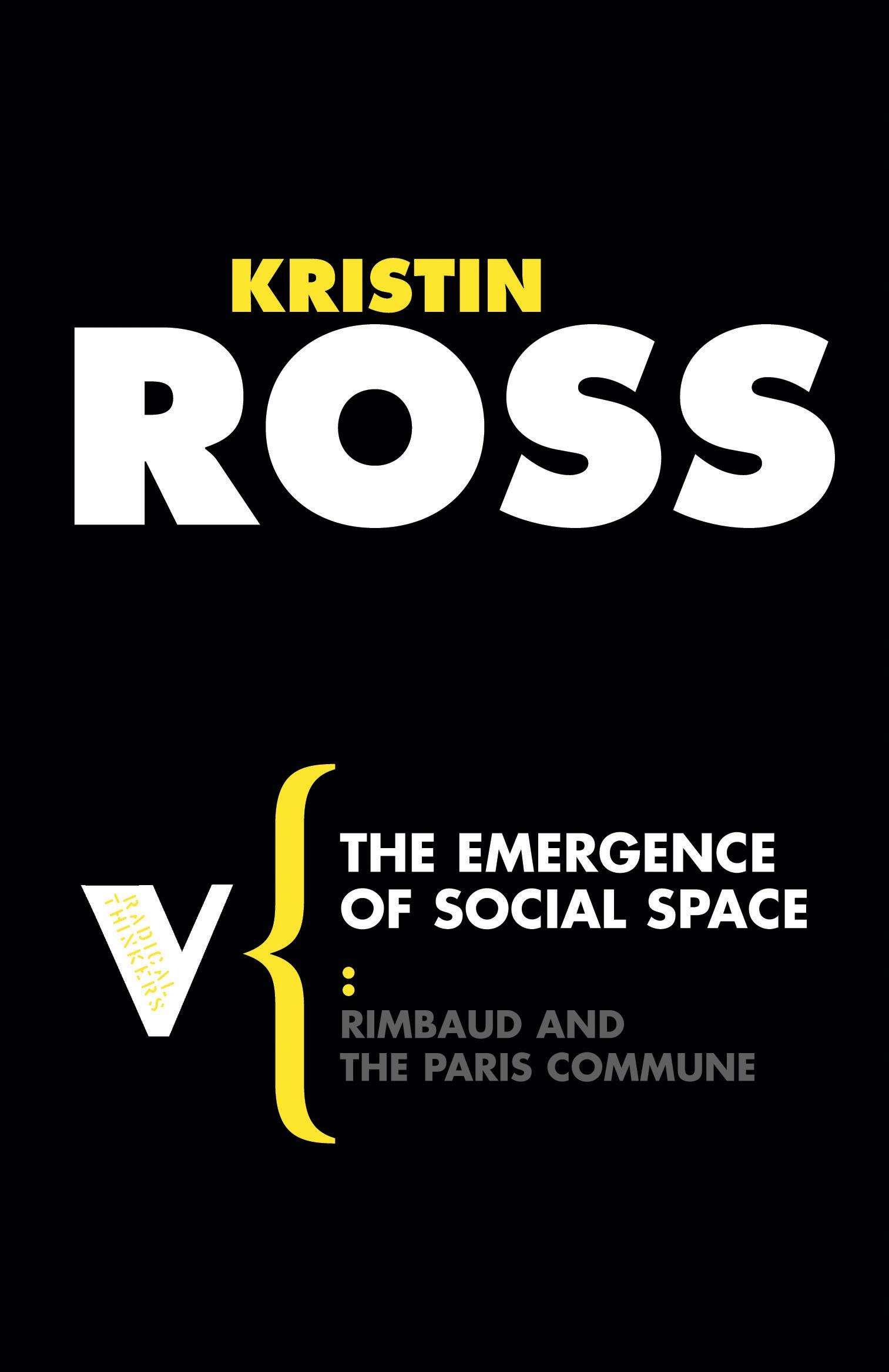
The 1870s in France - Rimbaud's moment, and the subject of this book - is a decade virtually ignored in most standard histories in France. Yet it was the moment of two significant spatial events: France's expansion on a global scale, and, in the spring of 1871, the brief existence on the Paris Commune - the construction of the revolutionary urban space. Arguing that space, as a social fact, is always political and strategic, Kristin Ross has written a book that is at once a history and geography of the Commune's anarchist culture - its political language and social relations, its values, strategies, and stances.
Central to her analysis of the Commune as a social space and oppositional culture is a close textual reading of Arthur Rimabaud's poetry. His poems - a common thread running through the book - are one set of documents among many in Ross's recreation of the Communard experience. Rimbaud, Paul Lafargue, and the social geographer �lis�e Reclus serve as emblematic figures moving within and on the periphery of the Commune; in their resistance to the logic and economy of the capitalist conception of work, in their challenge to work itself as a term of identity, all three posed a threat to the existing order. Ross looks at these and other emancipatory notions as aspects of Communard life, each with an analogous strategy in Rimbaud's poetry. Applying contemporary theory, to a wealth of little-known archival material, she has written a fresh, persuasive, and original book.
Central to her analysis of the Commune as a social space and oppositional culture is a close textual reading of Arthur Rimabaud's poetry. His poems - a common thread running through the book - are one set of documents among many in Ross's recreation of the Communard experience. Rimbaud, Paul Lafargue, and the social geographer �lis�e Reclus serve as emblematic figures moving within and on the periphery of the Commune; in their resistance to the logic and economy of the capitalist conception of work, in their challenge to work itself as a term of identity, all three posed a threat to the existing order. Ross looks at these and other emancipatory notions as aspects of Communard life, each with an analogous strategy in Rimbaud's poetry. Applying contemporary theory, to a wealth of little-known archival material, she has written a fresh, persuasive, and original book.
Paga facilmente con carta, Klarna, Apple Pay o Google Pay. Non sei soddisfatto? Hai sempre 14 giorni per il rimborso. Leggi di più nei nostri termini. Per qualsiasi domanda, scrivici a hello@memmo.org.
Memmo rende lo studio più facile, ovunque tu sia nel mondo. Qui trovi i tuoi libri di testo e strumenti di studio intelligenti, tutto in un unico posto: riassunti, quiz, podcast e flashcard. E poi c'è Ted, il tuo compagno di studio che risponde a ogni tua domanda. Oltre 50.000 studenti studiano già qui: è stato creato per aiutarti a imparare più velocemente e a stressarti meno.
Potrebbe interessarti anche
Acquista il libro0