
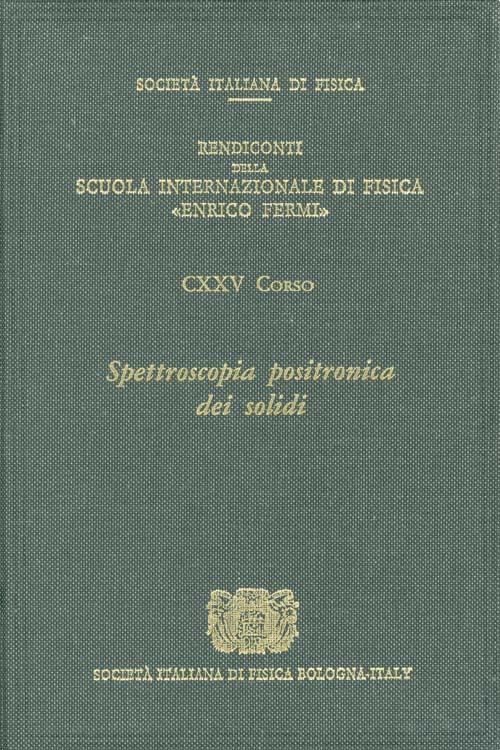
The lifetime of a positron inside a solid is normally less than a fraction of nanosecond. This is a very short time on a human scale, but is long enough to enable the positron to visit an extended region of the material, and to sense the atomic and electronic structure of the environment. Thus, we can inject a positron in a sample to draw from it some signal giving us information on the microscopic properties of the material. This idea has been successfully developed in a number of positron-based techniques of physical analysis, with resolution in energy, momentum, or position. The complex of these techniques is what we call now positron spectroscopy of solids. The field of application of the positron spectroscopy extends from advanced problems of solid-state physics to industrial applications in the area of characterization of high-tech materials. This volume focuses the attention on the physics that can be learned from positron-based methods, but also frames those methods in a wider context including other experimental approaches. It can be considered as a textbook on positron spectroscopy of solids, the sort of book that the newcomer takes for his approach to this field, but also as a useful research tool for the expert.
Paga facilmente con carta, Klarna, Apple Pay o Google Pay. Non sei soddisfatto? Hai sempre 14 giorni per il rimborso. Leggi di più nei nostri termini. Per qualsiasi domanda, scrivici a hello@memmo.org.
Memmo rende lo studio più facile, ovunque tu sia nel mondo. Qui trovi i tuoi libri di testo e strumenti di studio intelligenti, tutto in un unico posto: riassunti, quiz, podcast e flashcard. E poi c'è Ted, il tuo compagno di studio che risponde a ogni tua domanda. Oltre 50.000 studenti studiano già qui: è stato creato per aiutarti a imparare più velocemente e a stressarti meno.