
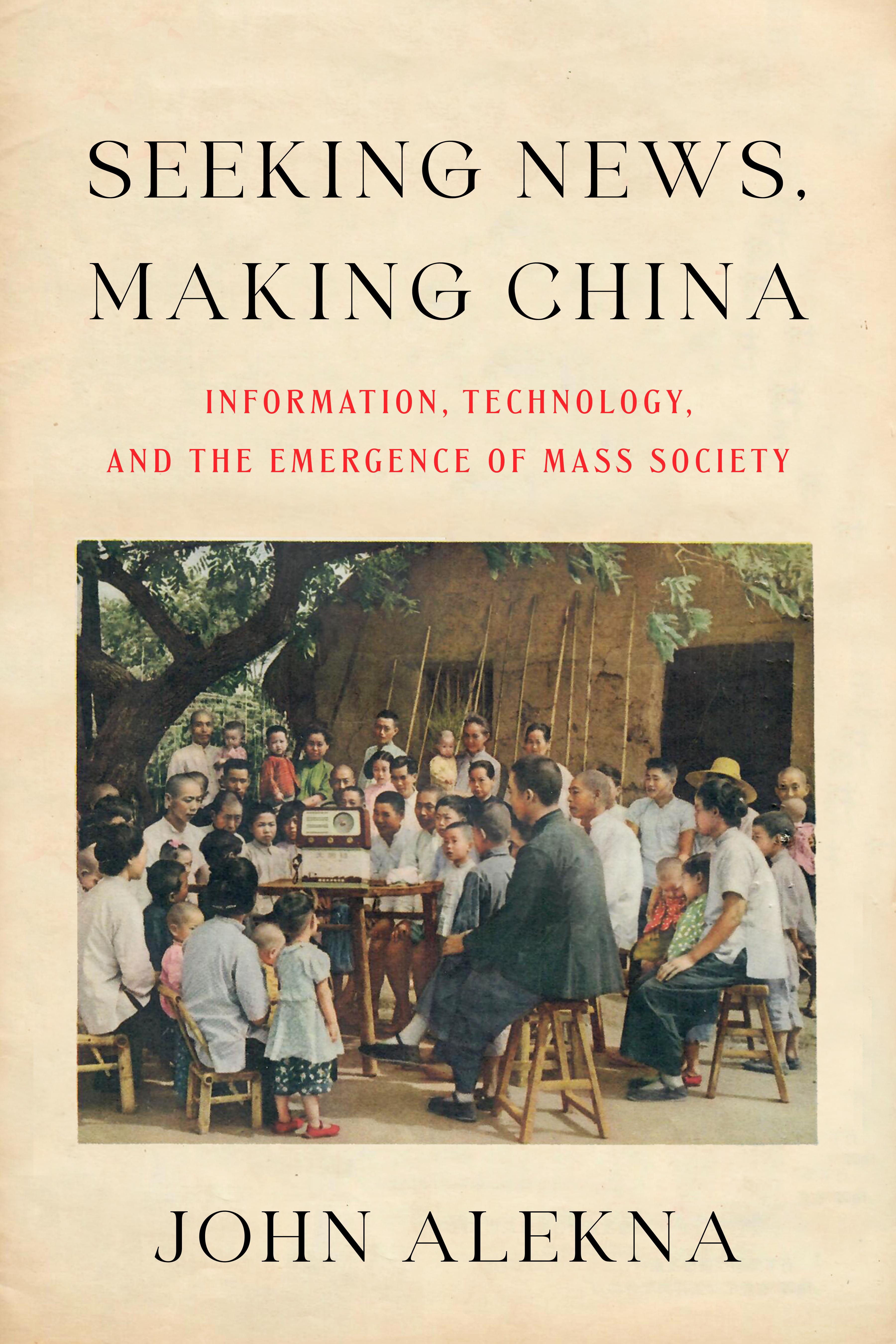
Contemporary developments in communications technologies have overturned key aspects of the global political system and transformed the media landscape. Yet interlocking technological, informational, and political revolutions have occurred many times in the past. In China, radio first arrived in the winter of 1922-23, bursting into a world where communication was slow, disjointed, or non-existent. Less than ten percent of the population ever read newspapers. Just fifty years later, at the beginning of the Cultural Revolution, news broadcasts reached hundreds of millions of people instantaneously, every day. How did Chinese citizens experience the rapid changes in information practices and political organization that occurred in this period? What was it like to live through a news revolution?
John Alekna traces the history of news in twentieth-century China to demonstrate how large structural changes in technology and politics were heard and felt. Scrutinizing the flow of news can reveal much about society and politics—illustrating who has power and why, and uncovering the connections between different regions, peoples, and social classes. Taking an innovative, holistic view of information practices, Alekna weaves together both rural and urban history to tell the story of the rise of mass society through the lens of communication techniques and technology, showing how the news revolution fundamentally reordered the political geography of China.
Paga facilmente con carta, Klarna, Apple Pay o Google Pay. Non sei soddisfatto? Hai sempre 14 giorni per il rimborso. Leggi di più nei nostri termini. Per qualsiasi domanda, scrivici a hello@memmo.org.
Memmo rende lo studio più facile, ovunque tu sia nel mondo. Qui trovi i tuoi libri di testo e strumenti di studio intelligenti, tutto in un unico posto: riassunti, quiz, podcast e flashcard. E poi c'è Ted, il tuo compagno di studio che risponde a ogni tua domanda. Oltre 50.000 studenti studiano già qui: è stato creato per aiutarti a imparare più velocemente e a stressarti meno.