
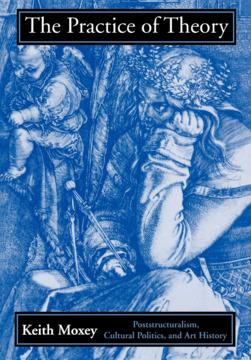
Many art historians regard poststructuralist theory with suspicion; some even see its focus on the political dimension of language as hostile to an authentic study of the past. Keith Moxey bridges the gap between historical and theoretical approaches with the provocative argument that we cannot have one without the other. "If art history is to take part in the processes of cultural transformation that characterize our society," he writes, "then its historical narratives must come to terms with the most powerful and influential theories that currently determine the way in which we conceive of ourselves."
After exploring how the insights offered by deconstruction and semiotics change our understanding of representation, ideology, and authorship, Moxey himself puts theory into practice. In a series of engaging essays accompanied by twenty-eight illustrations, he first examines the impact of cultural values on Erwin Panofsky's writings. Taking a fresh look at work by artists from Albrecht Dürer and Erhard Schön to Barbara Kruger and Julian Schnabel, he then examines the process by which he generic boundaries between "high" and "low" art have helped to sustain class and gender differences. Making particular reference to the literature on Martin Schongauer, Moxey also considers the value of art history when it is reduced to artist's biography. Moxey's interpretation of the work of Hieronymus Bosch not only reassesses its intelligence and imagination, but also brings to light its pragmatic conformity to elite definitions of artistic "genius." With his compelling analysis of the politics of interpretation, Moxey draws attention to a vital aspect of the cultural importance of history.
Paga facilmente con carta, Klarna, Apple Pay o Google Pay. Non sei soddisfatto? Hai sempre 14 giorni per il rimborso. Leggi di più nei nostri termini. Per qualsiasi domanda, scrivici a hello@memmo.org.
Memmo rende lo studio più facile, ovunque tu sia nel mondo. Qui trovi i tuoi libri di testo e strumenti di studio intelligenti, tutto in un unico posto: riassunti, quiz, podcast e flashcard. E poi c'è Ted, il tuo compagno di studio che risponde a ogni tua domanda. Oltre 50.000 studenti studiano già qui: è stato creato per aiutarti a imparare più velocemente e a stressarti meno.