
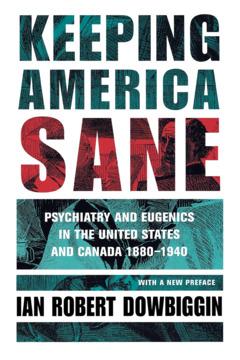
What would bring a physician to conclude that sterilization is appropriate treatment for the mentally ill and mentally handicapped? Using archival sources, Ian Robert Dowbiggin documents the involvement of both American and Canadian psychiatrists in the eugenics movement of the early twentieth century. He explains why professional men and women committed to helping those less fortunate than themselves arrived at such morally and intellectually dubious conclusions.
Psychiatrists at the end of the nineteenth century felt professionally vulnerable, Dowbiggin explains, because they were under intense pressure from state and provincial governments and from other physicians to reform their specialty. Eugenic ideas, which dominated public health policy making, seemed the best vehicle for catching up with the progress of science. Among the prominent psychiatrist-eugenicists Dowbiggin considers are G. Alder Blumer, Charles Kirk Clarke, Thomas Salmon, Clare Hincks, and William Partlow.
Tracing psychiatric support for eugenics throughout the interwar years, Dowbiggin pays special attention to the role of psychiatrists in the fierce debates about immigration policy. His examination of psychiatry's unfortunate flirtation with eugenics elucidates how professional groups come to think and act along common lines within specific historical contexts.
Paga facilmente con carta, Klarna, Apple Pay o Google Pay. Non sei soddisfatto? Hai sempre 14 giorni per il rimborso. Leggi di più nei nostri termini. Per qualsiasi domanda, scrivici a hello@memmo.org.
Memmo rende lo studio più facile, ovunque tu sia nel mondo. Qui trovi i tuoi libri di testo e strumenti di studio intelligenti, tutto in un unico posto: riassunti, quiz, podcast e flashcard. E poi c'è Ted, il tuo compagno di studio che risponde a ogni tua domanda. Oltre 50.000 studenti studiano già qui: è stato creato per aiutarti a imparare più velocemente e a stressarti meno.