
Winner of the 2020 Marie Hochmuth Nichols Award from the Public Address Division of the National Communication Association
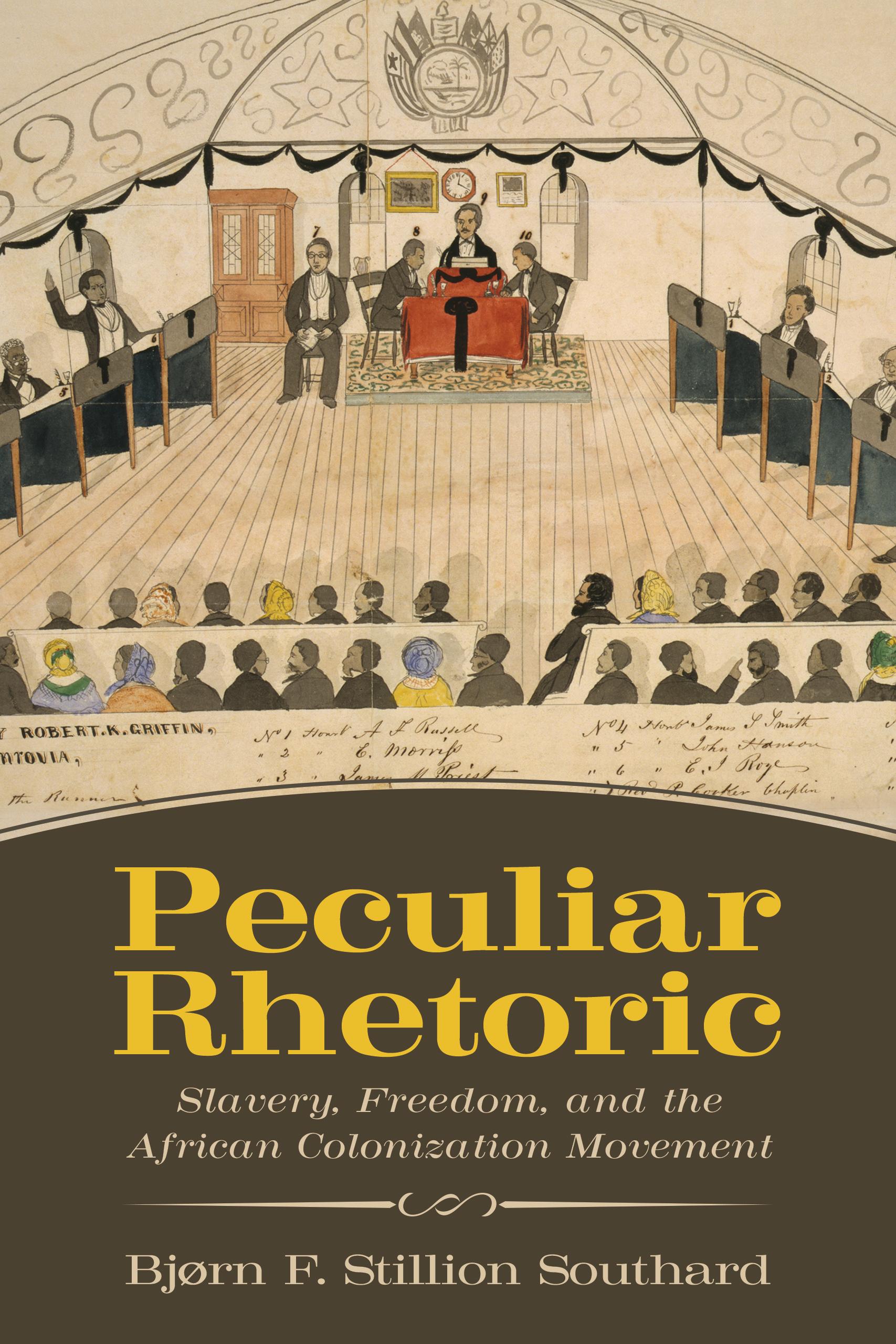
The African colonization movement occupies a troubling rhetorical territory in the struggle for racial equality in the United States. For white colonizationists, the movement seemed positioned as a welcome compromise between slavery and abolition. For free blacks, colonization offered the hope of freedom, but not within America’s borders. Bjørn F. Stillion Southard indicates how politics and identity were negotiated amid the intense public debate on race, slavery, and freedom in America.
Operating from a position of power, white advocates argued that colonization was worthy of massive support from the federal government. Stillion Southard pores over the speeches of Henry Clay, Elias B. Caldwell, and Abraham Lincoln, which engaged with colonization during its active deliberation.
Between Clay’s and Caldwell’s speeches at the founding of the American Colonization Society (ACS) in 1816 and Lincoln’s final public effort to encourage colonization in 1862, Stillion Southard analyzes the little-known speeches and writings of free blacks who wrestled with colonization’s conditional promises of freedom.
He examines an array of discourses to probe the complex issues of identity confronting free blacks who attempted to meaningfully engage in colonization efforts. From a peculiarly voiced “Counter Memorial” against the ACS to the letters of wealthy black merchant Louis Sheridan negotiating for his passage to Liberia to the civically minded orations of Hilary Teage in Liberia, Stillion Southard brings to light the intricate rhetoric of blacks who addressed colonization to Africa.
The African colonization movement occupies a troubling rhetorical territory in the struggle for racial equality in the United States. For white colonizationists, the movement seemed positioned as a welcome compromise between slavery and abolition. For free blacks, colonization offered the hope of freedom, but not within America’s borders. Bjørn F. Stillion Southard indicates how politics and identity were negotiated amid the intense public debate on race, slavery, and freedom in America.
Operating from a position of power, white advocates argued that colonization was worthy of massive support from the federal government. Stillion Southard pores over the speeches of Henry Clay, Elias B. Caldwell, and Abraham Lincoln, which engaged with colonization during its active deliberation.
Between Clay’s and Caldwell’s speeches at the founding of the American Colonization Society (ACS) in 1816 and Lincoln’s final public effort to encourage colonization in 1862, Stillion Southard analyzes the little-known speeches and writings of free blacks who wrestled with colonization’s conditional promises of freedom.
He examines an array of discourses to probe the complex issues of identity confronting free blacks who attempted to meaningfully engage in colonization efforts. From a peculiarly voiced “Counter Memorial” against the ACS to the letters of wealthy black merchant Louis Sheridan negotiating for his passage to Liberia to the civically minded orations of Hilary Teage in Liberia, Stillion Southard brings to light the intricate rhetoric of blacks who addressed colonization to Africa.
Paga facilmente con carta, Klarna, Apple Pay o Google Pay. Non sei soddisfatto? Hai sempre 14 giorni per il rimborso. Leggi di più nei nostri termini. Per qualsiasi domanda, scrivici a hello@memmo.org.
Memmo rende lo studio più facile, ovunque tu sia nel mondo. Qui trovi i tuoi libri di testo e strumenti di studio intelligenti, tutto in un unico posto: riassunti, quiz, podcast e flashcard. E poi c'è Ted, il tuo compagno di studio che risponde a ogni tua domanda. Oltre 50.000 studenti studiano già qui: è stato creato per aiutarti a imparare più velocemente e a stressarti meno.
Potrebbe interessarti anche
Acquista il libro0