
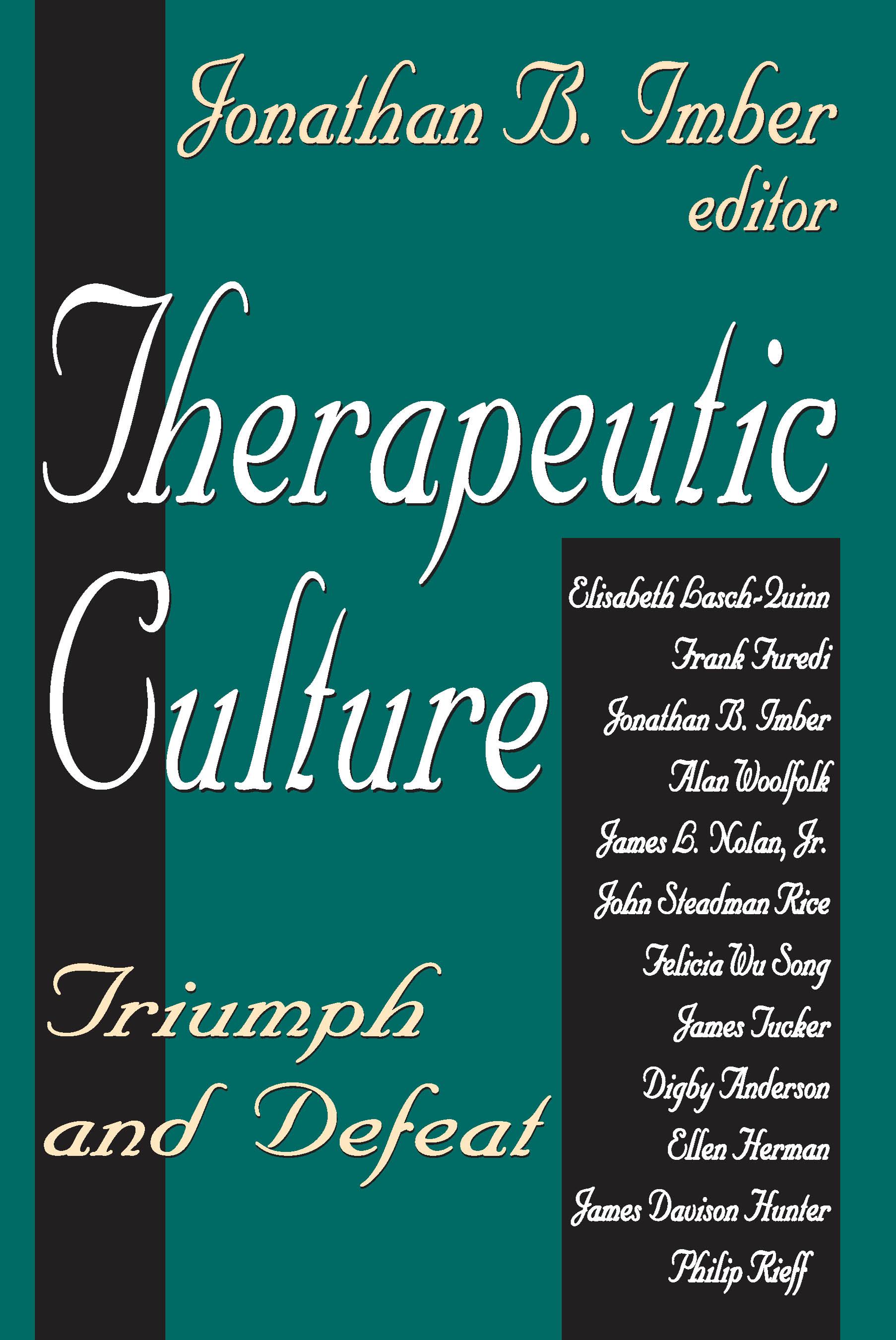
For nearly half a century, social scientists have made claims that there is a "therapeutic ethos" with extensive influence upon numerous aspects of American society. In Therapeutic Culture, twelve authors address the implications of this ethos and its effects on a wide range of social institutions, extending from the family to schools, and operating in religious behavior and within the legal system. Has there been, as the sociological theorist Philip Rieff argued in 1966, a "triumph of the therapeutic?" If so, in what kinds of institutions has it been most pervasive? At the same time, what aspects of modern culture has it replaced or defeated? Therapeutic Culture addresses these questions, and raises others. Part 1 of this volume examines the emergence of the idea of "authenticity" as it defines the manipulation of emotions and behavior both in the United States and Great Britain. Contributors include Elisabeth Lasch-Quinn, Frank Furedi, Jonathan B. Imber, and Alan Woolfolk. Part 2 illustrates specific cases of the effects of therapeutic culture within institutions, including courts, schools, religious communities, and the "virtual community" of the Internet. Contributors include James L. Nolan, Jr., John Steadman Rice, Felicia Wu Song, and James Tucker. Part 3 extends the analyses of specific social institutions to the broader consequences that have resulted as a therapeutic ethos has taken root in contemporary life. Contributors include Digby Anderson, Ellen Herman, and James Davison Hunter. Part 4 is devoted to a previously unpublished essay by Philip Rieff whose significant influence can be seen in many of the contributions. Rieff revisits the highly controversial confirmation hearings of Supreme Court Associate Justice Clarence Thomas in 1991 and offers ample evidence of the therapeutic uses of politics as well as the political manipulations available within a therapeutic culture to provide a fitting conclusion. This volume establishes a benchmark for furthe
Paga facilmente con carta, Klarna, Apple Pay o Google Pay. Non sei soddisfatto? Hai sempre 14 giorni per il rimborso. Leggi di più nei nostri termini. Per qualsiasi domanda, scrivici a hello@memmo.org.
Memmo rende lo studio più facile, ovunque tu sia nel mondo. Qui trovi i tuoi libri di testo e strumenti di studio intelligenti, tutto in un unico posto: riassunti, quiz, podcast e flashcard. E poi c'è Ted, il tuo compagno di studio che risponde a ogni tua domanda. Oltre 50.000 studenti studiano già qui: è stato creato per aiutarti a imparare più velocemente e a stressarti meno.
Potrebbe interessarti anche
Acquista il libro0