
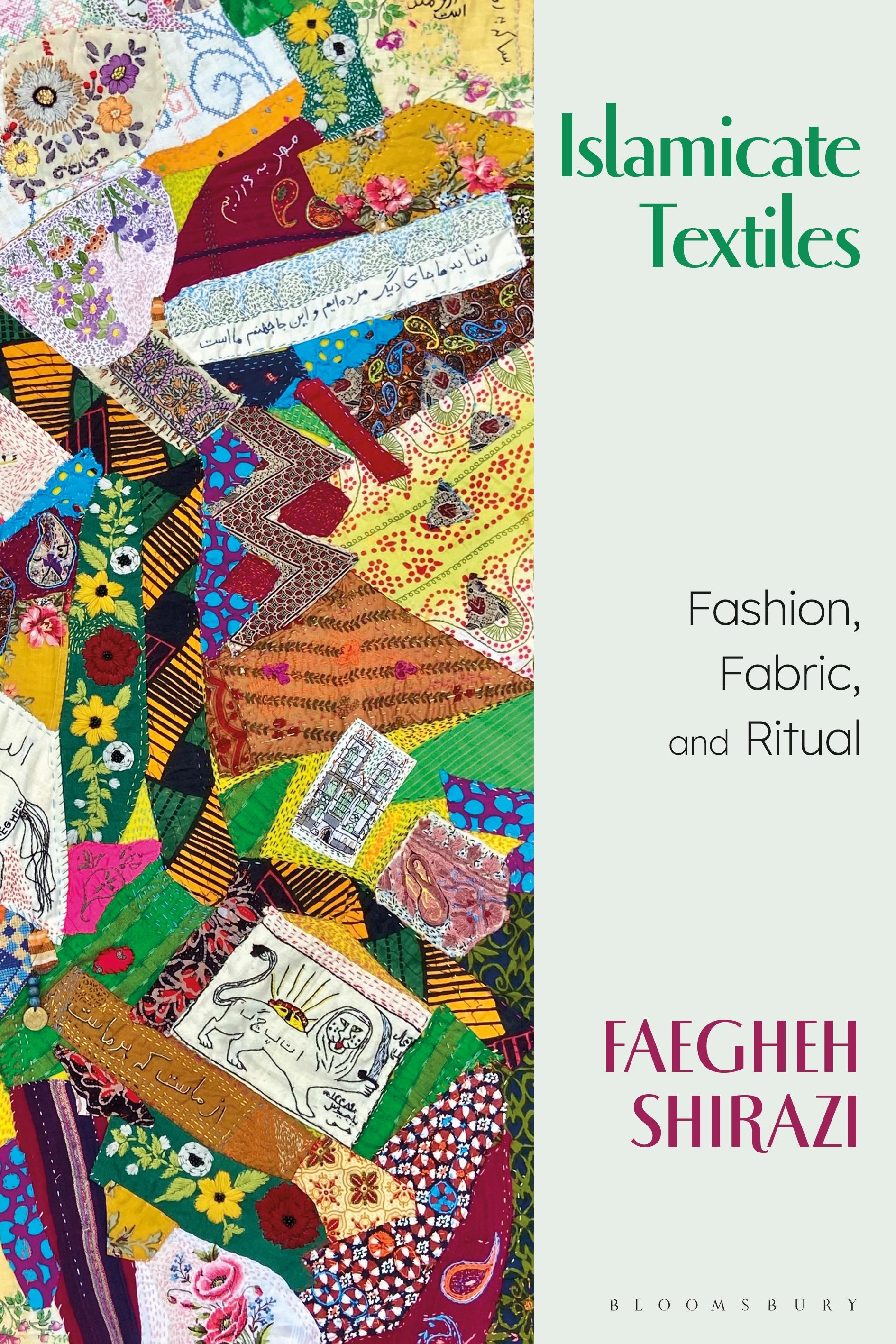
Textiles and clothing are interwoven with Islamic culture. In Islamicate Textiles, readers are taken on a journey from Central Asia to Tanzania to uncover the central roles that textiles play within Muslim-majority communities.
This thematically arranged book sheds light on the traditions, rituals and religious practices of these regions, and the ways in which each one incorporates materials and clothing. Drawing on examples including Iranian lion carpets and Arabic keffiyeh, Faegheh Shirazi frames these textiles and totemic items as important cultural signifiers that, together, form a dynamic and fascinating material culture. Like a developing language, this culture expands, bends and develops to suit the needs of new generations and groups across the world.
The political significance of Islamicate textiles is also explored: Faegheh Shirazi's writing reveals the fraught relationship between the East – with its sought-after materials and much-valued textiles – and the European countries that purchased and repurposed these goods, and lays bare the historical and contemporary connections between textiles, colonialism, immigration and economics. Dr Shirazi also discusses gender and how textiles and clothing are intimately linked with sexuality and gender identity.
This thematically arranged book sheds light on the traditions, rituals and religious practices of these regions, and the ways in which each one incorporates materials and clothing. Drawing on examples including Iranian lion carpets and Arabic keffiyeh, Faegheh Shirazi frames these textiles and totemic items as important cultural signifiers that, together, form a dynamic and fascinating material culture. Like a developing language, this culture expands, bends and develops to suit the needs of new generations and groups across the world.
The political significance of Islamicate textiles is also explored: Faegheh Shirazi's writing reveals the fraught relationship between the East – with its sought-after materials and much-valued textiles – and the European countries that purchased and repurposed these goods, and lays bare the historical and contemporary connections between textiles, colonialism, immigration and economics. Dr Shirazi also discusses gender and how textiles and clothing are intimately linked with sexuality and gender identity.
Paga facilmente con carta, Klarna, Apple Pay o Google Pay. Non sei soddisfatto? Hai sempre 14 giorni per il rimborso. Leggi di più nei nostri termini. Per qualsiasi domanda, scrivici a hello@memmo.org.
Memmo rende lo studio più facile, ovunque tu sia nel mondo. Qui trovi i tuoi libri di testo e strumenti di studio intelligenti, tutto in un unico posto: riassunti, quiz, podcast e flashcard. E poi c'è Ted, il tuo compagno di studio che risponde a ogni tua domanda. Oltre 50.000 studenti studiano già qui: è stato creato per aiutarti a imparare più velocemente e a stressarti meno.